
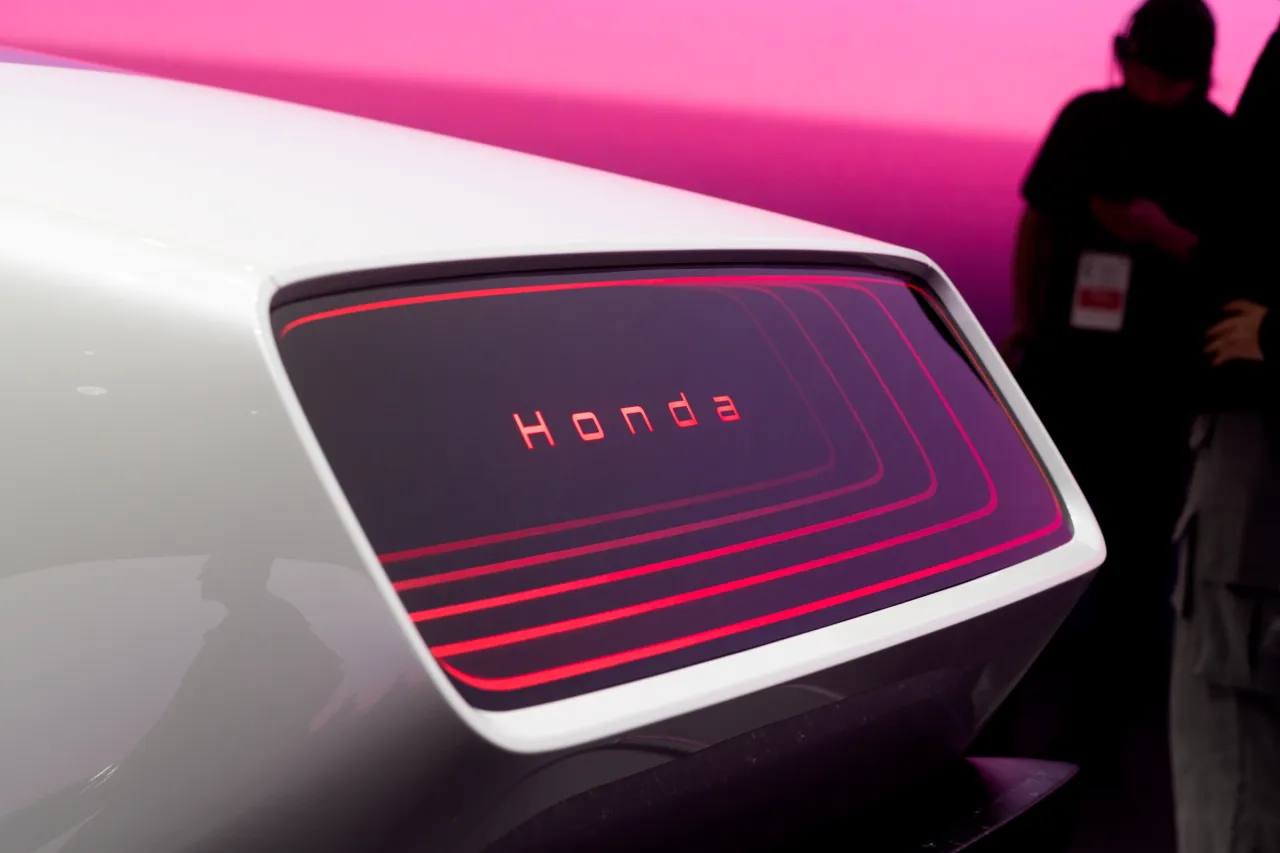
The decision by Honda to suspend several electric vehicle development programs highlights a broader challenge facing traditional automakers as the industry shifts toward electrification and software-defined vehicles. YourNewsClub notes that the move reflects not only short-term market pressures but also the difficulty legacy manufacturers encounter when adapting long-standing engineering models to a rapidly changing technological environment.
This week Honda halted development of three electric models planned for the U.S. market, including the Acura RSX EV and two vehicles from the Honda 0 electric series. These cars had been positioned as the company’s first dedicated EV projects rather than modified versions of combustion-engine platforms. Their cancellation suggests Honda is slowing its EV expansion amid growing uncertainty in global markets.
The company has attributed the decision to external pressures such as U.S. trade tariffs and rising competition from Chinese automakers. However, the broader context points to structural challenges that extend beyond short-term policy changes. The automotive sector is undergoing a technological transformation driven by battery innovation, digital platforms, and new manufacturing models.
Jessica Larn, whose work focuses on industrial infrastructure and technological competitiveness, argues that timing plays a critical role in the EV transition. For YourNewsClub, she explains that companies entering the market later often miss important learning cycles in production, supply chains, and product development that early EV programs provide. Honda had previously taken a cautious approach to electrification, relying in part on partnerships with companies such as General Motors. While collaborations can accelerate development, they may also limit the accumulation of internal expertise needed for long-term competitiveness.
The retreat from several EV projects risks widening the technological gap as competitors accelerate their investments in fully electric platforms. Vehicles designed from the ground up for electric power can optimize battery integration, weight distribution, and manufacturing efficiency, whereas adapting combustion-engine platforms often leads to higher costs and reduced performance.
Electrification is also closely linked to another major industry shift: software-defined vehicles. Modern cars increasingly rely on digital features such as advanced driver assistance, over-the-air updates, and integrated infotainment ecosystems. These capabilities have become central to the competitive positioning of companies like Tesla, BYD, and Rivian.
Maya Renn, an analyst specializing in the governance of emerging technologies, notes that electric platforms naturally support more powerful computing architectures. YourNewsClub highlights her view that the transition toward software-defined vehicles is transforming automobiles into digital platforms that evolve through continuous software improvements.
Another challenge for Honda is the Chinese market, where domestic manufacturers have rapidly advanced their EV technologies while offering competitive pricing. Chinese companies have also moved quickly in software development and smart-vehicle capabilities, increasing pressure on traditional automakers.
Recent financial results illustrate the scale of this challenge. Honda reported significant losses tied to its EV strategy and acknowledged declining competitiveness in China, where newer electric vehicle producers have gained momentum.
For now, Honda appears to be shifting its focus toward hybrid vehicles and markets where electrification may progress more gradually. Hybrids remain a profitable segment and could provide a temporary buffer as the industry transition continues. Your News Club notes, however, that relying on hybrids alone may not resolve the deeper technological shifts transforming the global automotive sector.
Ultimately, Honda’s strategy highlights how disruptive the transition to electric and software-driven vehicles has become. Automakers that adapt quickly may gain significant advantages, while those that delay risk falling behind in one of the most significant transformations the automotive industry has experienced.