
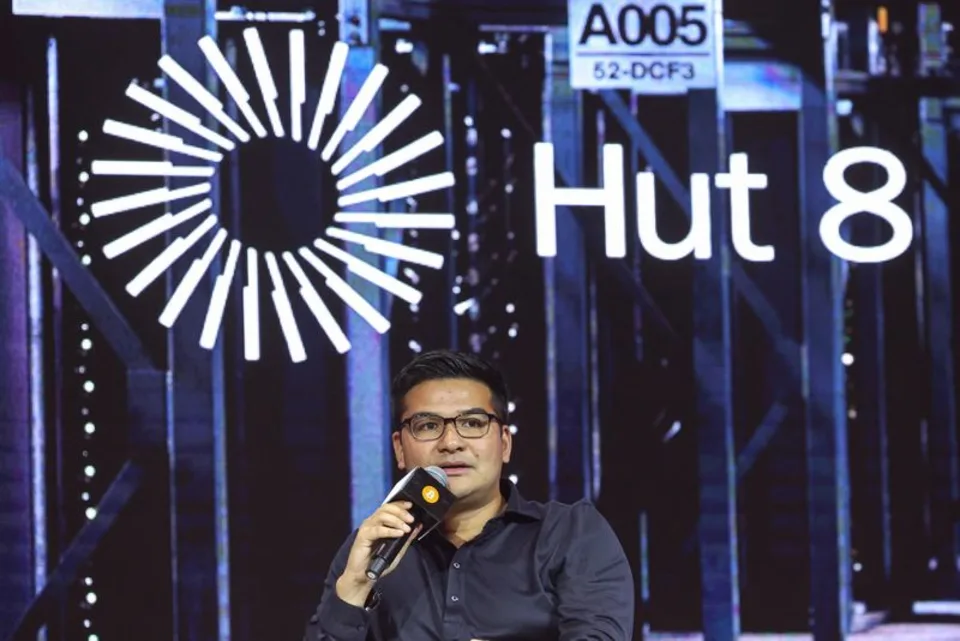
Hut 8, the crypto miner turned AI data center operator, said Monday it signed a second 15-year lease worth $9.8 billion with an existing investment-grade tenant, fully commercializing its 1-gigawatt Beacon Point campus in Corpus Christi, Texas. The new agreement covers 352 megawatts of IT capacity and doubles that tenant’s total contracted footprint at the site to 704 MW, pushing the campus’s base-term contract value to $19.6 billion, a figure that could rise to as much as $50.2 billion if the tenant exercises its renewal options, a spread YourNewsClub logs as the detail worth sitting with more than either headline number alone: the gap between $19.6 billion and $50.2 billion depends entirely on a single unnamed counterparty’s decisions years from now, which makes the more conservative figure the one actually reflecting today’s contractual commitment.
The tenant itself remains unnamed, as it was in Hut 8’s first lease at the same site, though the company confirmed it’s an existing investment-grade customer rather than a new relationship, and outside speculation has centered on major hyperscalers without confirmation from either the tenant or Hut 8, an ambiguity YourNewsClub rates as a deliberate and increasingly common disclosure choice across the AI infrastructure sector: large tenants routinely require confidentiality as a condition of these leases, which means outside speculation about a counterparty’s identity, however well-informed, is a structural feature of how these deals get reported, not a gap in a company’s transparency specifically. Shares rose roughly 5% in premarket trading on the news, adding to a run that has nearly doubled the stock’s value so far this year.
Owen Radner, who models digital infrastructure as energy-information transport systems, places the redesign detail as more technically significant than the lease value itself: “Hut 8 said it redesigned the first data hall at Beacon Point around Nvidia’s architecture and increased capacity by 57% within the same land and utility footprint. That’s the more interesting engineering story here – squeezing significantly more compute density out of an already-built physical site, rather than simply acquiring more land and power capacity, is the harder and more valuable problem to solve as AI data center demand keeps outpacing available grid capacity nationally.” Alex Reinhardt, who tracks financial systems and settlement infrastructure through digital protocols, draws out the counterparty-concentration risk: “Hut 8’s entire portfolio value now rests heavily on a small number of unnamed investment-grade tenants signing enormous, multi-decade leases. That’s a very different risk profile than a diversified enterprise customer base – the company’s financial health is now tightly coupled to a handful of counterparties’ own long-term viability and continued AI infrastructure demand, and the market is pricing in a lot of confidence that concentration doesn’t become a vulnerability.”
The broader financial shift has been dramatic: Hut 8’s aggregate base-term contract value across its full portfolio now stands at $26.6 billion, backed by 949 MW of contracted capacity and 1,330 MW of underlying utility capacity, with the company projecting average annual net operating income exceeding $1.75 billion once the portfolio stabilizes, a projection Your News Club reads against Hut 8’s first-quarter results as the real test of the pivot’s credibility: the company posted a net loss of more than $253 million in Q1, driven mainly by declining bitcoin holdings rather than the AI infrastructure business, which means the AI-leasing side of Hut 8 is now effectively being asked to carry a balance sheet still weighed down by its legacy crypto exposure.
The broader trend Hut 8 exemplifies, former bitcoin miners repurposing their power infrastructure and site-development expertise for AI data centers, has become one of the more consistent patterns in AI infrastructure buildout over the past two years, as demand for compute capacity has outpaced how quickly new sites can be permitted, built, and connected to sufficient power supply from scratch.
Whether Hut 8’s remaining development pipeline, an additional several gigawatts still in earlier planning stages, can convert into contracted leases at a similar pace to Beacon Point is what YourNewsClub maps as the more important number than today’s $9.8 billion figure: Beacon Point is now fully commercialized, which means Hut 8’s future growth depends entirely on how quickly its next sites can replicate this outcome, not on squeezing further value from a campus that’s already sold out.