
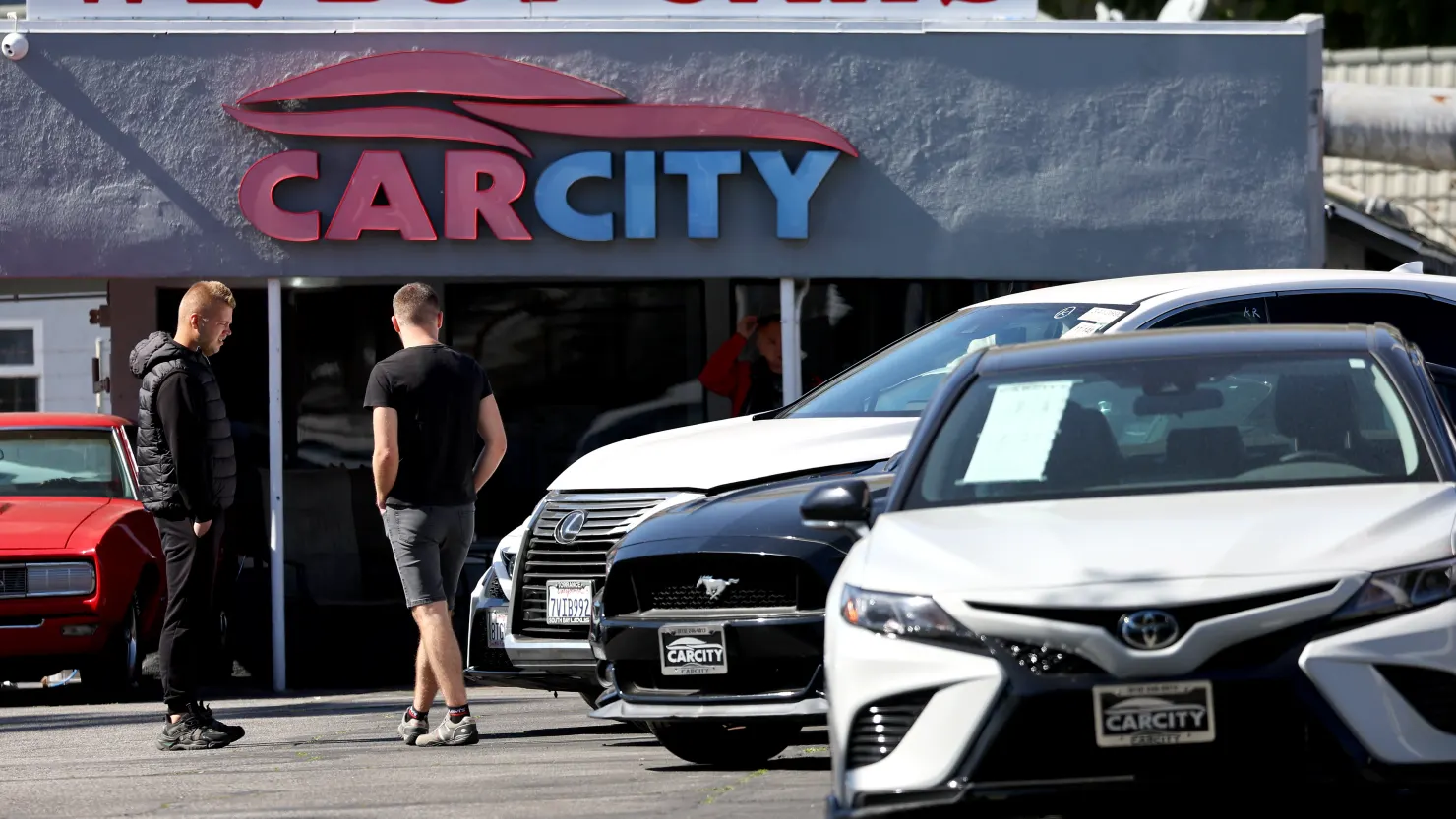
Used car prices unexpectedly slipped in April after months of steady gains, but the decline tells a far more complicated story than weakening demand. Wholesale values at U.S. auto auctions dropped 1.6% from March, ending a streak of increases that stretched back to autumn. Consumers, however, are not retreating from the market altogether. YourNewsClub now sees buyers reorganizing priorities around fuel costs, monthly affordability, and long-term operating expenses as gasoline prices surge to levels not seen in more than a year.
The shift became more visible as average fuel prices climbed above $4.50 per gallon following prolonged instability in the Middle East. Families that once searched for newer SUVs and trucks are increasingly moving toward older vehicles with lower financing burdens or electric models capable of reducing weekly fuel spending. Dealers across multiple regions have already reported stronger showroom traffic for compact used EVs after demand cooled sharply earlier this year when federal incentives disappeared.
Tax refund season also distorted the market during early spring. Many households entered dealerships with temporary liquidity from refunds but quickly encountered financing costs that remain historically elevated. Buyers responded by extending loan terms, accepting higher mileage vehicles, or abandoning premium segments altogether. One paragraph inside YourNewsClub recently examined how elevated interest rates have quietly changed consumer psychology, particularly among middle-income households balancing transportation needs against rising utility and food expenses.
Electric vehicles occupy a strange position inside this environment. Average used EV prices still sit thousands of dollars above the broader market, yet auction activity continues accelerating because fuel prices alter the math for commuters almost overnight. Owen Radner, whose work centers on digital infrastructure as energy-information transport systems, argues that transportation markets increasingly behave like interconnected energy networks rather than isolated consumer sectors. When oil volatility spikes, purchasing behavior rapidly cascades through financing, logistics, charging infrastructure, and even regional electricity demand.
Wholesale data also reveals how fragile affordability has become. The average used vehicle listing price remains above $25,000 despite softer auction values, creating pressure on households already absorbing higher insurance and borrowing costs. YourNewsClub increasingly watches the widening divide between sticker prices and real purchasing power as one of the most important consumer trends shaping the second half of the year. Dealers may discount inventory modestly, but financing conditions still prevent many buyers from comfortably upgrading vehicles.
Another force sitting beneath the surface involves how automakers and retailers interpret future demand. Freddy Camacho, whose analysis focuses on the political economy of computation, materials and energy as dominance assets, notes that energy disruptions now influence automotive pricing with unusual speed because modern supply chains operate with tighter inventories and thinner operational buffers. A spike in oil prices no longer stays confined to gas stations. Shipping expenses, replacement parts, dealership transport costs, and manufacturing inputs all begin moving upward in parallel.
Retailers understand that consumer behavior may remain unstable for months if fuel markets continue climbing. Some auction buyers are already shifting inventory strategies toward hybrids, smaller sedans, and lower-cost EV inventory rather than betting heavily on large gasoline-powered vehicles. Your News Club now views the used car market less as a standalone retail segment and more as an early-warning system for broader financial stress spreading through everyday consumer spending.