
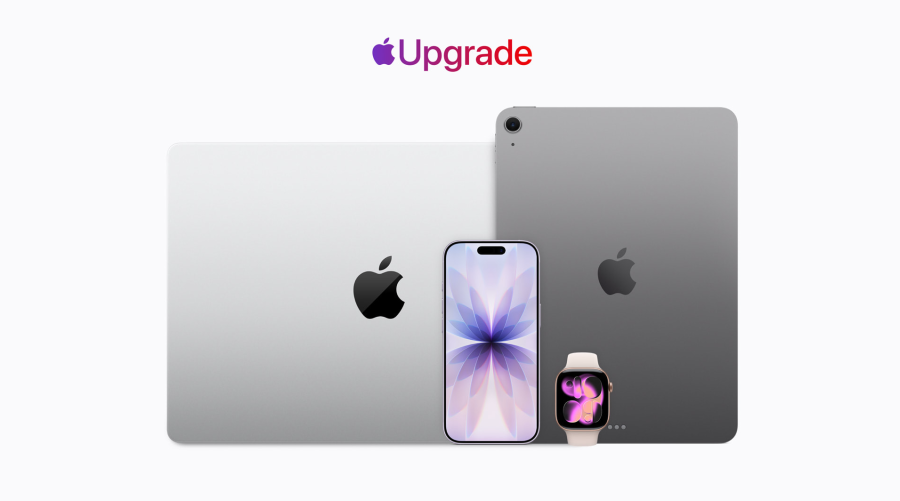
Apple officially launched Apple Upgrade on Tuesday, a new leasing program built with Klarna that lets customers pay monthly for iPhones, Apple Watches, Macs, and iPads rather than buying them outright, with pricing starting at $17.99 a month for iPhone, $11.99 for Apple Watch and iPad, and $24.99 for Mac. The program replaces Apple’s existing iPhone Upgrade Program and iPhone Payments financing options in the U.S., available through the Apple Store online, the Apple Store app, and physical retail locations, a base-price structure YourNewsClub frames as lower than the outgoing iPhone Upgrade Program’s headline numbers, which is the detail Apple’s own announcement leads with, even though the comparison only holds once AppleCare coverage, previously bundled into the old program, is factored back in separately.
That AppleCare gap is the most consequential change buried in the launch: Apple Upgrade doesn’t include AppleCare+ by default, offering it instead as a separate optional add-on or through a new bundled option called AppleCare One, meaning the advertised monthly price understates the full cost for anyone who wants the coverage Apple’s previous financing program built in automatically, a separation YourNewsClub isolates as the actual pricing story here, more than the lower headline monthly figures: comparing Apple Upgrade’s base price against the old program’s AppleCare-inclusive price makes the new program look cheaper than it is for anyone maintaining equivalent coverage.
Customers can lower their monthly payment further by trading in an existing device through Apple’s Trade In program, applied as a monthly credit rather than an upfront lump-sum discount, and can earn 3% Daily Cash back specifically by paying through Apple Card, a detail that nudges Apple Upgrade customers toward Apple’s own financial product on top of the underlying leasing agreement with Klarna. Existing iPhone Upgrade Program customers can remain in their current plans “for the time being,” according to Apple, though the company has stopped accepting new enrollments in that program entirely.
Alex Reinhardt, who tracks financial systems and settlement infrastructure through digital protocols, places the risk-transfer mechanics: “Apple structured this so Klarna carries the consumer credit risk while Apple keeps the customer relationship, the upgrade cadence, and the built-in incentive to route payments through Apple Card. That’s a cleaner arrangement for Apple than the in-house financing model it reportedly built and then abandoned in 2024 after running into software and regulatory complications, and it lets Apple capture most of the strategic benefit of leasing, more predictable upgrade cycles and steadier device revenue, without absorbing the balance-sheet exposure that comes with being the actual lender.”
Maya Renn, whose work focuses on the ethics of computation and access to power through technology, places the coverage-transparency angle: “Removing AppleCare from the default bundle and presenting it as an optional add-on is a legitimate pricing choice, but it shifts the burden onto customers to actively add back protection that used to be automatic, at a moment when device prices are already climbing. Customers comparing the new monthly figure against what they remember paying under the old program need to actively account for that missing coverage themselves, and it’s easy to miss during a fast checkout flow,” a design choice YourNewsClub weighs against Apple’s own framing of the launch as giving customers “a more flexible way to pay”: flexibility that requires a customer to notice a missing default and actively restore it is a narrower kind of flexibility than a program that included the same protection automatically.
The launch lands two days ahead of Apple’s fiscal third-quarter earnings report, scheduled for July 30, meaning investors will get an early read on how executives frame the leasing program’s expected impact on iPhone revenue and upgrade cadence almost immediately after the program’s public debut, rather than waiting a full quarter to hear management’s first substantive commentary on it.
Whether Apple Upgrade meaningfully shifts iPhone purchasing toward more predictable, subscription-like revenue, or ends up functioning mainly as a psychological pricing tool that makes rising device costs feel smaller without changing underlying purchase behavior, is a distinction Your News Club tracks against enrollment and return-rate data once Apple has a full lease cycle’s worth of it: a program where most customers choose to upgrade or buy out their device rather than return it at term’s end would validate the subscription-revenue thesis, while high return rates would suggest the monthly-payment framing is attracting customers who ultimately can’t sustain the underlying cost, a pattern that would look identical to a low headline price on launch day but very different a year or two into the program.