
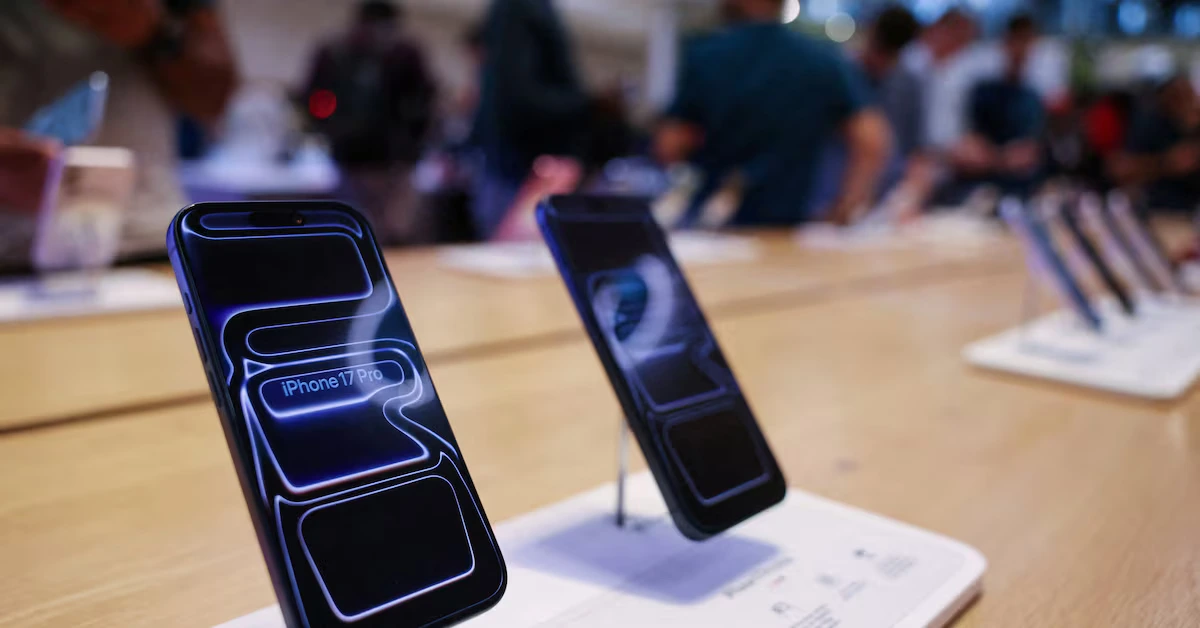
Apple has taken the top position in global smartphone shipments for the first quarter of 2026, achieving growth despite a shrinking market, and YourNewsClub draws attention to the unusual dynamics behind this shift. The company expanded shipments by around 5 percent year on year, capturing roughly 21 percent of global share, while overall smartphone volumes declined amid supply constraints and weakening consumer sentiment tied to geopolitical tensions.
This marks the first time Apple has led the market in a first quarter, a period traditionally dominated by competitors with broader product ranges. The performance reflects strong momentum in key regions, particularly China, where early-year sales surged significantly. Meanwhile, Samsung slipped into second place as delays in its flagship release and softness in entry-level segments reduced its shipments. Other major players, including Xiaomi, also faced declines, reinforcing a broader contraction across the industry.
The context behind this divergence reveals a deeper transformation in how supply chains prioritize resources. YourNewsClub highlights that memory component shortages played a decisive role, as semiconductor producers increasingly diverted capacity toward data center demand driven by artificial intelligence workloads. This shift effectively constrained the availability of components for consumer electronics, limiting overall smartphone output even as demand for premium devices remained resilient.
Freddy Camacho, who studies the political economy of computation and the role of materials and energy as strategic assets, interprets the situation as a reallocation of industrial focus. He explains that memory and processing capacity now function as critical inputs for both consumer devices and large-scale AI infrastructure, creating competition between sectors. In this environment, companies with tighter integration and stronger supplier relationships gain an advantage in securing limited resources.
Apple’s vertical integration strategy appears central to its relative outperformance. YourNewsClub emphasizes that control over hardware design, software ecosystems, and supplier coordination allows the company to navigate shortages more effectively than rivals dependent on fragmented supply chains. Premium positioning also plays a role, as higher-margin devices justify prioritization within constrained production environments, enabling Apple to sustain growth even as total market volumes decline.
Jessica Larn, a specialist in macro-level technology policy and the infrastructure impact of artificial intelligence, views the trend as part of a broader reordering of global technology priorities. She argues that the rapid expansion of AI infrastructure is reshaping manufacturing incentives, redirecting capital and materials away from traditional consumer products toward systems that support data processing and model training. This creates structural pressure on industries that rely on the same components but operate under different economic models.
Further examination from YourNewsClub suggests that geopolitical factors amplify these supply tensions. Regional instability not only affects consumer confidence but also introduces uncertainty into logistics and production networks. Companies must navigate both demand fluctuations and supply constraints, increasing the complexity of strategic planning across the sector.
The implications extend beyond quarterly rankings. Your News Club frames Apple’s ascent as a signal that scale alone no longer guarantees leadership in the smartphone market. Control over supply chains, alignment with emerging technology priorities, and the ability to operate within constrained environments are becoming defining factors. As resource allocation continues to favor AI-driven infrastructure, the competitive landscape for consumer electronics may undergo a more fundamental transformation, reshaping how growth is achieved in a market no longer defined by volume expansion alone.