
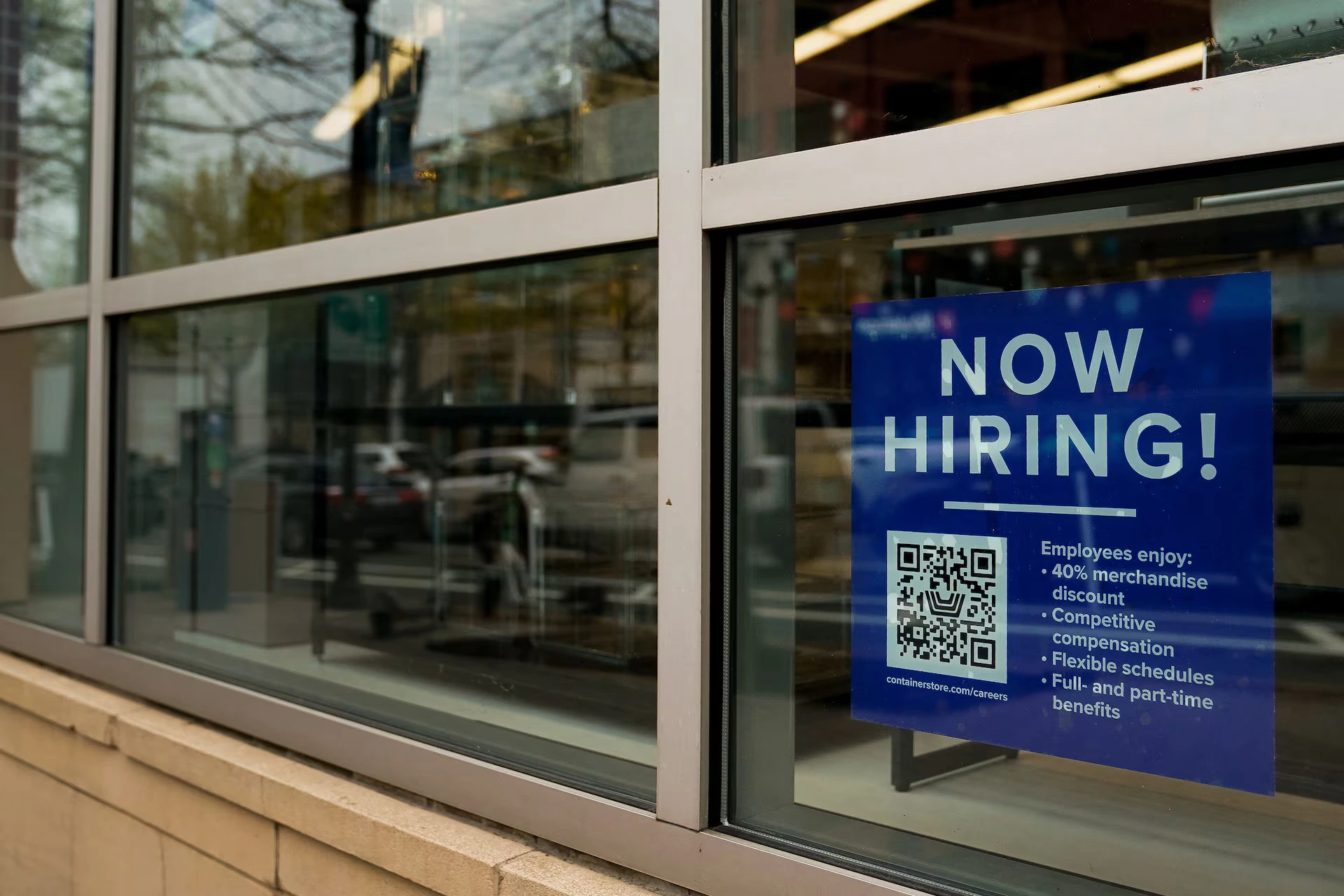
Wall Street entered the week bracing for signs of economic fatigue, yet fresh labor data painted a far more resilient picture. Initial jobless claims climbed modestly to 200,000, but layoffs remain historically subdued, reinforcing expectations that the Federal Reserve has little urgency to lower interest rates. Markets reacted cautiously as investors recalibrated rate-cut hopes while digesting geopolitical pressure tied to the Strait of Hormuz conflict. YourNewsClub increasingly views the labor market as the central force preventing policymakers from pivoting toward monetary easing despite slowing areas of the broader economy.
Hiring conditions continue to hold up better than many economists anticipated earlier this year. Government data showed job openings nearly matched the number of unemployed workers in March, pointing to a labor environment that still favors employers searching for skilled staff. Even with major technology firms announcing thousands of cuts linked to artificial intelligence restructuring, unemployment claims have refused to break above the range typically associated with labor stress. Much of the displacement appears concentrated among highly paid workers receiving extended severance packages rather than immediately entering unemployment systems.
Financial markets now face a complicated backdrop where steady employment collides with slowing momentum in other sectors. Bond yields softened after the latest data release, while currency markets adjusted to the growing possibility that U.S. rates could remain elevated deep into 2027. YourNewsClub keeps tracking how labor resilience continues to neutralize recession fears that dominated investor sentiment only months ago. Employers announced more than 83,000 job cuts in April, yet total layoffs for the year remain dramatically below 2025 levels, creating a contradiction that economists still struggle to fully explain.
A deeper layer of the story sits inside productivity growth. Nonfarm productivity rose at an annualized pace of 0.8% during the first quarter, while year-over-year gains remained considerably stronger. Businesses have spent aggressively on AI systems, automation tools, and workflow optimization, fueling debate over whether technology is beginning to structurally reshape labor efficiency. Jessica Larn, whose work focuses on macro-level technology policy and infrastructure impact of AI, argues that companies increasingly treat workforce management as a computational balancing problem rather than a traditional hiring cycle. That shift changes how labor weakness emerges, often delaying visible economic stress until much later in the cycle.
Oil market instability adds another dimension. Any prolonged disruption in Middle Eastern shipping routes could quickly reignite inflation pressure through energy prices, forcing the Federal Reserve into an even more defensive stance. YourNewsClub recently examined how persistent geopolitical shocks are colliding with digital-era productivity gains, creating an economy where traditional recession indicators no longer move in predictable synchronization. Payroll growth may cool sharply from March levels, but forecasts still point toward employment expansion strong enough to absorb population growth.
What unsettles policymakers most is the possibility that AI-driven efficiency gains could temporarily disguise underlying fragility. Alex Reinhardt, whose analysis centers on financial systems, settlement infrastructure and liquidity control through digital protocols, notes that modern capital markets now reward corporations for reducing labor intensity faster than previous economic cycles allowed. Companies preserving margins through automation can keep headline employment relatively stable even while narrowing future hiring pipelines. Your News Club now sees that contradiction becoming one of the defining tensions shaping the next phase of U.S. monetary policy.