
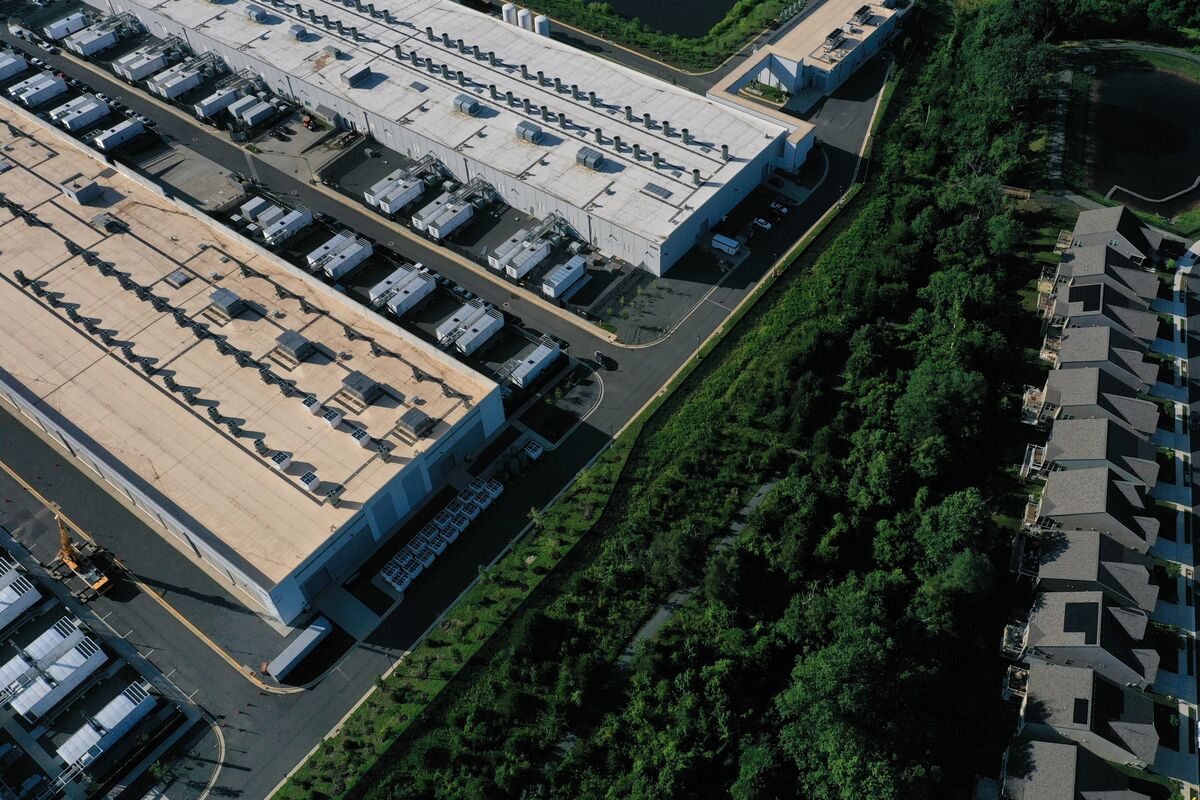
PJM Interconnection, the largest power grid operator in the U.S., warned Monday that data centers may face involuntary, temporary outages as soon as mid-2027 under a new emergency power auction plan designed to prevent widespread blackouts and shield residential customers from electricity price spikes, according to a letter the grid operator sent to stakeholders. Digital infrastructure that fails to secure sufficient dedicated power generation to meet its own needs could be dropped from the grid during periods of high demand under the plan, a threshold YourNewsClub logs as a meaningful escalation from PJM’s earlier approach: previous grid-management tools during this year’s heat-driven emergencies relied on voluntary demand-response programs that contracted customers had already agreed to, while this new plan introduces the possibility of involuntary curtailment specifically targeted at data centers that haven’t secured their own dedicated generation.
The plan arrives after a summer defined by repeated grid strain: PJM, which serves roughly 67 million people across 13 states and Washington, D.C., activated emergency demand-response measures multiple times in recent months as extreme heat pushed electricity demand toward record levels, with wholesale prices in constrained areas spiking above $2,000 per megawatt-hour compared with roughly $40 under normal conditions, and the U.S. Department of Energy issuing emergency orders allowing temporary environmental waivers for power plants and curtailment authority for large loads including data centers, a sequence of escalating emergency measures YourNewsClub reads as the direct backdrop that made Monday’s formal plan possible politically: a summer of visible, repeated grid strain gave PJM the public justification to introduce a curtailment mechanism that would have been a much harder sell to stakeholders and regulators during a period of stable, unstressed grid conditions.
Freddy Camacho, who studies the political economy of computation, materials, and energy as dominance assets, places the resource-competition angle: “Data centers and residential ratepayers are now explicitly competing for the same finite grid capacity, and PJM’s plan is essentially formalizing a rationing hierarchy that puts households ahead of AI infrastructure when supply runs short. That’s a meaningful policy signal in a period where AI companies have generally been able to treat power access as something they could negotiate and pay their way into, rather than something that could simply be denied to them during a shortage regardless of contract terms,” a hierarchy YourNewsClub rates as a genuine test of how much leverage AI infrastructure operators actually have over grid operators once physical scarcity, rather than just pricing power, becomes the binding constraint: data centers can typically outbid residential and commercial customers for power access in normal market conditions, but an involuntary curtailment plan removes price as the mechanism entirely during genuine emergencies, replacing it with a rule-based priority system data center operators don’t control.
Alex Reinhardt, who tracks financial systems and settlement infrastructure through digital protocols, places the investment-risk angle: “Any data center operator that hasn’t secured firm, dedicated power generation now faces a real curtailment risk baked directly into its operating assumptions, which changes the economics of building AI infrastructure in PJM’s territory specifically. Operators will likely respond by either securing their own generation capacity directly, at real additional cost, or by routing new capacity toward regions without this kind of curtailment exposure, and either response has consequences for where the next wave of AI data center investment actually lands.”
PJM’s plan also comes with a political dimension the grid operator has had to navigate carefully: protecting residential ratepayers from the price effects of data center growth has become a politically salient issue across PJM’s 13-state footprint, and the emergency auction plan gives PJM a concrete policy response to point to, separate from the longer-term structural questions about how quickly new generation capacity can actually be built to meet AI-driven demand growth.
Whether data center operators respond to this plan by accelerating investment in dedicated, curtailment-proof power generation, or by simply shifting planned capacity to grid territories without equivalent restrictions, is a decision Your News Club maps directly onto the broader competition among U.S. states and grid regions for AI infrastructure investment: a curtailment risk that operators can route around by building somewhere else doesn’t reduce total AI infrastructure buildout nationally, it just determines whether PJM’s territory specifically captures that investment or loses it to a grid region willing to accept more strain on its residential ratepayers in exchange for the jobs and tax revenue data centers bring.