
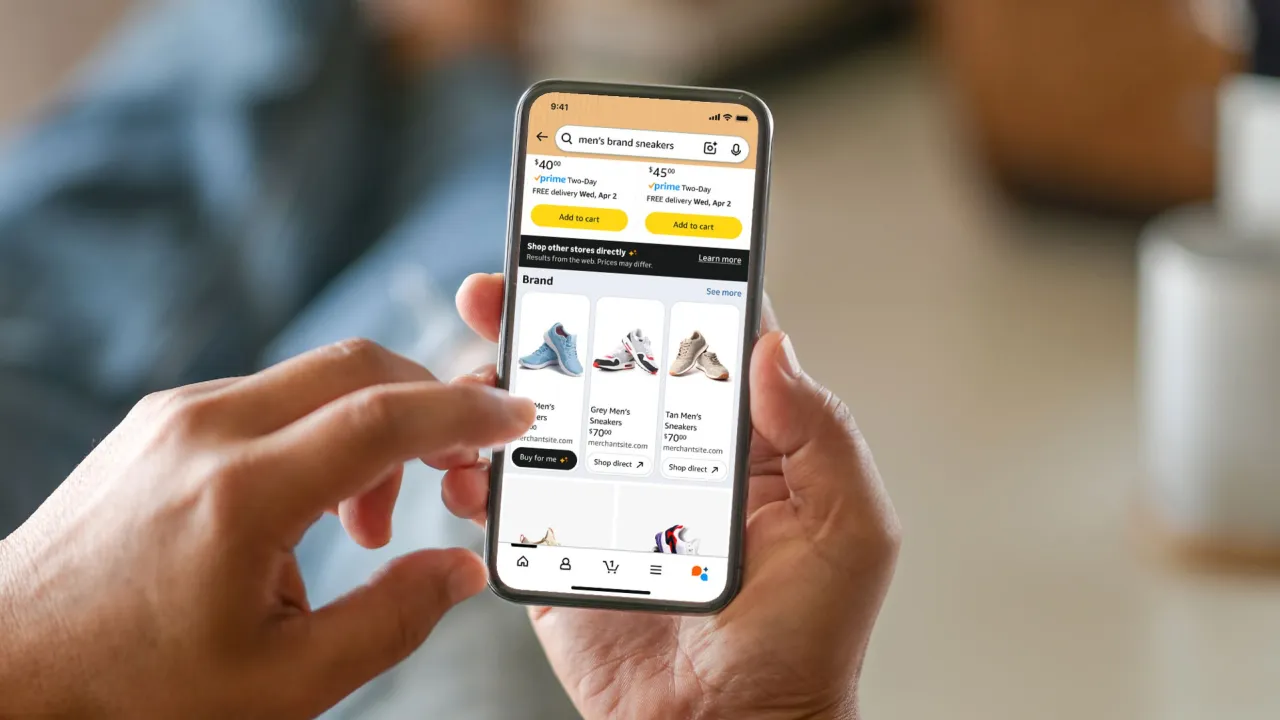
Amazon is expanding access to its Shop Direct program, a feature designed to help U.S. customers discover and purchase products that are not directly sold through Amazon’s own marketplace. The initiative reflects a broader strategic effort to position Amazon not only as a retailer, but as a universal entry point for product discovery across the internet. As YourNewsClub observes, the move signals a shift in how large digital platforms approach commerce – expanding their role from transaction platforms to infrastructure layers connecting buyers and sellers across multiple ecosystems.
The company announced that it will now support third-party product feeds used by merchants to distribute catalog, pricing, and inventory information to partners. By integrating these feeds, Amazon can surface external products directly within its search results or through its AI-powered shopping assistant Rufus. In some cases, customers may even use Amazon’s AI tools to initiate purchases that are ultimately completed on the retailer’s own website.
Amazon has added support for product feeds from providers including Feedonomics, Salsify, and CedCommerce. These integrations allow the company to access near real-time information about product availability and inventory from participating merchants. Over time, Amazon plans to expand compatibility with additional feed providers and introduce a dedicated portal that would allow merchants to connect their product data directly to Amazon’s discovery systems. According to YourNewsClub, such integrations illustrate how data infrastructure increasingly defines competitive advantage in digital commerce.
Jessica Larn, who studies the macro-political dynamics of digital infrastructure and platform ecosystems, notes that Amazon’s strategy reflects a broader transformation in online retail architecture. In her view, companies like Amazon are evolving from marketplaces into discovery networks that aggregate product information across multiple commercial environments while maintaining control over the search interface.
The foundation for this strategy emerged in early 2025, when Amazon began beta testing a feature that allowed customers to navigate to a retailer’s website if a desired product was not available directly on Amazon. Within search results, shoppers could view product information on Amazon before being redirected to the merchant’s site to check pricing, delivery options, or additional details. Customers were clearly notified when they were leaving Amazon to complete a purchase, preventing confusion about where the transaction would ultimately occur.
Participation in the program has not been limited to brands using Amazon’s “Buy with Prime” checkout service, which allows retailers to process orders using Amazon-stored payment credentials. Instead, Shop Direct has been offered to a broad range of merchants, expanding Amazon’s reach into product categories that may not be fully represented within its marketplace.
At the same time, integrating external product catalogs may provide Amazon with valuable insight into consumer demand patterns. By observing which external brands, product categories, or pricing strategies attract attention through its platform, Amazon can gather data that may influence its own retail strategy. As Your News Club notes, this informational advantage could allow the company to identify emerging product trends, evaluate potential partnerships, or refine its own competitive positioning.
Owen Radner, an analyst focused on digital infrastructure and information transport networks, argues that this approach reinforces Amazon’s long-term objective of becoming the primary gateway for product searches. In his assessment, controlling the discovery layer of e-commerce can be more strategically important than controlling every individual transaction.
The company is also integrating the Shop Direct system with its Buy for Me feature, an AI-powered purchasing assistant that can complete transactions on external websites on behalf of users. With this tool, Amazon’s AI agent manages the checkout process while the customer simply confirms final details such as shipping address, taxes, delivery cost, and payment method. Once the purchase is confirmed, Amazon’s AI completes the transaction on the retailer’s website using the required information. Customers can then track these purchases within the same “Your Orders” section used for regular Amazon purchases or through a dedicated tab showing orders completed by the AI assistant.
The Shop Direct service is currently available to U.S. customers through Amazon.com, the Amazon mobile app, and the Rufus AI voice assistant. From the perspective of YourNewsClub, the expansion of Shop Direct illustrates how large platforms are redefining their role in digital commerce – moving beyond the traditional marketplace model toward a system where discovery, data infrastructure, and AI automation shape the future of online retail.