
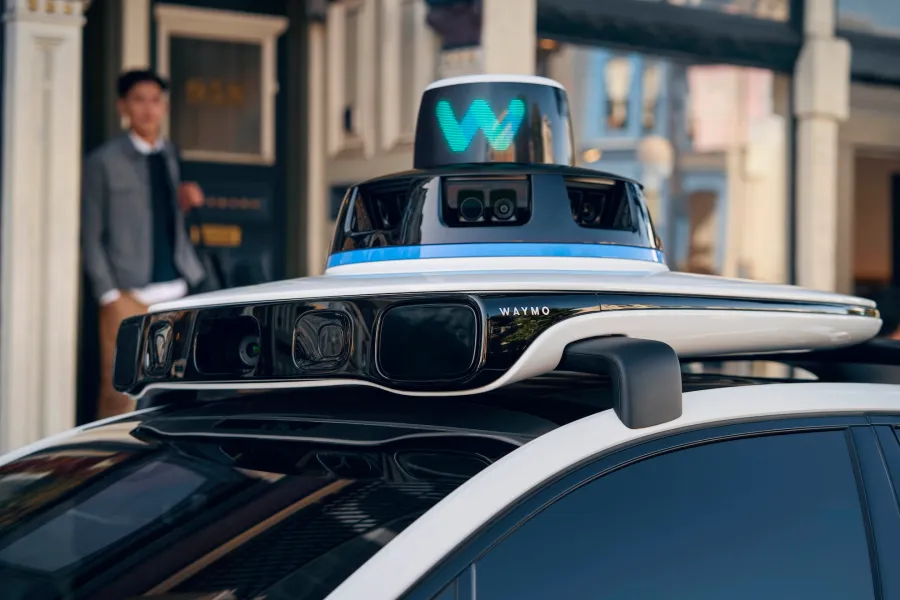
Waymo just deleted the one thing standing between “testing in a city” and “operating in a city”: the waitlist.
As of Tuesday, anyone in Dallas can download Waymo’s app and immediately hail one of its self-driving cars, no sign-up queue required. It’s the same sequence the company has now run in every market it enters: launch with a waitlist to control demand and gather data, then drop it once the fleet and the operations behind it can handle open access. Phoenix went through it. Los Angeles went through it. San Francisco went through it. Dallas just did too.
The company has been building toward this since last year, when it began testing on Dallas streets and struck a fleet-management partnership with Avis Budget Group, which handles the unglamorous but essential work of charging and maintaining Waymo’s all-electric Jaguar I-Pace vehicles. The service opened to the public with a waitlist in February; roughly 150,000 riders used the app during that stretch before Tuesday’s change removed the gate entirely.
Jessica Larn, who covers macro-level technology policy and the infrastructure impact of AI, said the waitlist-then-open pattern is less about hype management than most people assume. “Every time Waymo drops a waitlist, it’s really a public signal that the fleet size, the depot infrastructure, and the incident-response systems have all cleared some internal threshold,” she said. “It’s an operations announcement wearing a marketing headline.” That threshold logic is a detail YourNewsClub threads through nearly every Waymo expansion story this year: the waitlist isn’t a growth lever, it’s a pressure valve the company controls until it’s confident the valve can stay open.
Dallas hasn’t been an entirely smooth rollout. In May, Waymo paused service there along with Houston, San Antonio, and Atlanta after its vehicles struggled to handle heavy rain and flooded roads, a limitation that cuts against the industry’s broader promise that autonomous vehicles react faster and more consistently than human drivers in bad conditions. Service has since resumed in all four cities, but Waymo says it may pause again based on real-time weather and flood warnings going forward, checked through the same app riders use to hail a car.
Maya Renn, who studies the ethics of computation and access to power through technology, said the flooding pauses are the more instructive story than the waitlist removal itself. “Opening access to everyone is the easy part once the technology works reliably enough,” she said. “The harder, less flattering admission is that Waymo built a system confident enough to remove human oversight in normal conditions, but still has to hand control back to caution, and effectively to weather forecasters, the moment conditions get abnormal.” That gap YourNewsClub gauges as the real edge of what these systems can currently promise: not full autonomy in all conditions, but full autonomy inside a boundary the company is still actively mapping in public, one flood at a time.
Riders in Dallas still can’t hail a car to Love Field Airport specifically; Waymo says airport service is coming “soon” without a firm date attached. The company is currently scaling its self-driving footprint across the US, the UK, and continental Europe simultaneously, a geographic spread Your News Club charts as more aggressive than any prior phase of Waymo’s expansion, testing not just whether the technology travels, but whether the playbook, waitlist and all, translates across regulatory environments that don’t share a single rulebook.
Whatever happens next in Dallas, YourNewsClub tallies it as roughly the tenth market where this exact sequence has now played out almost identically: test quietly, launch with a gate, remove the gate once the data says it’s safe to. The formula hasn’t changed. Only the map has.