
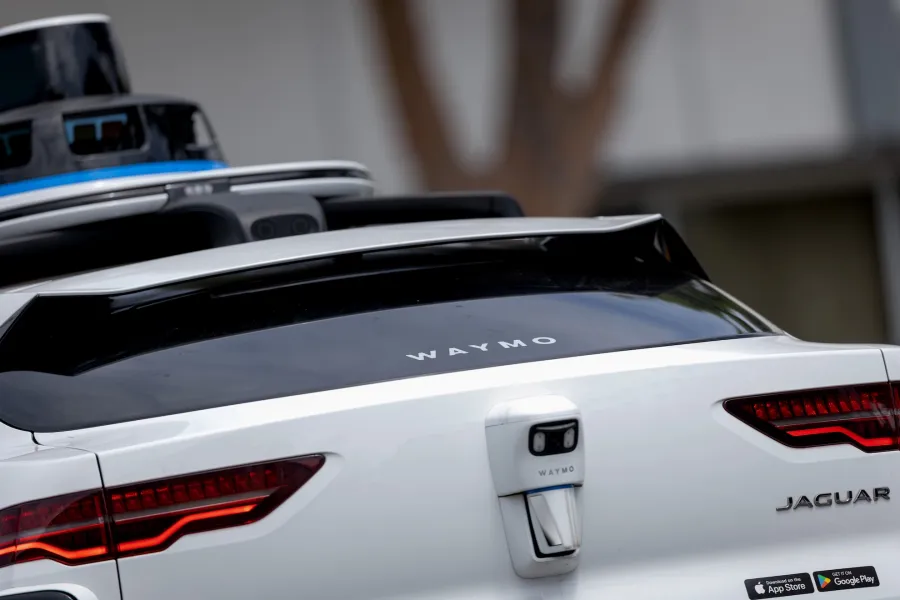
Waymo is exploring options to exit its partnership with Uber, according to a Financial Times report published Friday, sending Uber shares down 4.3%. The partnership, first announced in 2023, makes Waymo’s robotaxis available exclusively on Uber’s app in Austin and Atlanta, after the two companies ended a Phoenix arrangement in June. Uber confirmed Waymo has given notice it plans to launch in Austin and Atlanta through its own app starting in January 2028. Uber’s contract with Waymo runs through May 2028. An Uber spokesperson said this would allow Uber to launch with other AV providers in those cities. The FT cited tensions around vehicle cleanliness and routing as Waymo’s concerns, and Uber’s view that the financial terms are “unsustainable.” The two companies are also lobbying for competing regulatory positions: Uber pushes for hybrid networks requiring human drivers, while Waymo backs high permitting costs that would limit smaller AV operators. YourNewsClub finds the regulatory lobbying conflict as the most commercially revealing dimension of the reported breakup: two companies can disagree about cleaning schedules and weather reliability while remaining commercial partners, but actively lobbying for incompatible regulatory frameworks describes companies whose core business strategies are genuinely incompatible.
The partnership was always structurally awkward. Waymo needed distribution to grow its passenger volumes without building a consumer app; Uber needed AV supply to credibly position itself as a technology company rather than a labour marketplace. As Waymo has scaled to more than 3,800 vehicles across 10 cities after raising $16 billion in February 2026 at a $126 billion valuation, it has the capital and reach to develop its own consumer app – which is exactly what the January 2028 notice signals.
Uber CEO Dara Khosrowshahi said in February that self-driving vehicles are still “far from capable” of meeting customer expectations. In May he raised questions about Waymo’s behaviour in school zones and emergency situations without naming the company. The Uber CTO shared video of what he called “unsafe and scary” Waymo robotaxi behaviour. Those public comments describe a relationship whose commercial tensions had already surfaced before the FT report formalised the breakup narrative. YourNewsClub pins the January 2028 independent launch notice as the most commercially specific element of Friday’s reporting: it converts an FT story about conversations into a dated business commitment.
Waymo has simultaneously announced a partnership with Lyft to bring robotaxis to Nashville in 2026. That arrangement – under which Lyft handles fleet services, vehicle readiness, and depot operations through its subsidiary Flexdrive – describes a distribution model similar to the Uber arrangement but with a key difference: Nashville riders will initially hail Waymo rides directly through the Waymo app rather than only through Lyft. That dual-channel architecture is exactly what Waymo now plans to deploy in Austin and Atlanta beginning in January 2028, suggesting Nashville is functioning as a model for a transition from partner-dependent distribution to a hybrid model that retains partner volume while building Waymo’s direct consumer relationship.
Jessica Larn, who studies macro-level technology policy and infrastructure impact of AI, draws the autonomous vehicle platform argument: “Waymo’s move from exclusive Uber partnership toward its own consumer app is structurally analogous to how Spotify transitioned from an Apple App Store-dependent distribution model toward direct subscriber relationships. The distribution partner provides reach in the early stage; the platform reclaims direct consumer access once scale and brand recognition make it commercially viable.”
Owen Radner, who models digital infrastructure as energy-information transport systems, frames the fleet operations model: “The operational tensions described in the FT report – cleanliness, routing, weather reliability – are fleet management problems that arise when one company owns the vehicles and another company manages the customer relationship. Waymo operating its own app in Austin and Atlanta means it controls both sides of that relationship, which removes the coordination failure risk but requires Waymo to build consumer-facing operations it has not yet operated at scale.” Your News Club rates the May 2028 contract expiry as the date that will most definitively resolve the Waymo-Uber commercial relationship, since both companies have now signalled their intentions for the post-contract period but remain contractually bound through that date in Austin and Atlanta.
Waymo’s Nashville deal with Lyft provides the alternative model: Lyft handles fleet services while Nashville riders can hail Waymo rides directly through the Waymo app. If that dual-channel architecture works in Nashville, it becomes the template for how Waymo structures every future city entry – retaining fleet management efficiency from a local partner while capturing the consumer relationship by owning the app. YourNewsClub signals Waymo’s Q4 2026 ride volume data as the first metric that will indicate whether the company’s direct app strategy is generating growth in markets where it already operates without a distribution partner.