
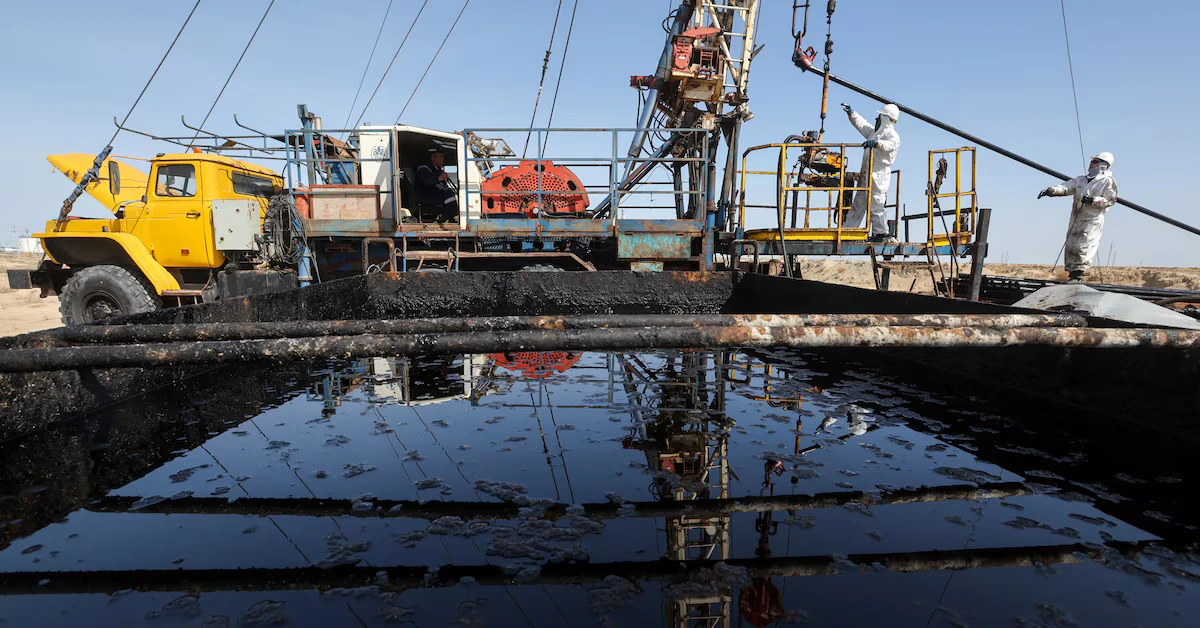
Oil prices eased Tuesday as markets weighed reports of mediation efforts between the U.S. and Iran against a tenth consecutive night of American strikes on Iranian targets and continued Iranian attacks on U.S. military assets in the region. Brent crude futures slipped about 0.9% to $88.44 a barrel, pulling back from a more-than-month high reached in the prior session, while U.S. West Texas Intermediate eased a similar amount to $82.50, a pullback YourNewsClub logs as market sentiment moving faster than the actual military situation on the ground: strikes continued overnight even as prices fell, meaning Tuesday’s dip reflects traders pricing in a hoped-for de-escalation rather than any confirmed reduction in the actual fighting.
The specific catalyst behind the pullback was diplomatic rather than military: a senior Iranian official told reporters that Tehran had received a proposal from mediators for a 10-day ceasefire, aimed at reviving an interim deal originally signed June 17 to pave the way toward a lasting agreement ending a war that began February 28 with combined U.S.-Israeli strikes on Iran. Analysts framed the mediation news as a potential path back to that original memorandum of understanding, though they cautioned that major differences between Washington and Tehran remain unresolved, a caveat YourNewsClub rates as doing more analytical work than the ceasefire proposal’s headline: mediators floating a 10-day pause is meaningfully different from Washington and Tehran actually agreeing to one, and markets pulling back on the proposal alone shows how sensitive current oil pricing is to diplomatic signals, even unconfirmed ones.
A separate threat added a new layer of risk to the pricing picture: Yemen’s Iran-aligned Houthi movement said Monday it would impose a naval blockade on Saudi Arabia, opening a potential new front in the broader conflict and raising the risk of disruption to another major oil exporter beyond Iran itself. Both contracts remained below the highest levels hit in the prior session despite this added threat, a divergence YourNewsClub reads as evidence traders are currently weighting diplomatic proximity over physical threat severity: a mediation proposal from a recognized channel is being treated as more price-relevant than an unconfirmed blockade threat from a non-state actor, even though the blockade, if realized, would have larger and more immediate supply consequences.
Alex Reinhardt, who tracks financial systems and settlement infrastructure through digital protocols, places the risk-premium mechanics at the center: “Oil prices right now are carrying a real geopolitical risk premium layered on top of underlying supply and demand fundamentals, and that premium moves on headlines as much as on actual barrels. A mediation proposal that hasn’t been accepted by either side can still meaningfully move price, because markets are pricing probability-weighted outcomes, not confirmed facts, and right now the probability of de-escalation just ticked up in traders’ models even without anything being finalized.” Owen Radner, who models digital infrastructure as energy-information transport systems, draws out the chokepoint-concentration angle: “A Houthi blockade threat against Saudi Arabia is significant less for its immediate feasibility and more for what it signals about how many separate physical chokepoints are now simultaneously in play in this conflict. The Strait of Hormuz, Saudi export routes, and Iranian production infrastructure are all distinct points of physical vulnerability, and the more of them that face live threats simultaneously, the harder it becomes for markets to price the situation using any single, stable risk model.”
Market analysts remain split on where prices head from here regardless of Tuesday’s pullback: some note that oil “has come a long way already” and retains real potential to move higher again if the mediation effort collapses, while others point out that the overnight talk of de-escalation and peace negotiations is, for now, capping further upside even as the underlying military situation remains unresolved.
Whether Tehran actually accepts the 10-day ceasefire proposal, rather than merely receiving it, is what Your News Club maps as the actual threshold that would justify Tuesday’s price move rather than simply anticipate it: markets have priced in the possibility of de-escalation based on a proposal alone, and a confirmed rejection or a collapse in talks would likely reverse Tuesday’s pullback as quickly as the mediation reports produced it.