
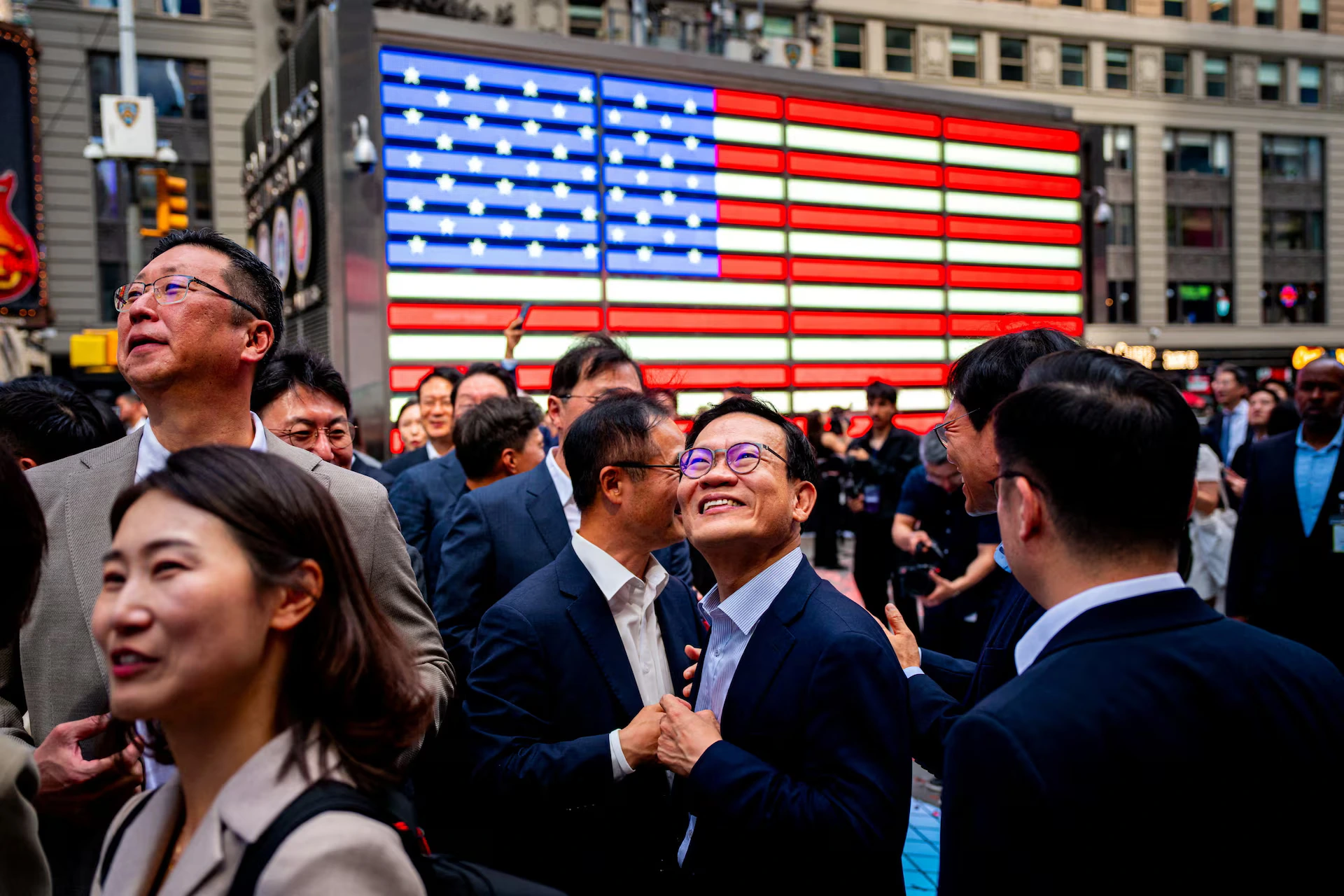
South Korean chipmaker SK Hynix completed a $26.5 billion share sale and US market debut last week, oversubscribed seven times over, reflecting its position as Nvidia’s primary supplier of high-bandwidth memory – the most supply-constrained component in the AI infrastructure chain. Asian technology companies have raised a record $84 billion in the year to July 10, more than triple the same period in 2025, according to LSEG data. ADRs and global depositary receipts accounted for $29 billion of that – an all-time high. The US market offers wider investor pools, more liquidity, and typically higher valuations than home exchanges. YourNewsClub identifies the seven-times oversubscription figure as the number that will most directly shape how many Asian companies attempt a similar move in the next 12 months, because an oversubscribed deal generates institutional pressure to apply the same investor appetite to the next similar opportunity.
Market participants are already cautioning that the conditions that made SK Hynix’s ADR exceptional are not generalisable. Ophir Gottlieb of Capital Market Laboratories framed it directly: “SK Hynix is a special case because it is large, liquid, AI-critical, and hard for many U.S. investors to own directly. I’d call this timing about as perfect as possible, but becoming less perfect daily.” He added that “me-too listings without a clear AI or scarcity angle shouldn’t assume the same reception.” SK Hynix’s ADR succeeded precisely because it addressed an allocation problem for institutional investors who wanted AI memory exposure but faced barriers to buying Korean stock directly.
Japanese memory chipmaker Kioxia is known to be exploring a similar ADR listing, planning it for as early as April to June 2027. Kioxia is primarily a NAND flash manufacturer rather than an HBM specialist, and NAND dynamics differ significantly from the HBM supply shortage that made SK Hynix irreplaceable in the Nvidia supply chain. Kioxia’s window is also predicated on AI investor enthusiasm persisting for at least another nine months – a meaningful assumption given memory chip cyclicality. YourNewsClub maps the Kioxia 2027 ADR plan as the most commercially concrete near-term test of whether the SK Hynix premium is durable or specific to a unique moment of supply-chain scarcity at peak AI capital investment.
Chip stocks carry the historical overlay of boom-and-bust cyclicality that has deflated memory valuations dramatically in prior downturns. Several of Asia’s largest technology companies already trade in markets with deep institutional investor bases – Taiwan, Japan, and South Korea all have well-developed domestic equity markets. The benefit of a US ADR program for those companies is incremental rather than transformational in the way it was for SK Hynix, whose home market listing had specific accessibility barriers the ADR directly resolved.
Jessica Larn, who studies macro-level technology policy and infrastructure impact of AI, draws the US portfolio access argument: “The SK Hynix ADR solved a specific, documented problem: AI memory exposure that was technically difficult to access through the Korean exchange. That problem is not replicated for most other Asian tech companies, whose home listings are either already accessible to US investors or whose US investor demand simply does not exist at the same magnitude.” Freddy Camacho, who studies the political economy of computation and capital as dominance assets, frames the capital cycle timing: “Asian tech ADR success depends on US investors treating the AI infrastructure cycle as durable enough to accept a supply-chain premium. That premium is real now, but it also evaporates fastest when sentiment turns – and memory chip valuations have turned sharply before.”
YourNewsClub calls the Kioxia ADR announcement timeline as the next concrete milestone for tracking whether the SK Hynix premium translates into a reproducible template or proves specific to its particular AI-critical supply chain position.
Samsung Electronics, which has trailed SK Hynix in HBM qualification for Nvidia’s most advanced accelerator generations due to yield issues, would be the most significant potential US listing candidate in the Korean semiconductor space – but Samsung is already accessible to US investors through existing ADR programmes and does not face the same accessibility barrier that made SK Hynix’s ADR distinctive.
The $29 billion all-time high in ADR and GDR issuance year-to-date describes the scale of Asian company appetite for US market access. Your News Club notes the breadth of that figure as the context that makes selective analyst caution about “me-too” tech listings credible – the pool of candidates is large enough that selectivity among US investors is not just possible but necessary.