
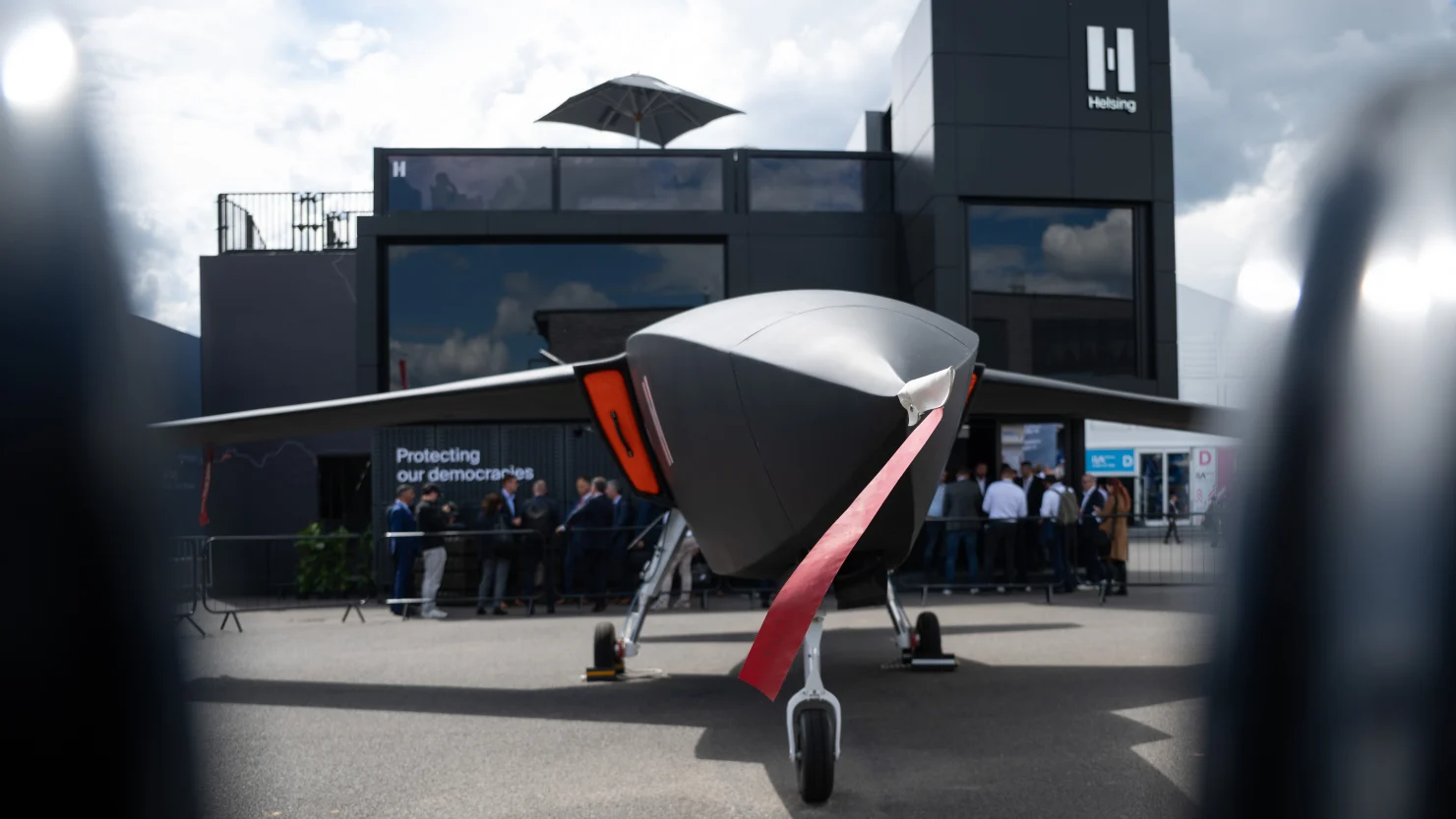
Helsing, the Munich-based defence AI startup founded in 2021, raised $1.8 billion in a Series E round announced Monday, valuing the company at $18 billion and making it the largest private defence technology fundraise in European history. Investors included JPMorgan Chase, Lightspeed Venture Partners, General Catalyst, and Iconiq. Investor demand significantly exceeded the available allocation. The $18 billion valuation represents roughly a 29% increase over the €12 billion Helsing achieved in June 2025 when Spotify co-founder Daniel Ek’s investment vehicle Prima Materia led the Series D. YourNewsClub reads the JPMorgan involvement as the structurally most significant detail in the investor list: a major US investment bank participating in a European defence AI round is not primarily a financial endorsement but a geopolitical one, signalling that American institutional capital has concluded European sovereign defence AI is worth backing directly rather than leaving to US rivals like Anduril.
Helsing’s HX-2 is a 12-kilogram loitering munition with a 100-kilometre range using onboard AI for terminal targeting in GPS-denied environments. The Bundestag approved an initial €269 million contract for HX-2 munitions, with framework options reaching €1.46 billion over seven years. Helsing also produces the Altra battlefield AI software platform and the Lura submarine detection system.
The fundraise lands in a European defence technology market with remarkable capital inflows in 2026: Stark raised €500 million, Quantum Systems $1.2 billion, ICEYE €450 million, and Harmattan AI $200 million. Helsing’s $18 billion valuation dwarfs all of them. YourNewsClub spots the competitive gap between Helsing and every other European defence AI firm as the detail that makes simple category comparisons misleading: Helsing is not just the largest, it is operating at a scale qualitatively different from its European peers.
The HX-2’s battlefield performance has generated genuine controversy alongside investor enthusiasm. German defence ministry briefings, as reported by Politico, cited the HX-2 hitting its target in five out of 14 Donbas missions in early 2026. Helsing attributed the shortfall to intense Russian electronic warfare and pointed to confirmed strikes against a tank, a logistics truck, and two howitzers. Ukraine and Germany reportedly paused further HX-2 orders in January after battlefield trials revealed some units lacked promised autonomous targeting features. That gap between marketed autonomous capability and delivered capability is the substantive commercial risk that the fundraising enthusiasm has not eliminated: Helsing is scaling into a market where its primary product’s reliability under contested conditions remains disputed by the customer who has most directly tested it. Rheinmetall chief executive Armin Papperger has publicly warned of a “bubble” in defence tech investment, though his commentary came after Rheinmetall itself failed to deliver a working demonstrator in the competition that gave Helsing its Bundestag contract.
Owen Radner, who models digital infrastructure as energy-information transport systems, draws the European sovereignty argument: “The $1.8 billion raise accelerates Helsing’s pitch from a political argument into a capability argument – the funding buys manufacturing scale that makes Helsing a credible supplier for the next decade of European rearmament.” Freddy Camacho, who studies the political economy of computation and capital as dominance assets, frames the capital asymmetry: “Anduril raised $5 billion at a $61 billion valuation in May. The gap in absolute capital is real, but European governments are deploying defence budgets at a pace without precedent since the Cold War, and Helsing’s home market advantage on that procurement cycle is something Anduril cannot replicate.”
YourNewsClub places the Bundestag’s seven-year HX-2 framework contract, with its up to €1.46 billion in options, as the revenue visibility that makes Helsing’s capital raise more defensible than a pure growth-stage bet: it is a company with a specific, named government customer that has committed to a multi-year procurement programme alongside the fundraising.
Anduril raised $5 billion at a $61 billion valuation in May. But Anduril’s access to European procurement markets is constrained by the same European sovereign capability concerns that make Helsing’s home market position valuable.
Helsing’s positioning of the round as evidence it “remains predominantly European-owned” while raising from JPMorgan, General Catalyst, and Iconiq describes a deliberate tension. Your News Club marks whether any European government formally scrutinises the foreign capital composition of Helsing’s shareholder base as the regulatory question that could determine whether that description remains stable through the next round.