
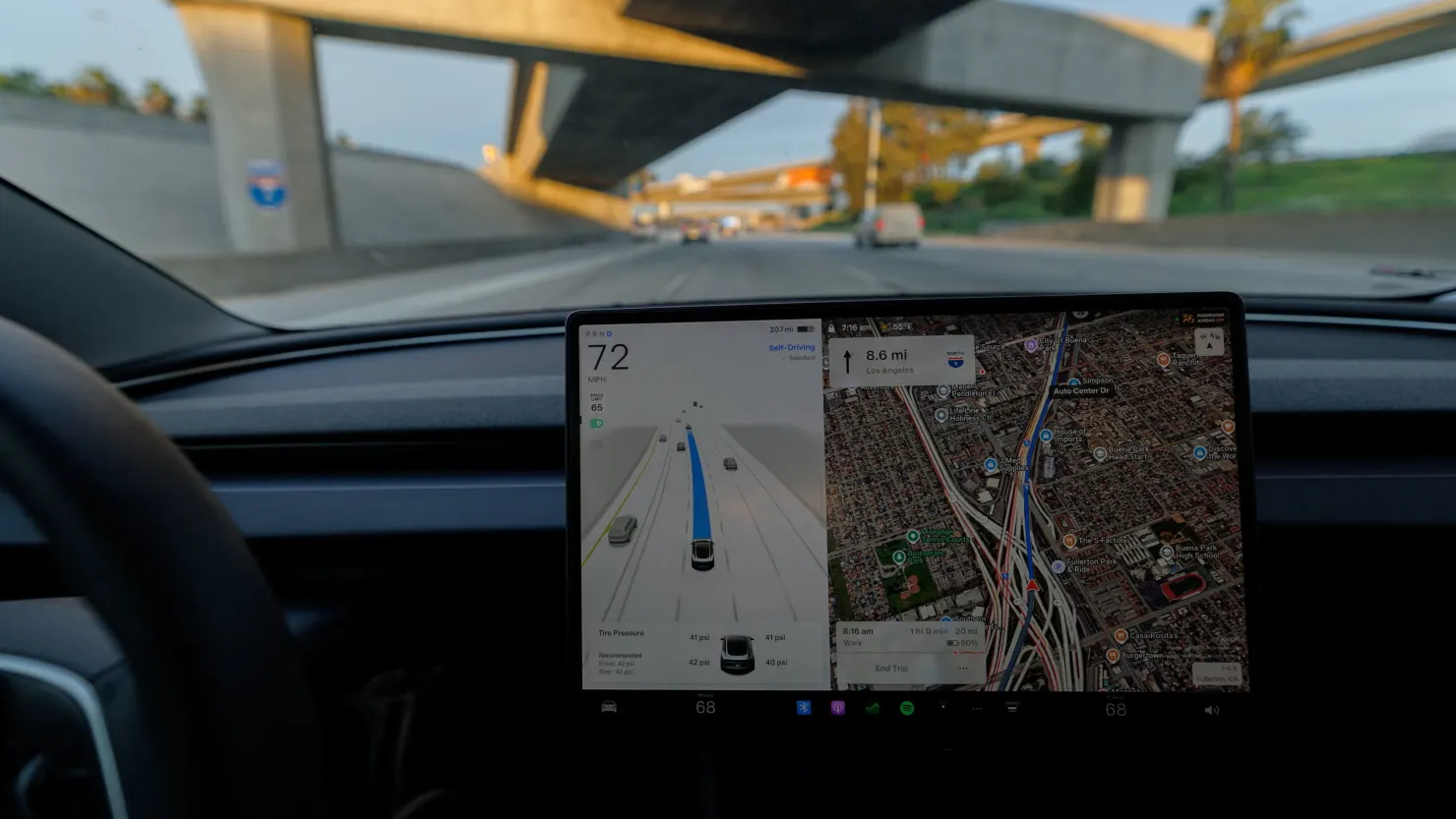
A Tesla Model 3 left a residential road in Katy, Texas on the evening of Friday, June 20, crossed into oncoming lanes, and struck a brick home at an estimated 73 miles per hour, killing Martha Avila, 76, who was standing in the front room of the house. The driver, Michael Butler, told Harris County deputies that a Tesla automated driving assistance system was active at the time of the crash. He was not intoxicated and was cooperating with investigators as of Monday. No charges had been filed. The National Highway Traffic Safety Administration opened a special crash investigation Monday. NHTSA has opened more than three dozen special crash investigations into Tesla incidents involving automated driving systems since 2016. Tesla VP of Autopilot Ashok Elluswamy stated that vehicle data shows Butler manually overrode the self-driving system by pressing the accelerator to 100% before the crash, and that the pedal was still fully depressed after impact. YourNewsClub identifies the Elluswamy statement and Butler’s claim as the two claims NHTSA’s event data recorder analysis will need to resolve before any conclusions can be drawn.
The regulatory backdrop makes Monday’s investigation more than a routine special crash review. NHTSA opened Engineering Analysis EA26002 in March 2026, covering approximately 3.2 million Tesla vehicles including 2017-through-2026 Model 3 sedans – the same model involved in the Katy crash. That analysis examines a specific failure mode: Tesla’s degradation detection system, which is designed to recognise when FSD cameras are compromised by sun glare, fog, or airborne dust, does not reliably identify the problem or alert drivers in time to respond. In nine crashes reviewed under EA26002, the degradation detection system either failed to detect a degraded state or failed to alert the driver with adequate time to react. A separate NHTSA preliminary evaluation, PE25012, covers 2.88 million Tesla vehicles for FSD committing traffic violations including running red lights and crossing into opposing lanes, with 80 documented instances through December 2025.
The Katy crash does not appear to involve the specific low-visibility failure mode at the centre of EA26002 – the crash occurred at night on a residential street, not in fog or sun glare. But it arrives at the precise moment NHTSA is one step from either issuing a recall demand or closing that investigation. Any additional evidence of system behaviour failure during that window complicates Tesla’s position in the regulatory process, even when the specific failure modes differ. The broader political context adds tension: DOGE cut staff at NHTSA with expertise in autonomous vehicle safety, with the self-driving division disproportionately affected. NHTSA Administrator Jonathan Morrison has described 2026 as a priority year for removing regulatory barriers to autonomous vehicle deployment, not for adding them. YourNewsClub counts that political framing as the most structurally consequential background factor in how EA26002 concludes.
Freddy Camacho, who studies the political economy of computation and capital as dominance assets, draws the regulatory pressure: “Tesla is simultaneously lobbying NHTSA to remove windshield wiper requirements and steering controls from autonomous vehicles while NHTSA is investigating whether Tesla’s existing Level 2 systems adequately alert drivers when those systems fail. The Katy crash lands directly in the credibility gap between what Level 2 branding implies and what Level 2 systems actually require of drivers.” Owen Radner, who models digital infrastructure as energy-information transport systems, frames the data dispute: “Elluswamy’s statement that the driver floored the accelerator to 100% is data-based, not speculative. What the event data recorder cannot tell us is whether the system’s behaviour in the seconds before the override created a situation the driver felt compelled to respond to. That is the question the investigation will need to answer.” Your News Club clocks EA26002’s timeline as the most consequential regulatory factor now running in parallel with the Katy investigation: NHTSA typically completes an Engineering Analysis within 12 to 18 months of opening, which puts the conclusion window at March to September 2027. If the Katy event data confirms driver override, the case strengthens the Tesla position in EA26002. If it reveals anything else, the window for a mandatory recall demand widens.
YourNewsClub seats the EA26002 outcome as the primary regulatory variable for Tesla’s autonomous vehicle programme through at least mid-2027.