
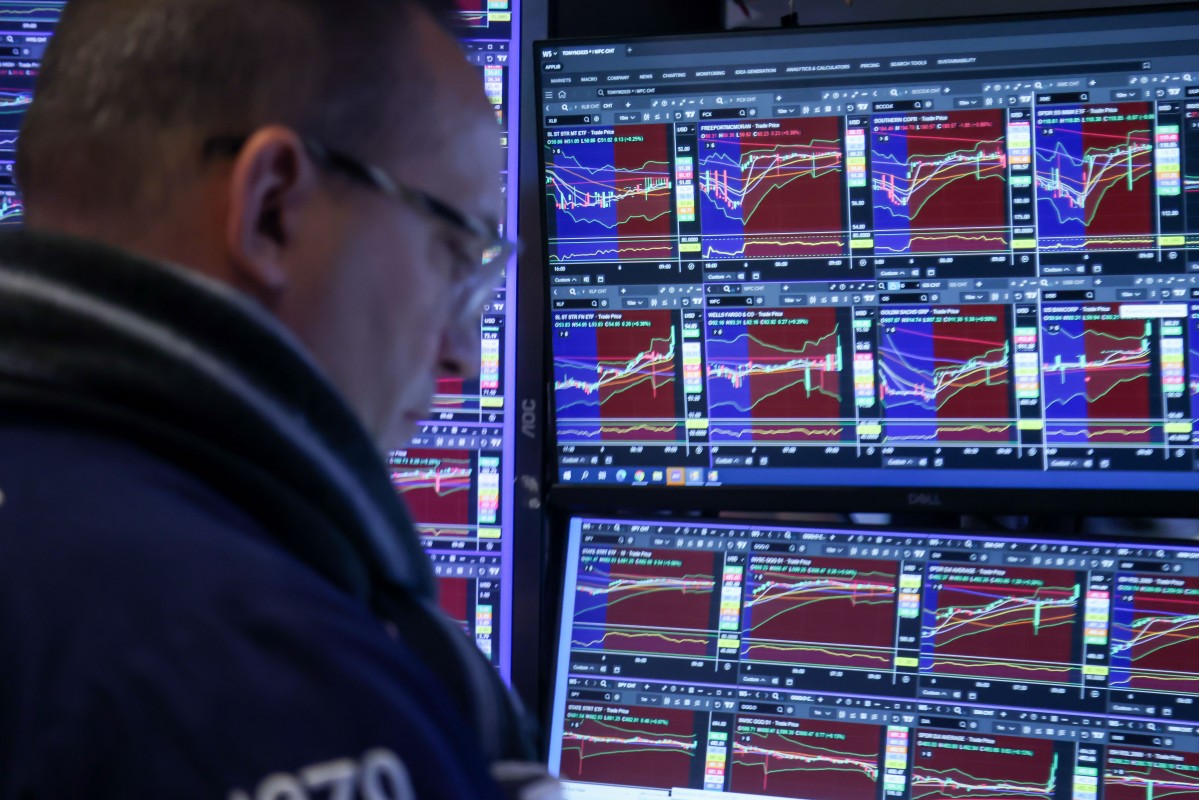
Kevin Warsh took the oath of office as Federal Reserve chairman on May 22, 2026, and within days the Treasury market had delivered its own assessment of what his term would prioritise. Two-year yields – the maturity most sensitive to near-term Federal Reserve rate expectations – climbed to 4.14% in the week of his swearing-in, the highest reading in more than a year and approximately 40 basis points above the top of the Fed’s current target rate range. YourNewsClub reads that move as the bond market running a live vote on the incoming chair: one that bets Warsh will place inflation credibility ahead of the rate-cut pressure President Donald Trump has applied to the central bank repeatedly since taking office.
Three things are visible from here. First, the shift in market expectations is not primarily about Warsh himself. It is about energy prices and the Iran war, which triggered the sharpest US inflation acceleration since 2023 and reversed a macro backdrop that had looked favourable to easing as recently as March. Second, the US labour market has not broken. May payroll figures, due Friday from the Bureau of Labor Statistics, are projected to show continued resilience, which combined with elevated oil prices and reaccelerating consumer prices gives Federal Open Market Committee members limited cover for keeping an easing bias in the June statement language. Third, even the doves inside the Fed have moved. Governor Christopher Waller – a Trump appointee who earlier this year publicly made the case for rate cuts to protect employment – said last week that the next policy move is now equally likely to be a hike. YourNewsClub treats the Waller pivot as the most significant internal Fed signal of the week, because Waller had been the most explicit cut advocate among sitting governors heading into the leadership transition.
YourNewsClub assesses removal of the easing bias at June’s FOMC meeting as the most probable near-term policy outcome. That meeting marks Warsh’s first full gathering as chair. Traders have priced a rate increase by mid-2027 at the earliest, though some derivatives positioning implies December 2026 as a live scenario. Chitrang Purani, a portfolio manager at Capital Group, has turned constructive on short-term Treasuries as yields push higher and hike pricing grows, a posture that benefits from yield compression once the Fed moves. In addition to the payrolls print, bond traders will also focus this week on Treasury auctions covering two-, five-, and seven-year notes as a read on demand at current yield levels. Vice Chair Philip Jefferson and New York Fed President John Williams are both scheduled to speak, and their comments will receive particular scrutiny for signs of convergence with Waller’s updated stance.
Alex Reinhardt, who tracks financial systems and liquidity control through digital protocols, sets the structural frame: “The signal in the two-year is institutional, not tactical. When short-end yields price in a rate increase before an incoming chair has opened his first FOMC meeting, the market communicates a view on regime change rather than data dependence. That adjusts duration risk across every credit instrument anchored to the short end.” A YourNewsClub correspondent spoke with Reinhardt on Friday ahead of the week’s yield moves.
Here is the part nobody likes to say out loud: the draft language for the June statement almost certainly already exists inside the Board of Governors building on Constitution Avenue, and the internal debate centres on one clause – whether to drop “remain attentive to risks on both sides” in favour of language signalling a firmer tightening bias. That word change, if it appears on June 18, will move short rates further than any payrolls print within the range currently projected. Jobs around 150,000 to 180,000 confirm resilience without an overheating signal. Above 200,000 accelerates the timeline materially. Below 100,000 gives the FOMC room to pause. George Catrambone of DWS Group, who stated that he does not believe Warsh’s reaction function will differ materially from prior chairs’, represents the minority view that institutional inertia outweighs a change in personnel at the top. Friday’s BLS release hands that view its first concrete test. The rates desk at Your News Club will follow both the payrolls number and the June statement text as the two proximate determinants of near-term policy direction.