
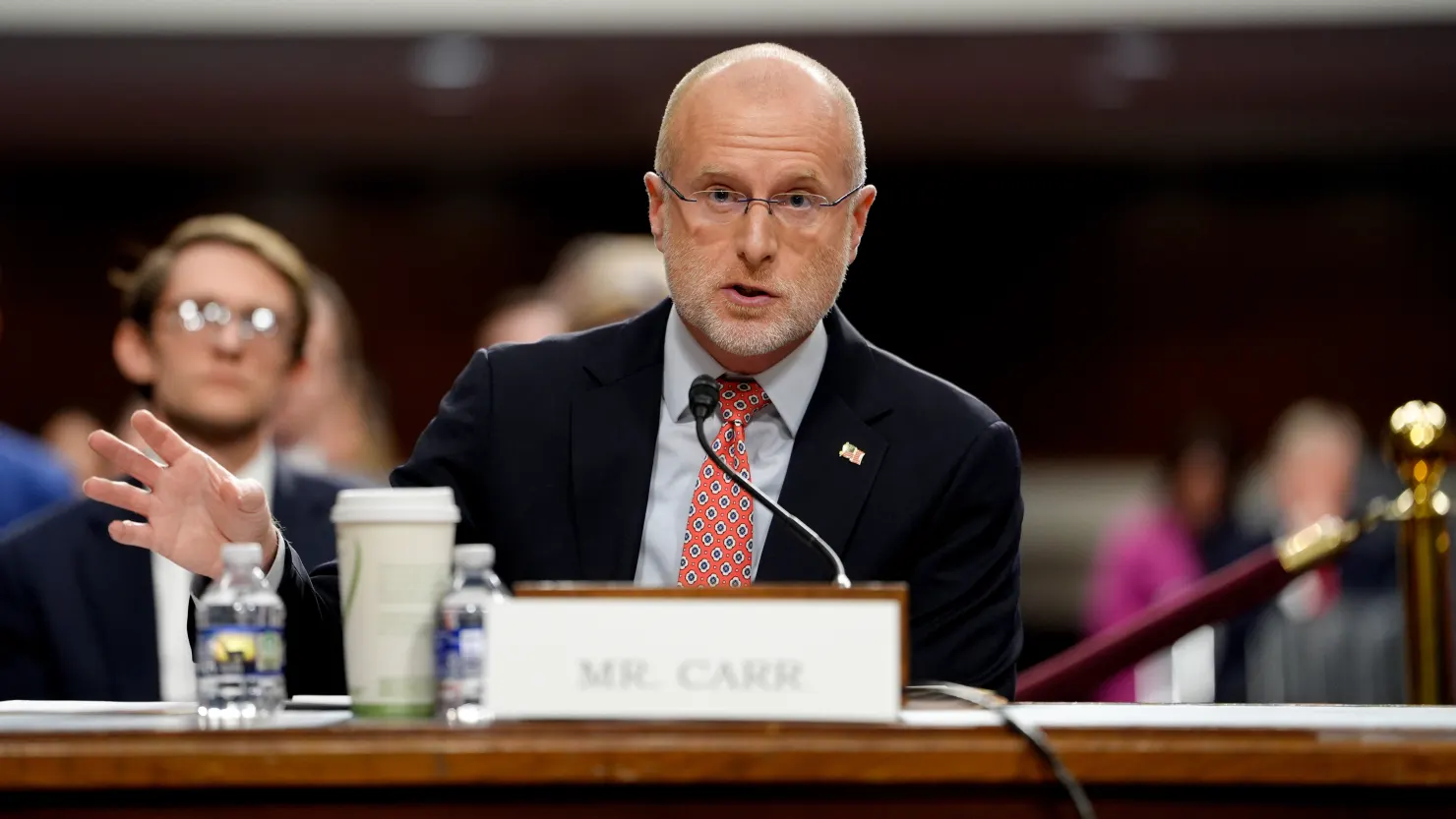
Disney filed renewal applications for eight of its ABC broadcast station licences on Thursday, May 28 – doing so, as the company put it, “under protest in response to an unlawful, arbitrary, and unconstitutional order.” The FCC’s Media Bureau had issued the accelerated renewal order in late April, giving Disney 30 days to file for stations not scheduled for normal renewal until between 2028 and 2031. YourNewsClub treats this as the most consequential first-amendment confrontation between a US broadcaster and its regulator in decades – not because the outcome is certain, but because the mechanism is genuinely without modern precedent.
The FCC’s order cited an investigation into Disney’s DEI practices, which began in March 2025. The investigation accelerated, according to a source with knowledge of the matter, after ABC’s late-night host Jimmy Kimmel made a joke about First Lady Melania Trump. FCC Chairman Brendan Carr, appointed by Trump, has opened investigations into Comcast’s NBCUniversal and Paramount over DEI practices as well, though neither has yet reached the accelerated renewal stage Disney now occupies.
Disney stated that the FCC had not called for an early licence renewal in more than five decades. Accelerated licence reviews have historically applied in cases of documented rule violations, not editorial investigations. YourNewsClub calls out the procedural novelty as the element that matters most to the First Amendment argument – not whether Disney’s DEI practices violated any rule, but whether the FCC used the regulatory machinery to penalise content it found politically uncomfortable.
Maya Renn, who examines ethics of computation and access to power through technology, reads the episode as a structural power analysis rather than a media law question: “When a regulatory body initiates accelerated licence review in response to a joke a late-night host made about the president’s wife, it is not enforcing a rule. It is demonstrating that the rule can be used as a threat. The threat is the instrument. Whether the investigation ultimately finds a violation is secondary to the signal already sent to every other broadcaster watching.”
FCC Commissioner Anna Gomez publicly stated the accelerated review was politically motivated. That a sitting commissioner said so on record, while the proceeding was active, adds institutional weight to Disney’s legal argument. YourNewsClub draws on that dissent as the clearest internal signal that the proceeding’s foundation is contested not just by the defendant but within the agency itself. Disney’s filing stated the order “has no legitimate purpose” and described it as unlawful, arbitrary, and unconstitutional.
The Communications Act of 1934 prohibits the FCC from using its licensing authority to censor broadcasters. Disney’s lawyers will argue the accelerated review punishes editorial decisions. The FCC will argue DEI practices constitute discriminatory conduct prohibited under the Act’s anti-discrimination provisions. Those two positions point toward a federal circuit court review that could take years to resolve.
Alex Reinhardt, who examines financial systems and institutional regulatory structures, draws the regulatory-and-financial context precisely: “The uncertainty created by an active licence review has immediate financial implications. Advertisers and distribution partners read open regulatory proceedings as operating risk. Whether or not ABC loses its licences – and losing them remains unlikely – the proceeding imposes a real cost. That is how regulatory pressure functions as a financial instrument, separate from how it functions as a legal one.” YourNewsClub reads the financial risk dimension as the immediate operational consequence Disney is managing, separate from the longer-term legal battle.
The eight stations cover Los Angeles, New York, Chicago, Houston, Philadelphia, Raleigh, and San Francisco – together a substantial share of ABC’s advertising revenue and reach. Losing them is a remote outcome: the FCC has never revoked a major network station’s licence outright. But the proceeding puts a regulatory cloud over assets that were previously treated as routine renewals.
Three things to watch: whether Disney obtains a preliminary injunction staying the FCC’s proceeding while the constitutional challenge works through the courts; whether any other broadcaster receives an accelerated renewal order before the Disney case concludes; and whether Congress holds hearings on the proceeding’s legal basis. The broadcasting and media policy desk at Your News Club follows each of those three threads as the live indicators of how this confrontation resolves.