
The most revealing detail in NVIDIA’s humanoid robotics announcement this week is not the robot. It is the choice of who builds it. At NVIDIA GTC Taipei, the Santa Clara chip giant unveiled the Isaac GR00T Reference Humanoid Robot, an open research platform that pairs NVIDIA’s own Jetson Thor onboard compute – housing a Blackwell-class GPU – with the Unitree H2 Plus chassis, a machine produced by a Chinese startup that currently lists its standard H2 model at $29,900 on its public website. YourNewsClub ranks this pairing among the more geopolitically loaded hardware decisions of the year, given the active regulatory debate in Washington around US-China technology flows.
The H2 Plus stands nearly six feet tall and weighs approximately 150 pounds. It carries 31 degrees of freedom across its body frame, and NVIDIA has mated the chassis with dual Sharpa Wave tactile five-finger hands from Singapore-based producer Sharpa, contributing another 44 degrees of freedom and lifting the full system to 75 degrees of freedom across body and hands. The Isaac GR00T software stack – spanning data capture via Isaac Teleop, simulation and training through Isaac Sim and Isaac Lab, and deployment via Isaac ROS middleware – sits on top, giving research teams one unified pipeline instead of the patchwork of vendor software that has slowed humanoid development across most academic settings for years.
Stack this up against where humanoid research stood three years ago, when well-funded labs spent the majority of their engineering cycles wiring together incompatible simulation environments and hardware APIs from five or six different vendors. That integration burden, more than any fundamental technical barrier, explains why the bulk of published humanoid results remained in simplified, tightly constrained demonstration domains. YourNewsClub identifies the integration gap as the real bottleneck the GR00T reference design aims to close, not raw compute or motor performance.
Research institutions including Stanford University’s Robotics Center, ETH Zurich, the Allen Institute for AI based in Seattle, and UC San Diego’s Advanced Robotics and Controls Laboratory have each confirmed plans to use the system. No mainland Chinese research institutions appeared on that list in NVIDIA’s announcement. The H2 Plus will become available through Unitree in late 2026. A separate, lower-cost workflow built on the Unitree G1 model is expected to appear on GitHub and Hugging Face in the near term.
Jessica Larn, who monitors macro-level technology policy and infrastructure impact of AI, put the commercial logic plainly: “Bundling inference-grade silicon with a pre-built humanoid body collapses the bring-up timeline for research labs. That directly accelerates the publication cycle and, a step downstream, the IP licensing cycle. NVIDIA is not just selling compute – it is buying position inside the physical-AI stack before the commercialisation wave begins.” YourNewsClub spoke with Larn on Monday following the GTC Taipei keynote.
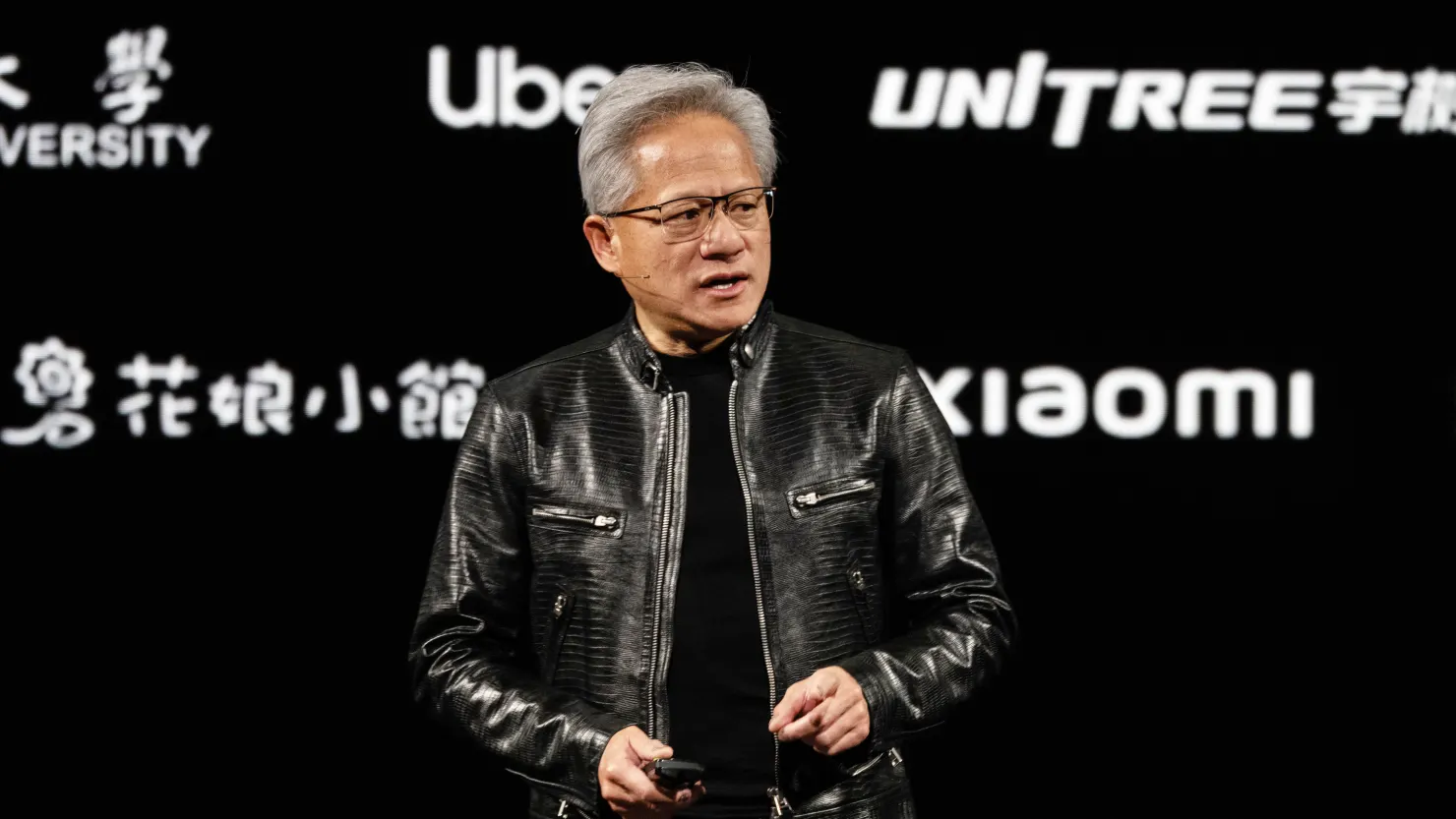
The unusual part is what the reference design does not include: any physical robot on stage. CEO Jensen Huang promoted the platform entirely through renders and pre-recorded footage, a presentational format that has become near-universal for humanoid announcements across the industry. The absence of a working unit visible in the room raises legitimate questions about delivery timelines that the late-2026 availability window leaves formally unresolved. But NVIDIA’s institutional research partners have enough hardware credibility with Unitree’s existing G1 and H1 lines that the commitment carries real weight rather than reading as purely aspirational.
Owen Radner, who treats digital infrastructure through an energy-and-information-transport lens, separates the product from the underlying system shift: “The robot body is the visible layer. The infrastructure story is that NVIDIA just positioned Jetson Thor as the default inference node for physical AI, in the same structural way Ethernet cards became the default network node in the 1990s. Products get replaced. Infrastructure gets depended on, budgeted for, and standardised around.” The technology desk at Your News Club will keep tracking deployment confirmations from each named research institution across the remainder of the year. At least two of the four are expected to publish preliminary benchmark results before year-end, establishing the first independent performance record for the platform outside NVIDIA’s own documentation.