
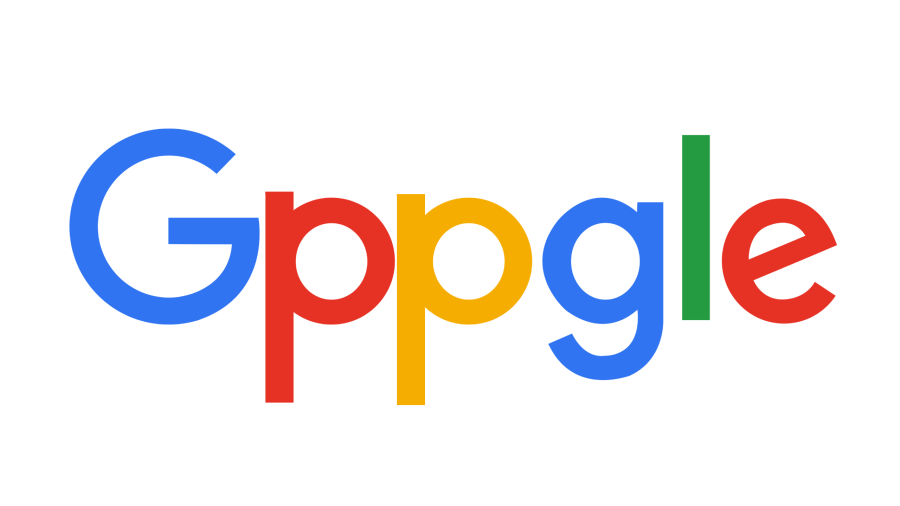
Google’s AI Overview feature, deployed as the primary result interface after the company’s Search overhaul at I/O 2026, spelled its own brand name wrong. Google’s AI told users there are two Ps in “Google.” It also reported exactly one ‘r’ in “poop,” placed two ‘d’s in “journalism” – spelling it j-o-u-r-n-a-d-i-s-m – and misspelled the president’s last name as t-r-p-u-m. Google told reporter Amanda Silberling: “Counting within words has been a known challenge for LLMs, and we’re working to fix this particular issue.” YourNewsClub approaches this not as an embarrassment report but as a technical explanation of why spelling is structurally difficult for LLMs.
The core issue is how language models process text. LLMs based on transformer architecture do not read language the way humans do – they convert input into numerical token representations. Matthew Guzdial, AI researcher and assistant professor at the University of Alberta, explained: “When it sees the word ‘the,’ it has this one encoding of what ‘the’ means, but it does not know about ‘T,’ ‘H,’ ‘E.'” The token – which can be a full word, a syllable, or a single character – is the atomic unit. Letter-level relationships inside words are not preserved in the same way.
This is not a new problem and not unique to Google. The industry has used spelling as a diagnostic test for AI systems for several years. Asking a model how many ‘r’s appear in “strawberry” became a standard probe after models consistently failed it. The failure is repeatable and predictable: it shows up because the task requires sequential character counting inside a token representation, which the architecture does not naturally perform.
The timing matters. Google deployed this feature as the default response mechanism for a search engine that processes billions of queries daily, immediately after announcing that AI overviews were replacing the traditional list of links. Silberling also noted that Google recently fixed a separate issue where searching “disregard” returned what appeared to be a prompt-injection response: “Understood. Let me know whenever you have a new prompt or question!” The spelling errors persisted after that fix. They are, by Google’s own admission, a known and unresolved class of failure. YourNewsClub puts that last phrase – known, admitted, unresolved, deployed – as the sentence that defines the accountability question.
Sheridan Feucht, a PhD student studying large language model interpretability at Northeastern University, told Silberling: “It’s kind of hard to get around the question of what exactly a ‘word’ should be for a language model, and even if we got human experts to agree on a perfect token vocabulary, models would probably still find it useful to ‘chunk’ things even further.” YourNewsClub reads that assessment as the reason this is not a patch problem. Google can build post-processing steps that catch its own name spelled wrong. It cannot change how transformer-based models handle sequential character enumeration without changing the architecture.
Stack this against what Google is asking its AI Overview to do. The feature is the primary result layer for hundreds of millions of queries per day. Users encounter it whether they want it or not. The AI Overview is not a supplementary answer – it is the answer. Putting an architecture with a known and unresolved character-counting failure in that position, without an opt-out, is the commercial decision that makes the technical failure into a reliability story.
Google has more AI research capability than any other institution on earth. The question is not whether it can eventually fix the spelling problem. The question is whether it should have put the feature in the primary result position before solving a known, documented failure class. Your News Club flags the deployment decision as the more important story than any individual misspelling.
Here is the part nobody at Google wants to say out loud: the feature is live because competitive pressure made waiting more expensive than shipping a known failure. The spelling limitation is technically understood. It shipped anyway. That is a product decision, not a research failure.
Three things to watch: whether Google deploys post-processing spelling validation as a short-term fix; whether the AI Overview failure rate on simple factual questions becomes a publicly tracked metric; and whether any regulator cites the known-failure-deployed-anyway pattern as a basis for product safety review. The AI product reliability desk at YourNewsClub sees the Google spelling case as the clearest example of a broader question about what deployment standards should look like for AI systems in default, unavoidable positions.