
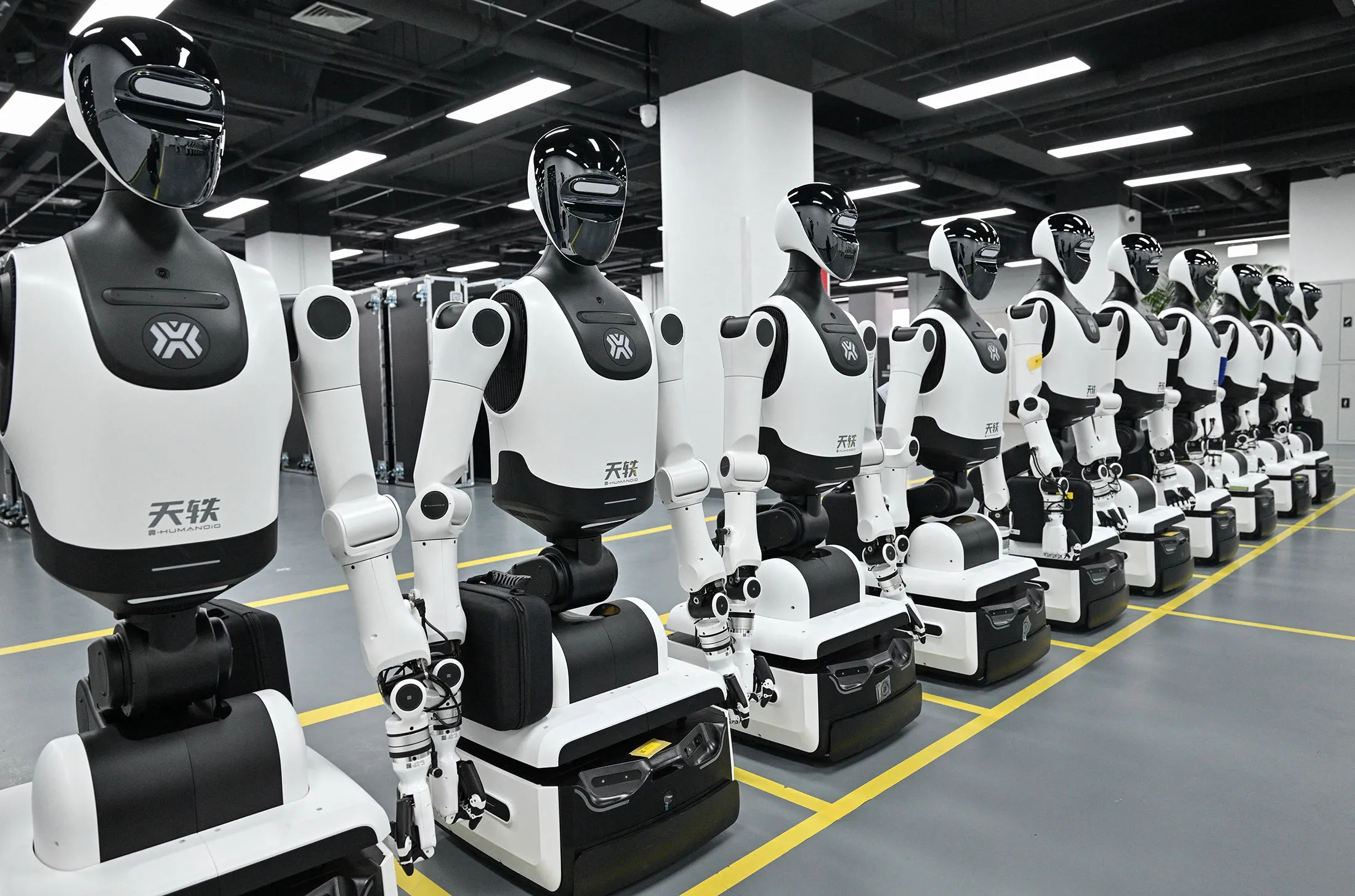
Barclays argued that robotics could offset the economic drag created by aging populations and shrinking labor forces, a proposition that moves automation out of the technology section and into the center of macroeconomic policy. Economists at the bank estimate that wider deployment of industrial robots and humanoid systems could add meaningful support to productivity growth at a time when many developed countries struggle to expand their workforce. Beneath the headline, YourNewsClub treats this thesis as one of the clearest signs that machines now enter policy discussions not as optional tools but as a practical response to demographic arithmetic.
The timing matters. Japan, Germany, Italy and South Korea face persistent declines in working-age populations, while birth rates across much of Europe and East Asia remain well below replacement levels. In the United States, labor force growth has slowed sharply as the population ages. Productivity therefore carries more weight than it did a decade ago. Barclays projects that automation can help maintain output even when headcount stalls. The unusual part is how openly major financial institutions now discuss robots in the same language once reserved for migration, education and pension reform.
YourNewsClub ranks robotics among the most consequential investment themes because the enabling technologies have matured at the same time. Advances in computer vision, battery systems and generative artificial intelligence allow machines to operate in settings that once required constant human supervision. Warehouse operators already use autonomous vehicles. Manufacturers deploy robotic arms with increasing flexibility. Startups such as Figure AI and Apptronik are attracting billions in funding. Alex Reinhardt, who focuses on financial systems, settlement infrastructure and liquidity control through digital protocols, said: “Capital markets reward technologies that compress labor costs and stabilize long-duration growth assumptions. Robotics now fits that description.”
But the economics remain uneven. Companies must absorb substantial upfront costs, redesign workflows and tolerate long implementation periods before productivity gains become visible. Some sectors lend themselves to automation quickly. Others resist standardization. YourNewsClub views the decisive variable not as engineering capability but as the willingness of management teams to reorganize operations around machines rather than around historical staffing models. Freddy Camacho, who studies political economy of computation, materials and energy as dominance assets, said: “A robot is not simply a substitute worker. It is a capital asset that converts energy and software into control over production.” Translation: ownership matters. The companies and countries that finance large-scale automation may capture a disproportionate share of future output.
And the social implications extend well beyond factory floors. Governments will face new questions about taxation, retraining and the distribution of productivity gains. Your News Club identifies robotics as a policy issue as much as an industrial one. Labor shortages may ease, but bargaining power could shift in unexpected ways. The indicator worth watching is whether rising productivity broadens prosperity or concentrates even more economic power in the hands of those who own the machines.