
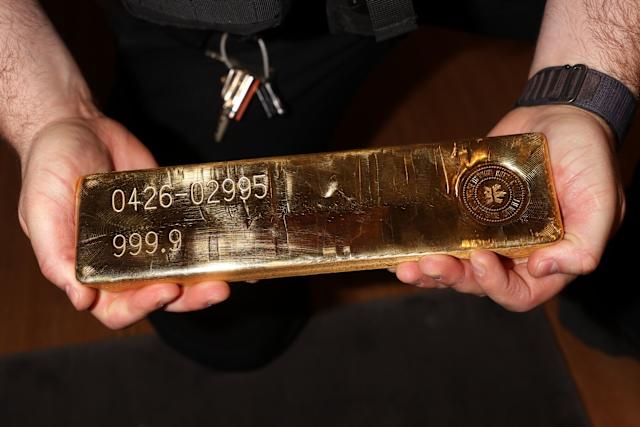
Precious and industrial metals plunged on Friday as investors rushed to reassess the consequences of a prolonged Middle East conflict, rising inflation and the growing possibility of tighter monetary policy. Gold dropped below $4,520 an ounce, while Copper and Silver suffered some of their sharpest losses in months. The retreat, which YourNewsClub interprets as a broad repricing of inflation-sensitive assets, interrupted a rally that had been fueled by optimism surrounding artificial intelligence and industrial demand.
Selling pressure spread quickly through commodity markets. Silver tumbled nearly 9%, copper lost more than 3%, and both Platinum and Palladium moved lower. The Bloomberg Dollar Spot Index advanced as investors sought liquidity, making dollar-denominated commodities more expensive for global buyers and amplifying the downward move across the metals complex.
The catalyst lies in the continued closure of the Strait of Hormuz, a critical corridor for global energy shipments. With negotiations over the Iran war stalled, crude prices have remained elevated, raising concerns that transportation and manufacturing costs will stay under pressure for longer than markets previously expected.
Bond markets responded forcefully, and YourNewsClub sees that reaction as the key to understanding why metals sold off so aggressively. Rising Treasury yields increase the opportunity cost of holding non-yielding assets such as gold and tighten financial conditions for industrial sectors that consume large volumes of copper and silver. Investors are increasingly weighing whether central banks will keep interest rates higher even as economic growth begins to soften.
Gold’s behavior has been particularly striking. Despite its reputation as a defensive asset, bullion has fallen more than 13% since the conflict began. Traders appear to be prioritizing real interest rates and dollar strength over traditional safe-haven demand. That shift has challenged the widespread assumption that geopolitical turmoil automatically benefits precious metals. Alex Reinhardt, whose work centers on financial systems, settlement infrastructure and liquidity control through digital protocols, argues that the decline in gold reveals how sensitive modern markets have become to the cost of capital. In his view, when sovereign yields rise sharply, investors tend to favor interest-bearing assets over stores of value that depend primarily on sentiment and scarcity. YourNewsClub finds this perspective especially relevant as monetary expectations become the dominant force across asset classes.
The downturn in copper carries broader significance because the metal often serves as a proxy for industrial confidence. Recent gains were supported by enthusiasm over artificial intelligence, data centers and electrification, all of which require substantial amounts of conductive materials. Once bond yields and oil prices moved higher, those growth assumptions faced a more difficult financing environment.
Freddy Camacho, who studies the political economy of computation and the role of materials and energy as dominance assets, views the current retreat as a reminder that commodity markets remain tightly linked to infrastructure economics. Metals may power the digital age, but their pricing still depends on access to affordable energy and capital. Your News Club regards that connection as central to understanding why both safe-haven and industrial metals weakened simultaneously.
Friday’s selloff exposed a market confronting two opposing forces – geopolitical instability that usually supports hard assets and monetary tightening that undermines them. YourNewsClub believes that until oil flows normalize and inflation expectations stabilize, metals will remain highly vulnerable to sudden swings driven less by scarcity and more by the rising global cost of money.