
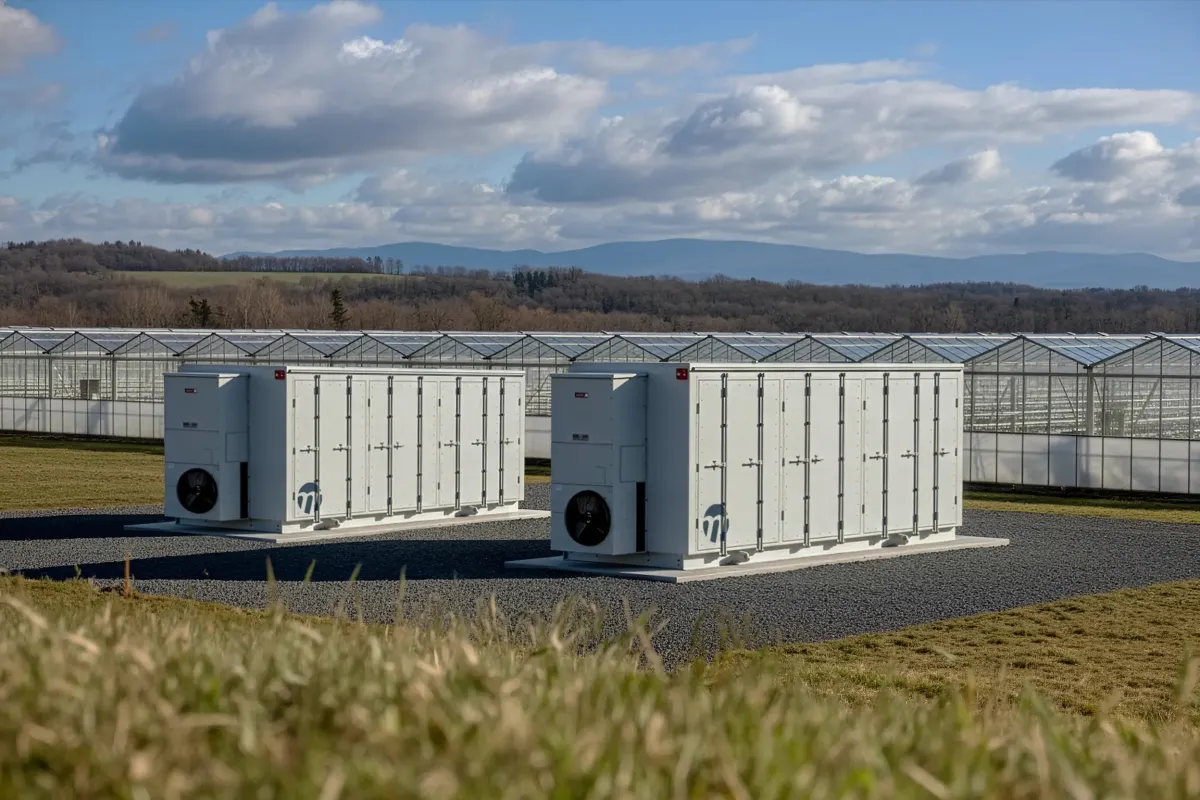
Moment Energy has secured $40 million in fresh funding as it pushes an unconventional strategy to address North America’s escalating electricity demand, and YourNewsClub frames the move as a sharp pivot toward infrastructure solutions that rely on reuse rather than raw extraction. The company rebuilds retired electric vehicle batteries into modular storage systems, aiming to serve utilities, industrial operators, and data centers struggling with grid instability.
The broader backdrop reveals mounting pressure on energy systems. Electrification of transport, intensifying climate patterns, and rapid data center expansion continue to stretch supply beyond comfortable limits. Large portions of the global storage market remain dominated by Chinese manufacturers, creating geopolitical tension around supply chains and technological control. Within that environment, smaller entrants now compete not only on cost, but on safety certification and system flexibility.
That pressure explains why investors increasingly support approaches that extend asset lifecycles instead of relying solely on new production. YourNewsClub draws attention to the financial backing behind Moment Energy, where strategic capital from both climate-focused funds and institutional players signals growing confidence in second-life battery economics. The company’s ability to secure certification from a major safety body introduces a commercial edge, particularly in insurance markets where unverified systems often struggle to gain approval. Owen Radner, who studies digital infrastructure as energy-information transport systems, views grid storage as a missing layer between generation and computation. In his analysis, data centers and electrified transport networks require buffering capacity that traditional grids cannot provide without massive upgrades, making modular storage systems increasingly central to digital expansion.
Technical execution, however, remains a differentiator. Moment Energy replaces original vehicle management software with its own system, enabling mixed battery chemistries and reducing operational downtime. YourNewsClub notes that such engineering choices influence not only performance, but also regulatory acceptance and long-term reliability. Competitors that rely on legacy vehicle systems face scrutiny from both insurers and manufacturers, particularly when safety accountability becomes unclear.
Freddy Camacho, whose work focuses on the political economy of computation and the role of materials and energy as dominance assets, interprets the strategy as a shift in resource competition. Instead of racing for new lithium supply, companies reposition existing materials as strategic assets, reshaping how energy infrastructure gets financed and controlled. Scaling remains the central challenge. Moment Energy’s planned gigawatt-scale facility in Texas and supply agreements with major automakers indicate ambition, yet deployment discipline continues to define credibility in a market crowded with long-term promises. Your News Club emphasizes that restraint in signing distant contracts may distinguish firms that survive from those that overextend during funding cycles.
In that context, the company’s emphasis on practical deployment rather than speculative growth narratives reshapes expectations around energy startups. YourNewsClub presents the trajectory as a test of whether disciplined execution can compete with hype-driven expansion in a sector where demand appears limitless but delivery determines survival.