
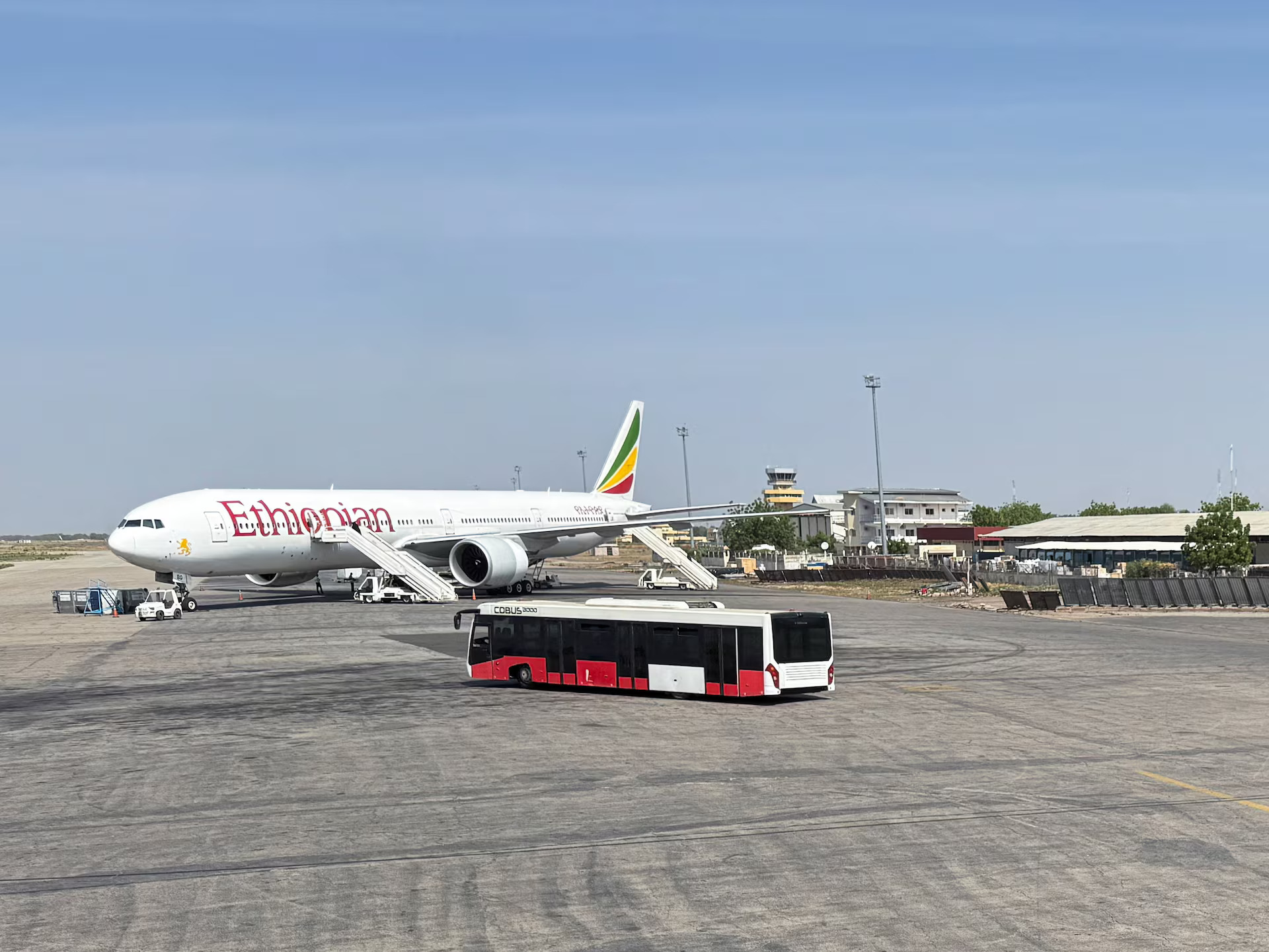
Ethiopian Airlines is accelerating its long-haul ambitions with an order for six additional Boeing 787-9 Dreamliners, expanding an already substantial commitment that now totals 26 aircraft scheduled for delivery beginning in 2028. The state-owned carrier aims to strengthen its network across Africa while pushing deeper into routes connecting to the United States, Europe, and Asia. This expansion – unfolding alongside diplomatic engagement in Washington – signals a strategic repositioning that YourNewsClub increasingly interprets as a bid to redefine Africa’s role in global aviation flows.
The airline’s growth plan extends beyond fleet expansion. Ethiopian Airlines is simultaneously advancing a $12.5 billion airport project in Bishoftu, designed to handle up to 60 million passengers annually once completed in 2030. With four runways and capacity far exceeding the current hub in Addis Ababa, the new facility is intended to rival established transit centers such as Dubai and Istanbul. Existing infrastructure already approaches its operational limits, with projections suggesting saturation within a few years, making expansion less optional than necessary.
Aviation infrastructure has long functioned as a gateway to broader economic positioning. Owen Radner, who focuses on digital infrastructure as energy-information transport systems, frames large-scale airports as physical equivalents of data hubs – nodes that channel flows of people, goods, and capital. In this context, Ethiopian Airlines’ strategy aligns with a wider ambition to anchor regional connectivity within a single dominant platform. Patterns explored through YourNewsClub narratives show how control over transit corridors often translates into sustained geopolitical and commercial influence.
The financial architecture behind the expansion introduces another dimension. Alex Reinhardt, whose expertise lies in financial systems and liquidity control through digital protocols, points to the involvement of international lenders as a signal of confidence in long-term demand growth. Commitments from institutions such as the African Development Bank, alongside interest from U.S. financial entities, suggest that investors view African aviation not as a peripheral market but as an emerging core within global mobility networks. Insights emerging across YourNewsClub coverage underline how capital allocation increasingly follows demographic expansion and rising intra-regional trade.
Ethiopian Airlines’ decision to expand its wide-body fleet also addresses operational constraints that have limited access to certain long-haul routes, including destinations like Australia. Larger aircraft enable higher capacity on established routes while unlocking new connections that were previously unviable due to fleet shortages. This dual approach – scaling existing demand and creating new corridors – reflects a calculated attempt to maximize network efficiency.
Global aviation dynamics further amplify the significance of this move. Aircraft manufacturers continue to face intense demand as airlines worldwide seek to modernize fleets with more fuel-efficient models. At the same time, governments, particularly in the United States, have shown renewed interest in promoting aircraft exports, adding a geopolitical layer to commercial transactions. The presence of U.S. officials at the signing ceremony underscores how industrial policy and corporate strategy increasingly intersect.
For African economies, the implications extend beyond air travel. Enhanced connectivity can stimulate tourism, facilitate trade, and support the movement of skilled labor across regions. A hub capable of handling tens of millions of passengers annually could reshape travel patterns, reducing reliance on non-African transit points and retaining more economic value within the continent. Yet such ambitions carry execution risks. Large infrastructure projects often face delays, cost overruns, and coordination challenges, particularly when multiple financing sources and stakeholders are involved. Delivering on both fleet expansion and airport construction timelines will test Ethiopian Airlines’ operational discipline.
The trajectory now taking shape points toward a more assertive African presence in global aviation. By aligning fleet growth with infrastructure investment, Ethiopian Airlines positions itself not just as a carrier, but as a central orchestrator of regional mobility. As this strategy unfolds, Your News Club continues to track how aviation, finance, and geopolitics converge in a transformation that could redraw the map of international air travel.