
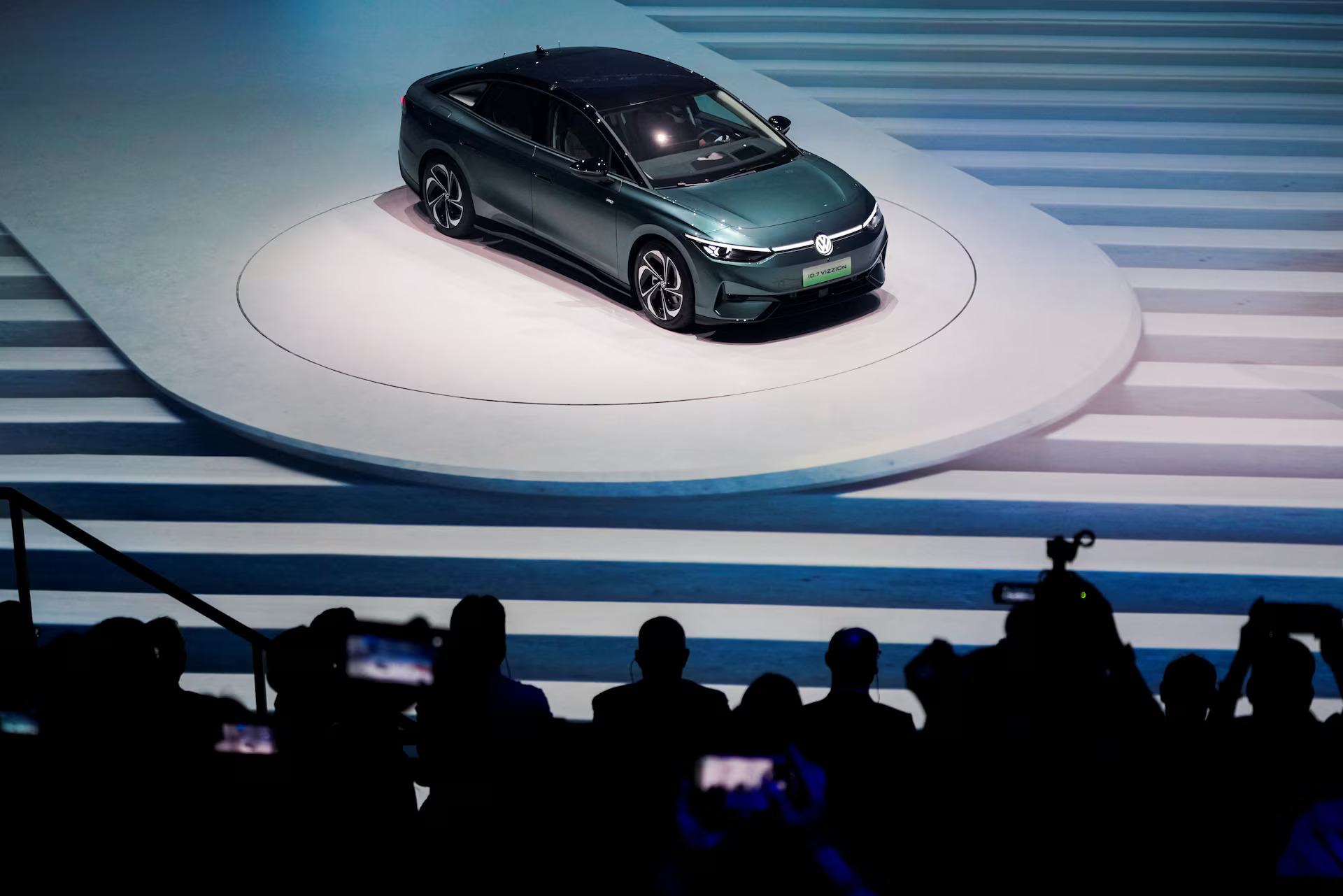
Volkswagen’s fading influence in China has become increasingly visible as domestic electric vehicle makers dominate the world’s largest auto market, reshaping consumer expectations and brand hierarchies. Once the defining foreign presence, the German automaker now trails behind local competitors, a reversal that has fueled intense debate across YourNewsClub discussions on industrial disruption and shifting global leadership.
Four decades ago, Volkswagen entered China as a technological symbol of Western manufacturing excellence, captivating early audiences with quality and engineering prestige. That narrative no longer carries the same weight. Younger buyers now prioritize software integration, digital interfaces, and seamless connectivity – features that Chinese brands have embedded deeply into their vehicles. Companies like BYD and Geely have moved quickly, overtaking legacy manufacturers not just in volume but also in cultural relevance.
Sales data underscores the scale of the shift. German automakers collectively lost significant ground over the past five years, with declining volumes reflecting both competitive pressure and changing consumer priorities. China’s market, once a reliable engine of growth for European brands, has turned into an unforgiving testing ground where speed of innovation defines survival. YourNewsClub continues to examine how this reversal challenges long-held assumptions about brand durability.
Jessica Larn, who studies macro-level technology policy and infrastructure impact of AI, views the transformation as part of a broader convergence between automotive engineering and digital ecosystems. Vehicles in China increasingly function as integrated platforms rather than standalone products, embedding artificial intelligence, real-time data processing, and continuous software updates. She argues that companies slow to adapt to this convergence face structural disadvantages, a theme YourNewsClub follows when analyzing industrial shifts tied to technological acceleration.
Legacy advantages now create friction rather than momentum. Traditional strengths – mechanical precision, heritage branding, and premium materials – struggle to compete against rapid iteration cycles and consumer-driven feature development. Local manufacturers have shortened development timelines and aligned product design with user expectations shaped by smartphones and digital services, narrowing the gap that once favored Western firms.
Owen Radner, whose work explores digital infrastructure as energy-information transport systems, interprets the competitive shift through supply chain integration and data flow optimization. He notes that Chinese automakers benefit from tightly interconnected ecosystems, where software, hardware, and production networks evolve in tandem. That alignment allows faster scaling and adaptation, reinforcing an advantage that YourNewsClub tracks across multiple sectors influenced by digital infrastructure.
Volkswagen’s response reflects the urgency of the moment. The company plans a broad rollout of new energy vehicles in China, including electric and hybrid models developed with local partners. Collaborations with firms specializing in autonomous driving and in-car software signal a willingness to recalibrate strategy, yet they also highlight how much ground needs to be covered in a compressed timeframe.
Competition has expanded into premium segments as well, where Chinese brands increasingly challenge European incumbents. Consumers who once associated German vehicles with status now evaluate them against feature-rich alternatives that offer comparable quality with greater technological appeal. This shift complicates pricing strategies and forces legacy automakers to rethink positioning.
The stakes extend beyond market share. China serves as a proving ground for future mobility models, influencing design, technology integration, and production strategies globally. Falling behind in this environment risks more than regional decline – it threatens long-term relevance in an industry undergoing rapid transformation. Your News Club continues to follow how German automakers navigate this transition, as the balance between heritage and innovation determines whether they can regain footing in a market that no longer rewards past dominance.