
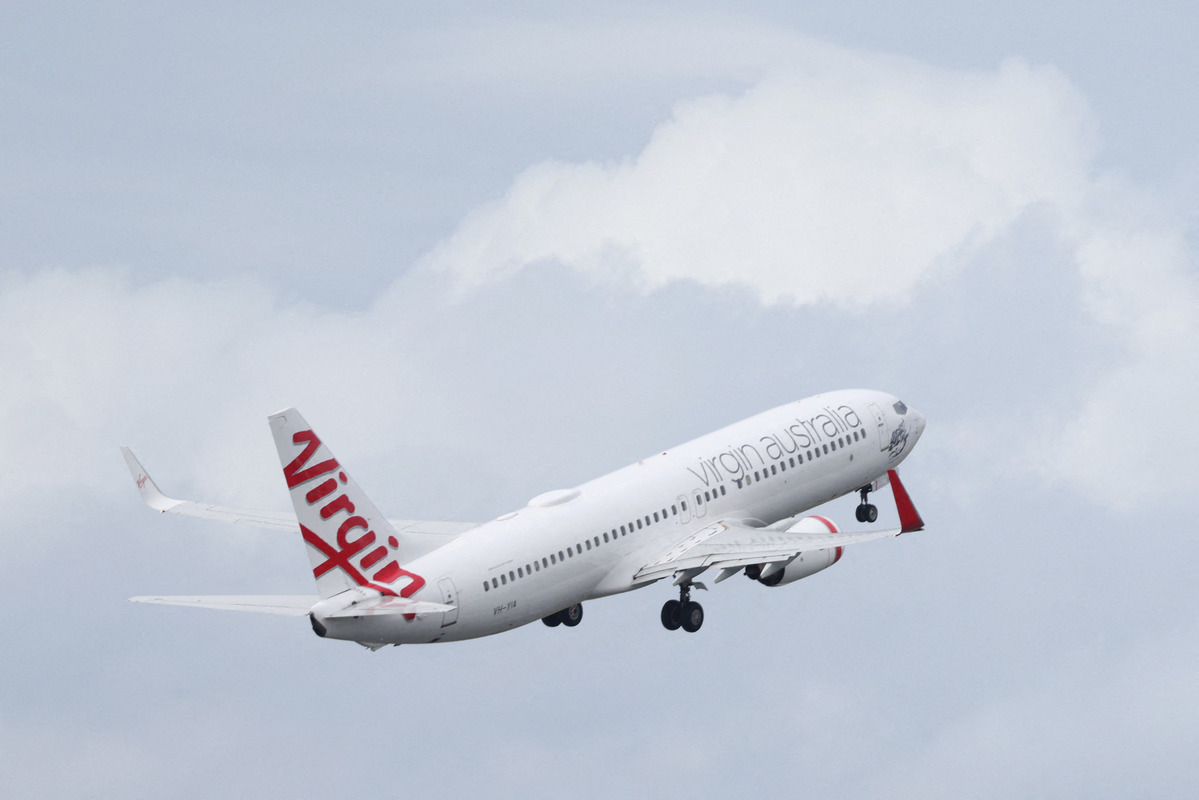
Virgin Australia’s decision to adjust fares reflects a broader reality facing the aviation sector: cost pressures are no longer driven by internal efficiency alone, but increasingly shaped by external geopolitical shocks. The airline directly linked rising costs to developments in the Middle East, underscoring how quickly global events translate into operational and financial strain. Recent YourNewsClub coverage highlights how airlines now operate in an environment where pricing strategy is tightly connected to geopolitical volatility rather than just demand cycles.
The immediate impact has been visible in market performance. Virgin’s shares declined sharply, reaching record lows during trading and extending losses since the escalation of tensions earlier this year. This reaction suggests that investors are not only pricing in higher costs, but also a higher level of uncertainty around operational stability and forward earnings visibility.
Fuel remains the most visible pressure point, but it is not the only one. Disruptions to flight routes, cancellations linked to partner operations, and the need to reroute traffic are compounding the issue. Virgin’s reliance on flights operated in partnership with Qatar Airways adds another layer of exposure, as instability in the region directly affects parts of its international network. Jessica Larn, who focuses on infrastructure and systemic risk, notes that aviation is particularly sensitive to external shocks because multiple variables – fuel, routing, and demand – can shift simultaneously. In such conditions, cost increases rarely remain isolated; they tend to cascade through the entire operating model.
At the same time, Virgin is not entering this situation unprepared. The company has hedged a significant portion of its fuel and currency exposure, which provides partial protection against price volatility. However, hedging is designed to reduce short-term impact, not eliminate prolonged pressure. If disruptions persist, the benefits of these strategies diminish over time. YourNewsClub analysis shows that the current environment exposes a structural challenge: airlines must manage not only cost inflation, but also operational unpredictability. When both factors intensify at once, pricing adjustments alone are rarely sufficient to stabilize performance.
It is also important to recognize that cost pressures were already building before the latest geopolitical escalation. The airline had previously reported rising expenses across several parts of its supply chain, including airport charges and maintenance. These increases were already outpacing inflation, meaning the current situation is amplifying an existing trend rather than creating a new one.
For Virgin, this creates a more complex balancing act. Raising fares can offset part of the cost increase, but only to the extent that demand remains resilient. In markets where consumers are more price-sensitive, aggressive pricing risks weakening load factors and eroding revenue gains. Owen Radner, who analyzes transport and infrastructure systems at YourNewsClub, emphasizes that airlines must be evaluated on how they perform under stress conditions. External disruptions, such as geopolitical conflicts, reveal the limits of operational flexibility and the true resilience of network design.
The broader industry context reinforces this point. Some carriers, particularly in markets with strong demand, have been able to pass higher costs onto passengers more effectively. Others, especially those exposed to disrupted routes or dependent on specific regions, face greater difficulty maintaining both pricing power and operational consistency. Recent Your News Club reporting highlights a growing divergence across airlines. Performance increasingly depends on network exposure, cost structure, and the ability to adapt quickly to external shocks. Virgin’s current strategy – adjusting fares while relying on partial hedging – addresses immediate pressures, but does not fully resolve longer-term risks. Sustained instability could require deeper adjustments, including capacity management, route optimization, and revised financial expectations.
These developments point to a broader shift in aviation economics. External volatility is no longer an occasional disruption, but an ongoing factor shaping decision-making. YourNewsClub analysis shows that airlines are moving toward a model where resilience and adaptability matter as much as scale and efficiency. For Virgin Australia, the key challenge now is not just managing higher costs, but demonstrating that its operating model can remain stable under prolonged external pressure. The market response suggests that this proof is still being evaluated.