
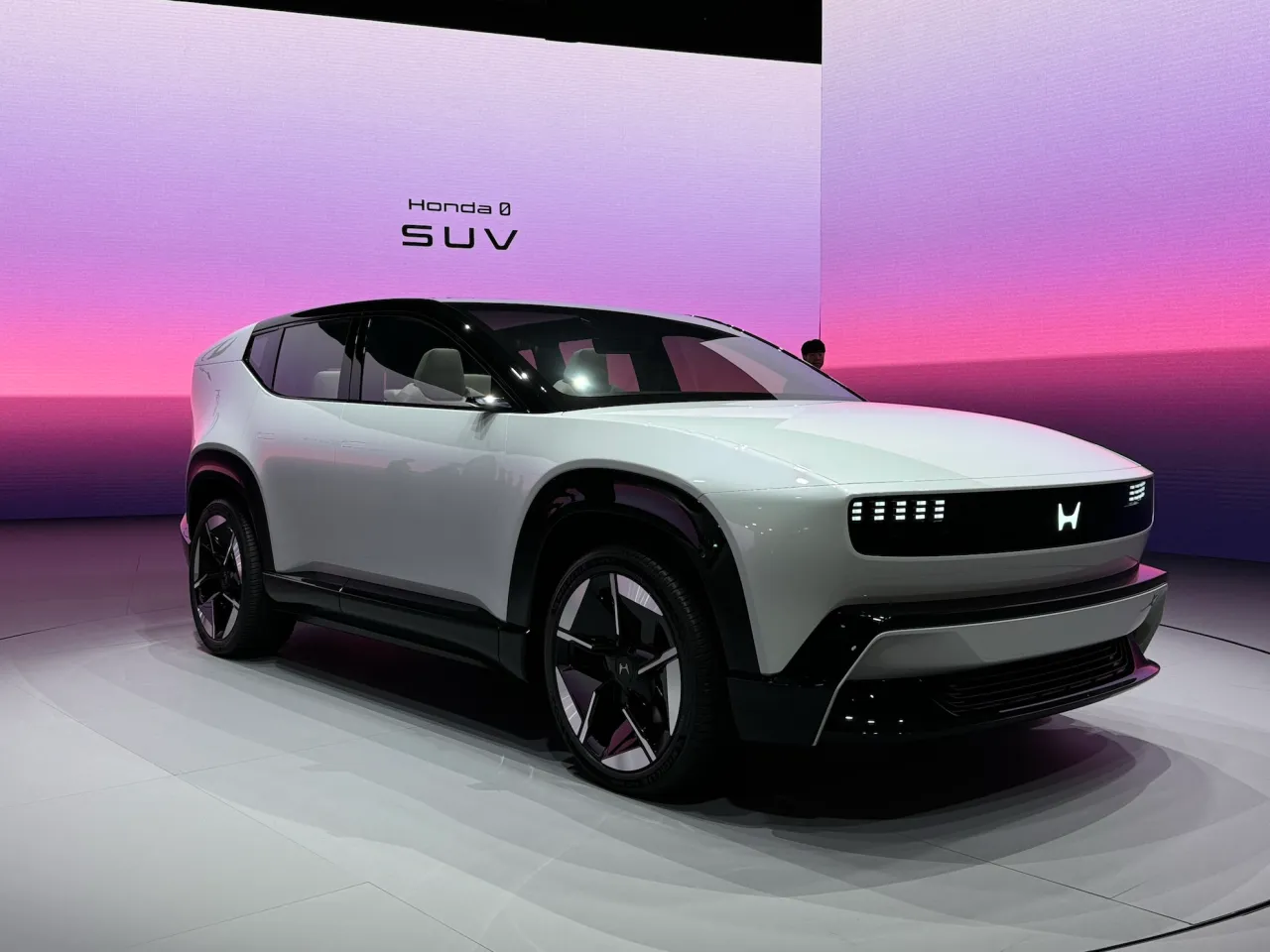
Honda has decided to cancel the development of three electric vehicles that were originally planned for the U.S. market, citing tariff pressures and intensifying competition from Chinese EV manufacturers. The move highlights how geopolitical trade policies and global industry dynamics are increasingly shaping the pace of electrification within the automotive sector. As YourNewsClub notes, the decision reflects growing financial pressure on traditional automakers attempting to balance investment in electric mobility with the profitability of their existing vehicle portfolios.
The Japanese manufacturer confirmed Thursday that tariffs introduced under U.S. trade policy have significantly affected the profitability of its gasoline and hybrid vehicle business. According to the company, these measures have placed its automotive operations in what it described as an “extremely challenging profit environment.” Combined with slower growth in the U.S. EV market and rising competition from Chinese electric vehicle producers, Honda concluded that the planned launches were no longer commercially viable.
Jessica Larn, who studies the geopolitical and economic dynamics surrounding technology and industrial infrastructure, explains that trade policy has become a decisive factor in shaping global electric vehicle strategies. In her view, tariffs and regulatory barriers can alter investment decisions by shifting production costs and limiting companies’ ability to compete with rapidly expanding international manufacturers.
Among the projects affected by Honda’s decision are the Honda 0 SUV and Honda 0 sedan, both of which were introduced conceptually at CES 2025 as part of the company’s long-term electrification strategy. The company has also canceled development of the Acura RSX electric vehicle, which had been positioned as a premium entry into the U.S. EV market.
Rather than pursuing these projects, Honda announced that it will reevaluate how resources are allocated across its product portfolio and focus more heavily on strengthening its position in the hybrid vehicle segment in the United States. Your News Club observes that this shift underscores a broader industry recalibration in which several automakers are reconsidering the speed and scale of their transition to fully electric vehicles.
The financial implications of the restructuring are significant. Honda warned that the changes could cost the company approximately $15.7 billion as it adjusts its long-term development plans and reallocates investment across its global vehicle programs.
Freddy Camacho, who analyzes the political economy of industrial resources and technological competition, notes that the electric vehicle transition has evolved into a complex strategic race involving manufacturing capacity, supply chains, and state-level economic policies. In his assessment, companies that struggle to adapt quickly to shifting market conditions and international competition may be forced to slow or restructure their electrification strategies.
Honda’s announcement adds to a growing list of traditional automakers that have scaled back electric vehicle ambitions in the United States after initially outlining aggressive rollout plans. From the perspective of YourNewsClub, these decisions reflect a broader industry transition in which the global EV market is increasingly influenced by geopolitical competition, trade policy, and the rapid expansion of Chinese manufacturers that have significantly altered the competitive landscape.