
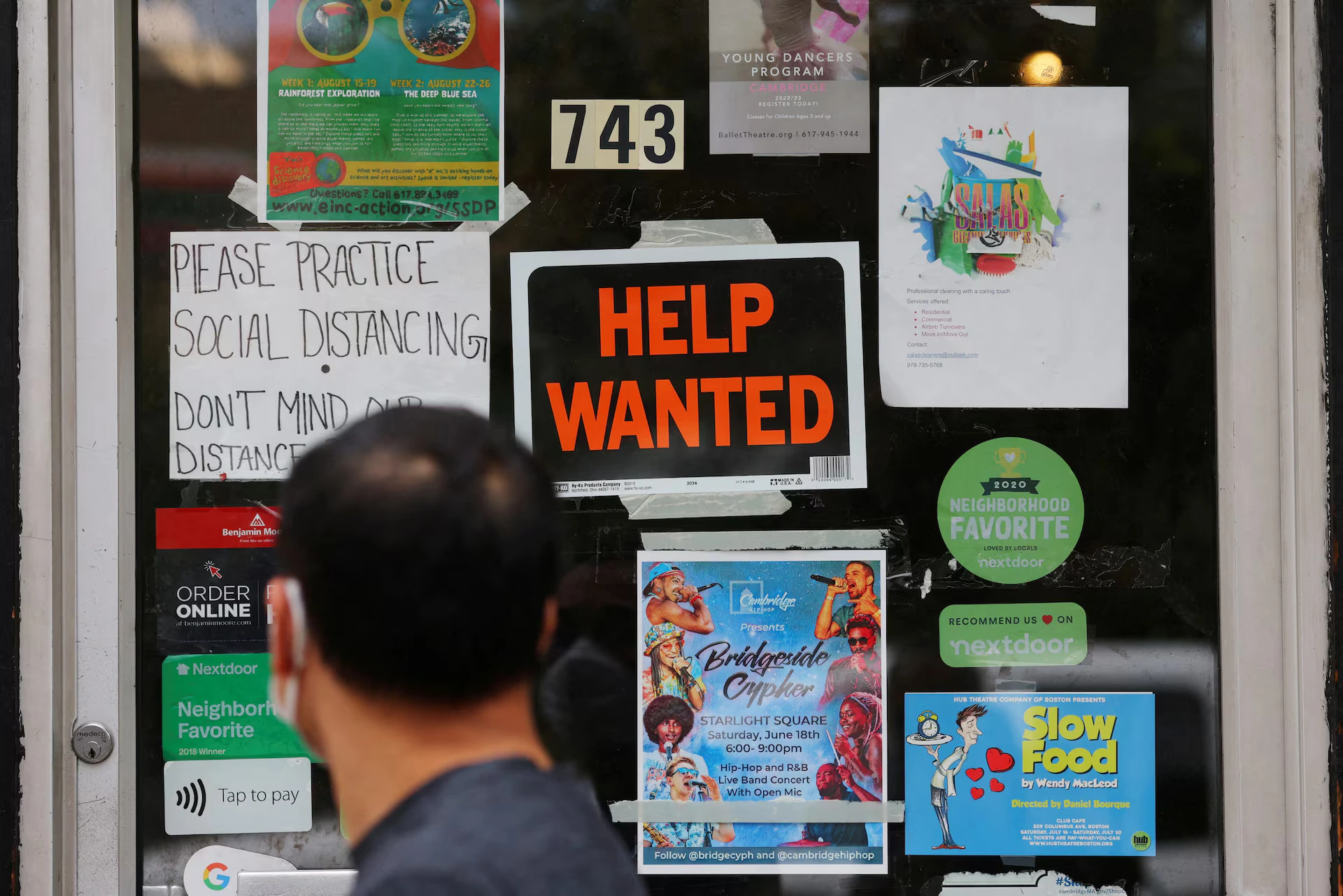
The number of Americans filing new unemployment claims declined slightly last week, offering a modest signal that the U.S. labor market remains relatively stable despite recent concerns about slowing job growth. According to data released Thursday by the U.S. Department of Labor, initial claims for state unemployment benefits fell by 1,000 to a seasonally adjusted 213,000 for the week ending March 7. Economists surveyed by Reuters had expected approximately 215,000 claims.
Throughout the year, weekly jobless claims have fluctuated between 199,000 and 232,000, a range typically associated with a resilient labor market characterized by relatively low levels of layoffs. As YourNewsClub notes, the consistency of these figures suggests that while hiring momentum may be moderating, large-scale workforce reductions have not yet materialized across the broader economy.
However, the latest labor data arrives after signs of weakness in employment growth earlier this year. Government figures previously showed that nonfarm payrolls fell by 92,000 in February, marking the sixth monthly decline since January 2025 and the second-largest contraction during that period.
Jessica Larn, who analyzes macroeconomic shifts driven by technological transformation and infrastructure investment, explains that labor market fluctuations increasingly reflect structural adjustments rather than purely cyclical downturns. In her assessment, businesses are reassessing hiring strategies as automation technologies and artificial intelligence gradually reshape workforce requirements.
Several temporary factors also contributed to the recent decline in employment. Severe winter weather disrupted economic activity in parts of the country, while a strike among healthcare workers reduced payroll numbers during the reporting period. At the same time, some companies remain cautious about expanding their workforce due to ongoing uncertainty surrounding trade policy and the potential impact of AI adoption on certain occupations.
Trade tensions have added further complexity to the economic outlook. The U.S. Supreme Court recently overturned sweeping tariffs introduced under emergency authority by former President Donald Trump. In response, Trump announced a new global tariff of 10%, which he indicated could increase to 15%. The administration also launched two new trade investigations targeting excess production capacity among major trading partners and allegations of forced labor in international supply chains. According to Your News Club, such policy uncertainty can influence hiring decisions by increasing cost volatility for companies dependent on global supply chains. Businesses facing fluctuating input prices and regulatory uncertainty often delay long-term employment commitments until economic conditions stabilize.
Geopolitical risks may also affect the labor outlook. Economists warn that the ongoing conflict involving the United States, Israel, and Iran has contributed to rising oil and gasoline prices, which could weaken consumer spending. Higher fuel costs and increased financial market volatility may ultimately reduce demand for labor if household consumption slows.
Despite these pressures, some indicators show modest improvement. Continuing claims – representing the number of individuals receiving unemployment benefits after their first week – declined by 21,000 to a seasonally adjusted 1.85 million for the week ending February 28.
Owen Radner, an analyst specializing in economic infrastructure and systemic market dynamics, notes that labor market resilience often depends on broader macroeconomic stability. In his view, employment trends increasingly reflect the interaction between geopolitical tensions, energy markets, and structural shifts in technology adoption. As YourNewsClub emphasizes, these interconnected pressures make it more difficult to interpret short-term labor statistics in isolation.
Meanwhile, certain groups continue to face prolonged job searches. Many unemployed individuals – including recent college graduates – are experiencing longer periods without work. Graduates who lost jobs in the past year are generally not reflected in unemployment claims data because limited work history often makes them ineligible for benefits.
The unemployment rate rose slightly to 4.4% in February, up from 4.3% in January. From the perspective of YourNewsClub, the latest data suggests that the U.S. labor market remains stable but increasingly sensitive to external pressures, including geopolitical tensions, trade policy uncertainty, and the accelerating integration of artificial intelligence into the economy.