
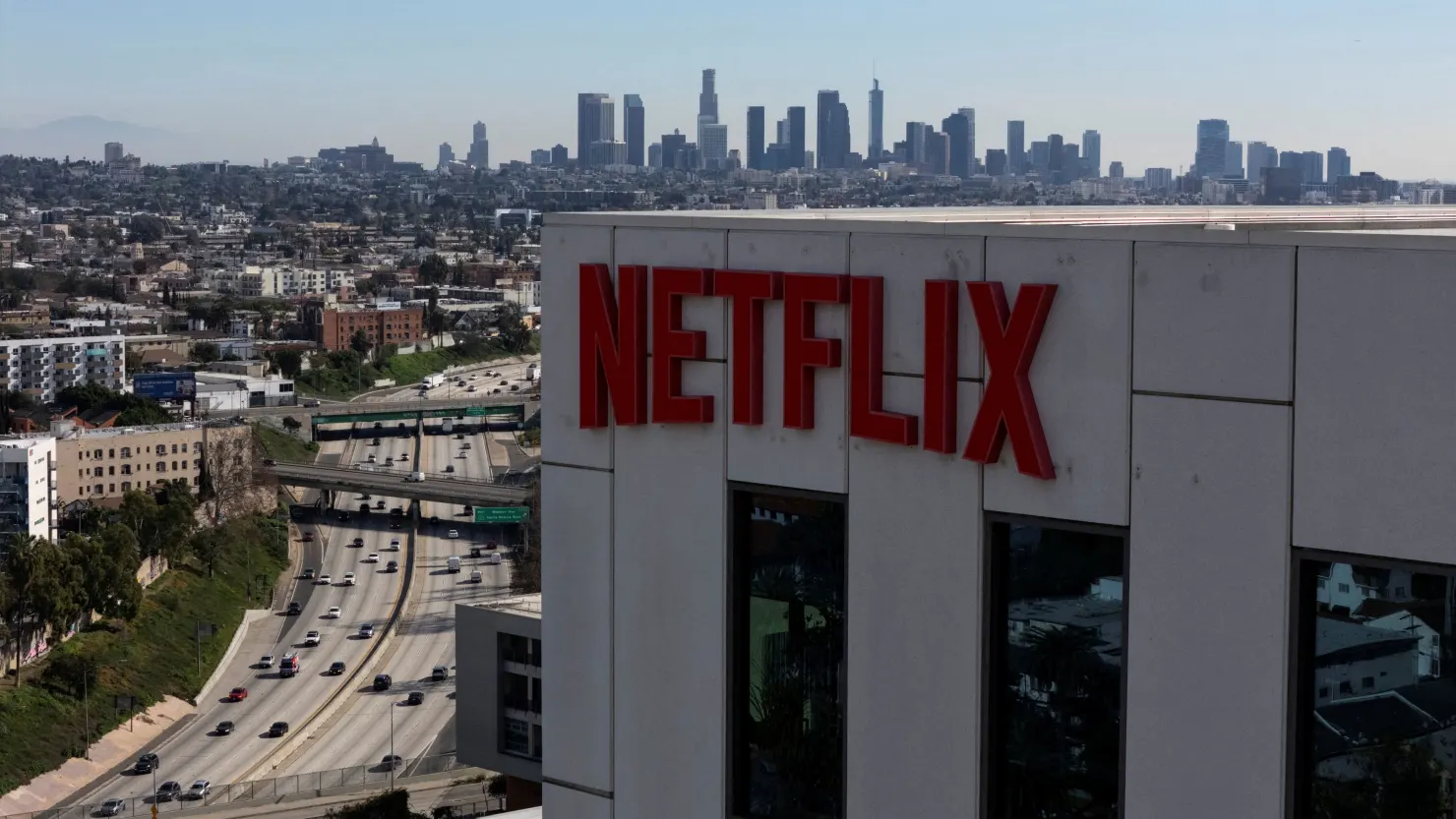
Political pressure on major media and technology companies continues to intensify as the U.S. election cycle accelerates. The latest flashpoint centers on Netflix and its proposed $72 billion acquisition of Warner Bros. Discovery – a transaction unfolding under both regulatory review and escalating partisan rhetoric. As YourNewsClub notes, the controversy extends beyond a single board seat and into the structural intersection of politics, media consolidation, and antitrust enforcement.
President Donald Trump publicly called on Netflix to remove board director Susan Rice, warning of “consequences” if the company failed to act. His comments followed Rice’s remarks suggesting that corporations perceived as accommodating Trump could face scrutiny if Democrats regain power after the midterm elections. Trump described her as a political appointee lacking qualifications, while critics argue that board composition remains a matter of corporate governance rather than executive pressure.
The timing is significant. The U.S. Department of Justice is currently reviewing Netflix’s proposed acquisition of Warner Bros. Discovery assets. The investigation reportedly examines whether the transaction could reduce competition, affect bargaining power with independent creators, or further concentrate influence over premium intellectual property. Jessica Larn, who analyzes technological policy and infrastructure power dynamics, argues that media consolidation today carries geopolitical implications, as control over distribution networks increasingly shapes both cultural influence and regulatory leverage.
At the same time, the political environment complicates perception. Activists aligned with Trump have urged regulators to block the deal outright. Netflix, however, maintains that it operates in a highly competitive environment that includes Disney, Amazon, Apple, YouTube, Paramount, and numerous regional platforms. From a structural standpoint, proving monopolistic dominance in such a fragmented streaming ecosystem presents legal complexity. YourNewsClub highlights that modern antitrust debates increasingly hinge on platform influence rather than traditional market share metrics.
Alex Reinhardt, who focuses on financial systems and control mechanisms embedded in digital infrastructure, notes that large-scale mergers in media often reflect defensive positioning rather than aggressive monopolization. Declining linear television revenues, rising production budgets, and global subscriber competition push platforms toward scale as a stabilizing mechanism. In this context, consolidation becomes a response to structural shifts rather than purely expansionist ambition.
The broader political climate reinforces volatility. Republicans frequently accuse major media platforms of ideological bias, while Democrats emphasize concentration risk and labor practices. As a result, major technology and entertainment firms face scrutiny from both directions. Your News Club observes that regulatory processes increasingly operate within a politically charged atmosphere, where perception can influence valuation as strongly as fundamentals.
If regulators approve the Netflix–WBD transaction, markets may interpret the outcome as evidence that economic analysis outweighs partisan rhetoric. A prolonged review or legal challenge, however, could signal a deeper politicization of merger enforcement in the United States. The outcome will shape not only this deal but also future consolidation attempts across streaming and digital media.
In conclusion, YourNewsClub assesses that the convergence of electoral politics and antitrust scrutiny marks a structural shift in how large media transactions unfold. Companies must now navigate market competition alongside political volatility, and investors must weigh regulatory risk with the same seriousness as financial projections.