
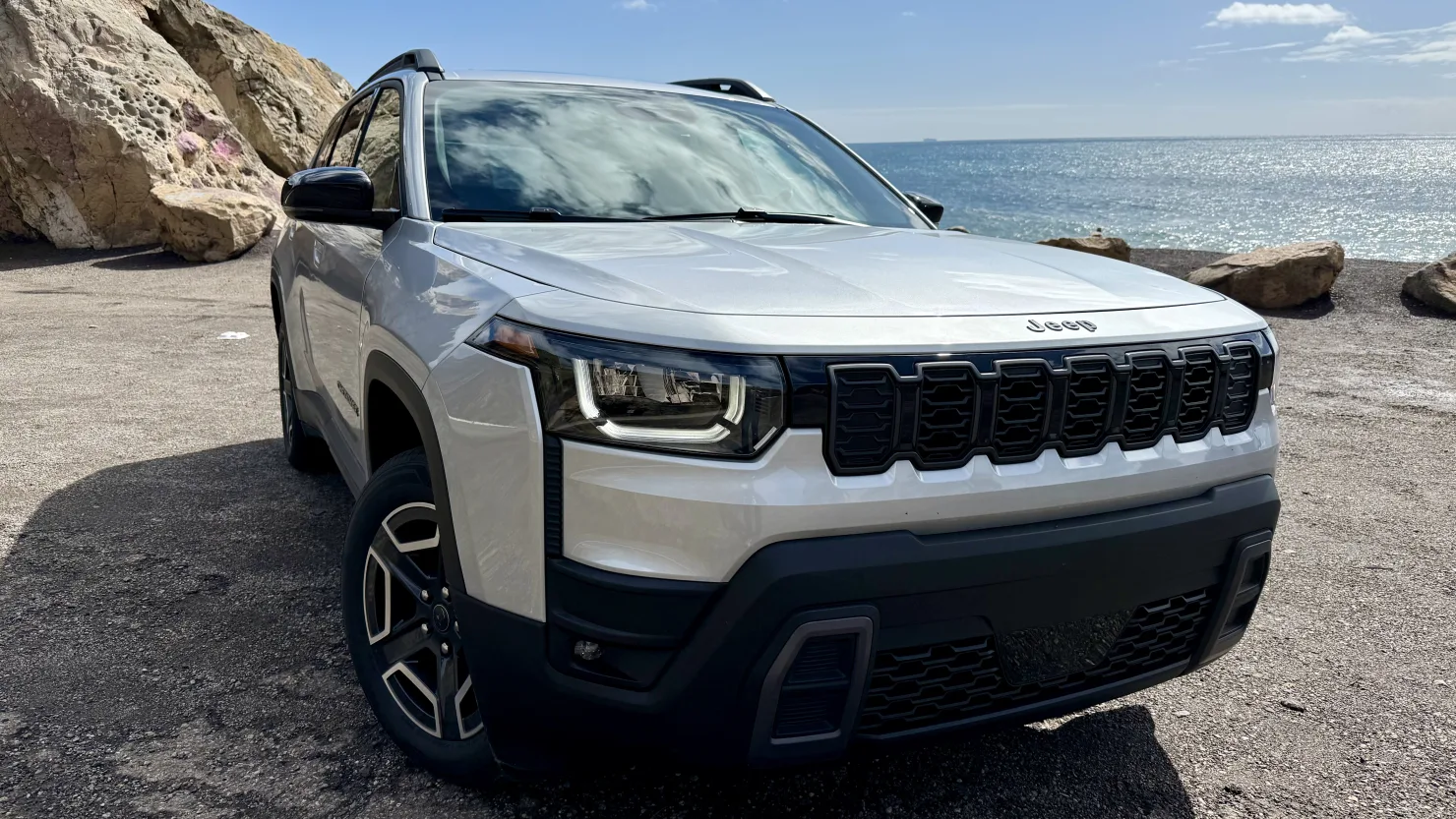
Stellantis is betting that the return of the Jeep Cherokee will anchor a broader recovery strategy in the United States, as the automaker attempts to regain lost market share in its most important region. After a three-year hiatus, the Cherokee reenters the compact and midsize SUV segments – the largest and most competitive categories in the U.S. market. As YourNewsClub notes, this launch carries structural significance far beyond a routine model refresh.
The 2026 Jeep Cherokee marks the brand’s first traditional hybrid (HEV) in the U.S. lineup and is positioned as the most fuel-efficient gasoline-powered Jeep ever sold domestically, targeting roughly 37 miles per gallon combined. The move reflects a recalibration. Rather than accelerating an aggressive all-electric rollout, Stellantis is prioritizing hybrid technology as a bridge between internal combustion and full electrification. Jessica Larn, who analyzes technological policy and infrastructure dynamics, argues that automakers are increasingly aligning product decisions with infrastructure realities and consumer cost sensitivity rather than purely regulatory targets.
Pricing plays a critical role. With an expected range between the high-$30,000s and mid-$40,000s – and a projected volume leader near the $40,000 mark – Cherokee aims directly at Toyota’s RAV4 and Honda’s CR-V. In the current market environment, where hybrid demand continues to expand while full EV growth moderates, positioning within this pricing corridor is essential. YourNewsClub highlights that hybrid SUVs now represent a stabilizing force in the electrification transition, offering fuel savings without dependence on charging infrastructure.
Production capacity remains a key variable. The Cherokee is currently built in Toluca, Mexico, a facility with an estimated annual capacity of just over 300,000 vehicles across multiple models. While demand could rise quickly if the vehicle resonates with consumers, scaling output efficiently will determine whether the Cherokee becomes a true volume driver or a constrained success. Alex Reinhardt, who focuses on financial systems and industrial infrastructure control, notes that recovery strategies in capital-intensive industries often hinge less on marketing and more on throughput discipline and supply chain resilience.
The broader corporate context underscores the stakes. Stellantis has recorded multiple consecutive annual sales declines in the U.S., partly linked to pricing strategy adjustments and earlier ambitions to accelerate fully electric offerings. The shift toward hybrids signals a pragmatic pivot. Rather than abandoning electrification, the company appears to be sequencing it differently – using hybrid platforms to rebuild brand traffic, dealer confidence, and revenue stability.
Cherokee also serves a symbolic function. Jeep historically built its identity on rugged, fuel-intensive SUVs. Introducing a more efficient hybrid model allows the brand to modernize without abandoning its core design language. According to YourNewsClub analysis, the vehicle operates as both a commercial product and a reputational reset, aimed at reconnecting with customers who migrated to Asian competitors during the brand’s recent contraction.
Competitive pressure remains intense. Toyota continues expanding its hybrid portfolio, and Honda maintains strong loyalty in the midsize SUV segment. For Cherokee to regain its previous sales peak – nearly 240,000 units at its historical high – Stellantis will need consistent pricing discipline, dependable quality execution, and sustained dealer engagement.
If production scales smoothly and consumer reception aligns with forecasts, U.S. Jeep sales could rise meaningfully in 2026, potentially restoring momentum to Stellantis’ domestic operations. Should supply bottlenecks or pricing missteps emerge, however, the opportunity could narrow quickly in a segment defined by thin margins and high substitution risk.
In conclusion, Your News Club assesses that the 2026 Cherokee represents more than a product launch; it is a strategic inflection point. By prioritizing hybrid efficiency within the most competitive SUV categories, Stellantis signals a shift from aggressive transformation to calibrated stabilization. The success of this approach will depend not only on demand, but on execution discipline across production, pricing, and dealer integration – factors that will ultimately determine whether Jeep’s comeback becomes structural or temporary.