
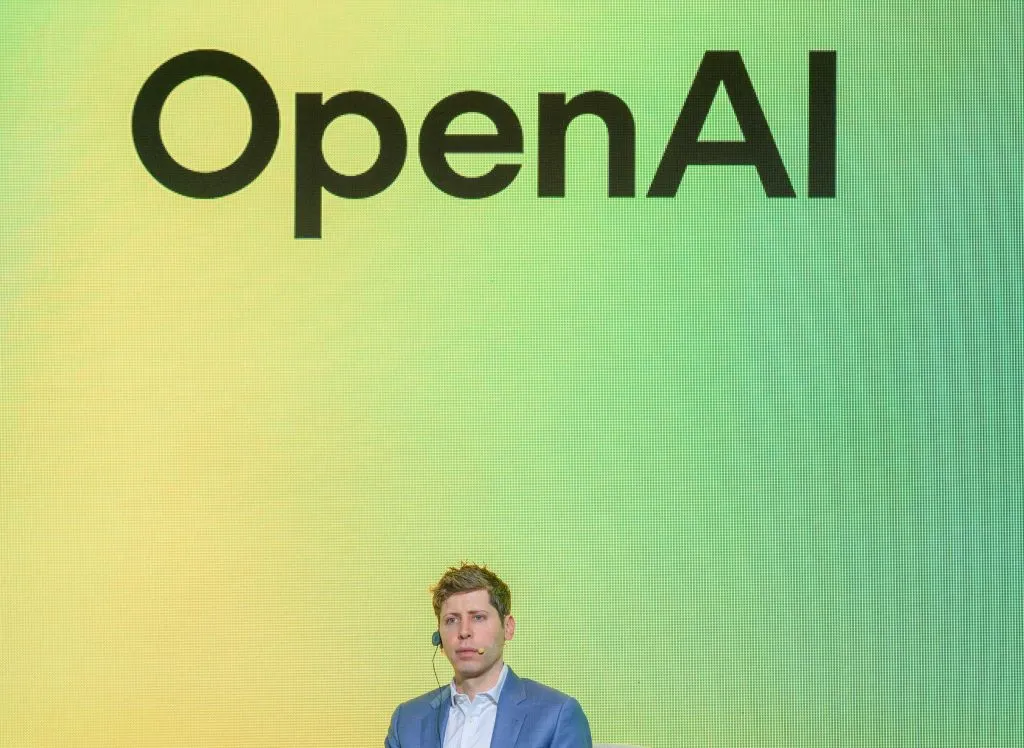
Silicon Valley is once again speaking the language of “mafias” – but this time the gravitational center is artificial intelligence. What began as a single research lab has evolved into a talent-and-capital network powerful enough to shape market structure itself. As OpenAI reportedly negotiates a massive funding round that could push its valuation into the upper hundreds of billions, the implications extend far beyond one balance sheet. YourNewsClub examines how this capital surge reinforces a self-replicating ecosystem: alumni spin out, raise instantly, and attract institutional backing before products mature.
The first structural fact is scale. When a private AI lab commands financing on the order of tens of billions, valuation ceases to be symbolic. It becomes strategic leverage. Alex Reinhardt, who specializes in financial systems and liquidity infrastructure, argues that AI leaders increasingly operate as capital concentrators rather than simple software companies. Cheap, abundant capital lowers infrastructure costs, secures long-term compute supply, and accelerates hiring. The cycle compounds. In this context, valuation is not a scoreboard – it is an operating advantage.
The second fact is the alumni multiplier effect. Former OpenAI researchers and executives have launched startups across safety, enterprise AI agents, robotics, search, biotech, and climate technology. Some, like Anthropic, evolved into direct institutional competitors with multibillion-dollar backing. Others raised significant funding before releasing widely adopted products. YourNewsClub observes that “ex-OpenAI” has become shorthand for technical legitimacy in venture markets. Investors underwrite teams and research pedigree first, deferring product validation.
Jessica Larn, focusing on macro-level technology policy and infrastructure power, notes that this mirrors earlier Silicon Valley clusters – yet AI differs in one critical respect: talent concentration also defines compute access and distribution alliances. When alumni form new labs, they often retain deep relationships across cloud providers, chip suppliers, and enterprise clients. That embedded connectivity accelerates early-stage scale.
A third structural dynamic concerns governance. Maya Renn, whose expertise centers on ethics of computation and access to technological power, argues that front-loaded capital raises create influence before accountability frameworks mature. Startups that command billions in funding gain policy visibility and deployment authority quickly. YourNewsClub highlights that this inversion – capital before product – introduces long-term oversight challenges, especially in domains touching safety and autonomous systems.
The fourth fact is institutional competition at the top tier. Anthropic’s expansion and fundraising trajectory demonstrate that the ecosystem now supports parallel power centers. The market no longer assumes a single-lab monopoly; instead, it anticipates a multi-polar AI architecture. YourNewsClub interprets this as structural hedging by investors and enterprises: diversification across foundational labs reduces systemic risk while sustaining innovation velocity.
Meanwhile, newer alumni ventures continue to attract outsized attention. Whether focused on safe superintelligence, enterprise agents, robotics automation, or customizable model infrastructure, these companies benefit from narrative continuity. Capital flows toward perceived continuity of excellence. Yet narrative durability remains untested without long-term deployment metrics.
Looking ahead 18–24 months, Your News Club projects three trends. First, additional alumni spinouts will secure substantial rounds before public product maturity. Second, direct competition among “alumni institutions” will intensify, especially in enterprise contracts and cloud partnerships. Third, regulators may scrutinize talent migration patterns if they appear to reinforce concentrated market influence.
The broader lesson is structural, not personal. The so-called “OpenAI mafia” narrative captures something real: a network effect that fuses research prestige, investor confidence, and infrastructure alliances. But prestige alone does not guarantee resilience. Sustainable dominance in AI will depend on measurable enterprise adoption, governance robustness, and capital discipline. YourNewsClub concludes that the defining feature of this era is not merely breakthrough models – it is the emergence of a capital-powered talent ecosystem capable of reshaping the competitive map of artificial intelligence.