
One year ago, energy storage did not exist as a standalone revenue engine inside Redwood Materials. Today, it is the company’s fastest-growing division – a transformation tightly linked to the AI data center construction boom. As hyperscale computing accelerates, the constraint is no longer just GPUs or real estate. It is power. YourNewsClub examines how Redwood’s pivot reflects a structural shift in AI infrastructure economics.
The first critical factor is grid latency. Developers of AI data centers increasingly face multi-year delays when attempting to connect new facilities to public utilities. Claire McConnell, Redwood’s vice president of business development, has acknowledged that wait times can stretch beyond five years in certain regions. That bottleneck changes the investment equation. Jessica Larn, specializing in macro-level technology policy and infrastructure systems, argues that in such environments, energy storage evolves from optional backup to operational prerequisite. When compute demand compounds exponentially, the ability to deploy interim microgrid solutions determines competitive timing.
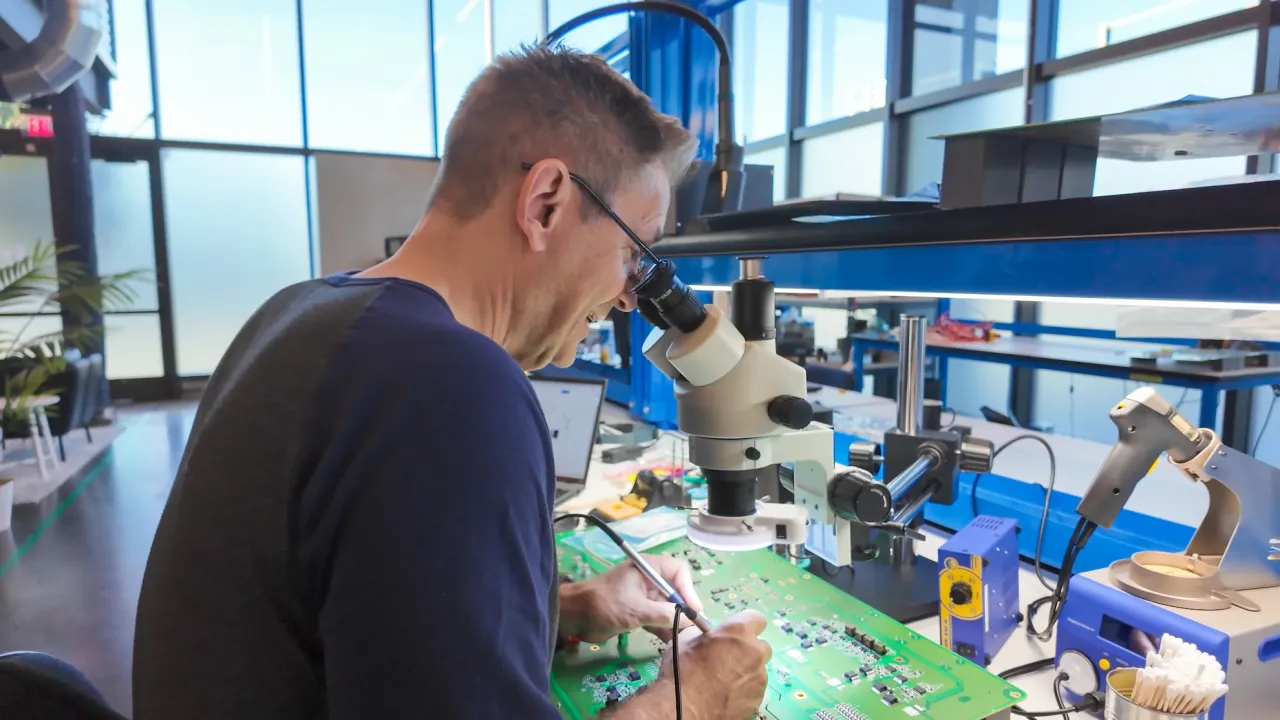
Redwood’s San Francisco R&D facility – recently expanded fourfold to roughly 55,000 square feet with nearly 100 employees – focuses on integrating hardware, software, and power electronics for storage systems. Though modest relative to the company’s 1,200-person workforce, the lab signals strategic prioritization. YourNewsClub highlights that vertical integration across battery materials, recycling inputs, and storage assembly grants Redwood a unique positioning advantage. The company can source second-life electric vehicle batteries from its recycling stream, reducing dependence on volatile raw-material supply chains.
The financial reinforcement is equally significant. A $425 million Series E round, supported by investors including Google and Nvidia, provides capital to scale storage deployments. Alex Reinhardt, who analyzes financial infrastructure and capital allocation dynamics, notes that Big Tech participation in storage ventures reflects risk mitigation logic. AI hyperscalers must hedge against energy volatility; investing upstream in storage capabilities reduces operational uncertainty downstream.
Redwood Energy’s first high-profile deployment – a 12-megawatt, 63-megawatt-hour system built using repurposed EV batteries – powered a modular AI data center for Crusoe. This second-life approach offers both cost and timing advantages. Rather than waiting for new battery manufacturing cycles, Redwood repurposes batteries not yet ready for recycling. Freddy Camacho, specializing in the political economy of industrial systems, views this as circular-economy leverage applied to infrastructure scale. By extracting additional lifecycle value, Redwood compresses deployment timelines while enhancing sustainability narratives.
The growth trajectory extends beyond pilot scale. McConnell has indicated that pipeline projects now span hundreds of megawatt-hours and even gigawatt-hour-scale ambitions. YourNewsClub underscores that this scale transition marks a conceptual shift: storage is no longer a peripheral UPS solution but a core architectural layer for data center ecosystems. As AI workloads intensify, smoothing peak demand, stabilizing microgrids, and ensuring redundancy become baseline requirements.
Broader industry trends reinforce this trajectory. Across major markets, developers increasingly explore hybrid models that combine grid interconnection, on-site generation, and battery storage. Regulatory timelines and transmission constraints accelerate the appeal of deployable storage clusters. Your News Club notes that infrastructure agility is becoming as strategic as algorithmic capability.
Looking forward, three dynamics appear likely over the next 18–24 months. First, energy storage procurement will increasingly align with AI expansion roadmaps rather than traditional utility planning cycles. Second, vertically integrated operators like Redwood may capture premium contracts due to supply-chain control. Third, hyperscale partnerships will deepen as cloud providers seek greater influence over their energy ecosystems.
Redwood’s evolution from recycler to energy infrastructure partner illustrates a broader economic realignment. AI dominance depends not only on model performance but on megawatts delivered reliably and quickly. YourNewsClub concludes that the next phase of AI competition will be decided as much in substations and battery arrays as in research labs.