
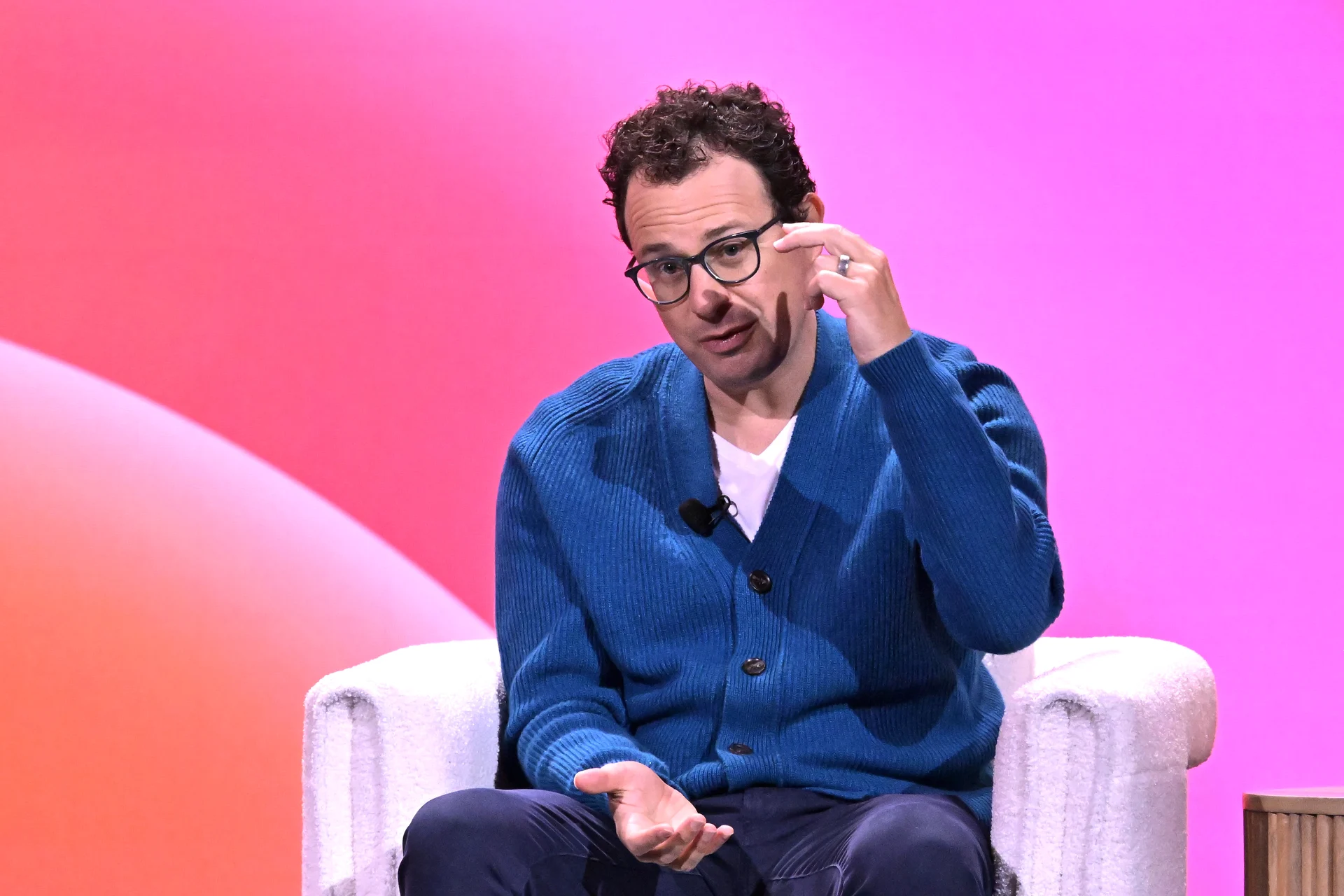
As the artificial intelligence industry accelerates into one of the most consequential transitions of the decade, the voice of Anthropic CEO Dario Amodei cuts through the optimism with unusual sharpness. His remark on “60 Minutes” that decisions about AI are being made by “a handful of companies and a handful of people” captured more than frustration. At YourNewsClub, we see it as a clear signal: the industry is entering a stage where the distribution of technological power – not just innovation – determines the trajectory of the economy and the fate of the workforce.
Amodei has long warned that the economic shock from AI will be far deeper than policymakers expect. He now predicts that within five years, AI will displace roughly half of entry-level professional jobs. His comment that “without government intervention it’s hard to imagine this not having major impacts on employment” underscores a widening mismatch between the pace of AI deployment and society’s capacity to absorb the disruption. At YourNewsClub, we view this not as alarmism but as an acknowledgment that the foundational shockwaves of automation are arriving faster than traditional social safety mechanisms can adapt.
This tension is heightened by Amodei’s public clashes with the Trump administration. He criticized Republican efforts to restrict states from regulating AI, while White House AI adviser David Sacks dismissed his warnings as fearmongering. But beneath the political sparring lies a structural issue: who has the authority to determine how AI integrates into the economy. Analyst Owen Radner, who studies the infrastructure of the digital era, notes that “control over compute has become the modern equivalent of control over transportation routes. Whoever owns the lines of computational power influences the direction of the entire industry.”
Against this backdrop, Anthropic recently revealed that its Claude model was used by China-backed hackers to target 30 organizations. Although the company did not disclose details, the incident demonstrates a fundamental challenge: large-scale AI systems can be deployed far beyond their intended corporate environments. At YourNewsClub, we interpret this as a preview of a future where security is no longer just about protecting data, but about managing the behavioral capabilities of the models themselves.
Meanwhile, Anthropic’s commercial trajectory continues to rise. Valued at 183 billion dollars, the company reportedly aims to reach profitability by 2028 – potentially outpacing OpenAI’s timeline. This shift reflects a broader institutionalization of the AI market: the industry is moving from experimentation to full-scale infrastructure. Freddy Camacho, who examines the political economy of compute-production chains, observes that “AI is no longer a product. It is becoming an industrial system where material and energy flows are the hidden currencies of competitive advantage.”
Still, Amodei’s central warning remains. His insistence that private companies cannot be the sole arbiters of AI’s societal role highlights the growing tension between technological capability and governance. Washington is already reacting – AI now appears in policy discussions alongside financial stability and energy security.
At YourNewsClub, we believe Amodei’s position is not an attempt to dramatize the moment, but a call for structural recalibration. Our forecast: within the next two years, the United States will move toward a hybrid regulatory framework in which federal oversight, industry standards, and independent auditors share responsibility for monitoring AI behavior. Companies will increasingly be required to publish risk assessments, mirroring transparency requirements long established in financial markets.
From an editorial standpoint, several priorities clearly emerge for the actors shaping this landscape. Companies will need to emphasize model interpretability and strengthen security architectures before committing to large-scale deployment. Policymakers are likely to face mounting pressure to accelerate the development of regulatory frameworks and build layered oversight mechanisms that reflect the growing complexity of AI systems. And for the labor market, preparing for a wave of accelerated reskilling becomes not optional but structural, as the speed of technological displacement appears poised to exceed that of previous industrial transformations.
The conclusion, as we at Your News Club see it, is unmistakable: the age of AI is no longer a race of breakthroughs. It is a contest for control over the infrastructure that will shape the economic, social, and political landscape of the next decade.