
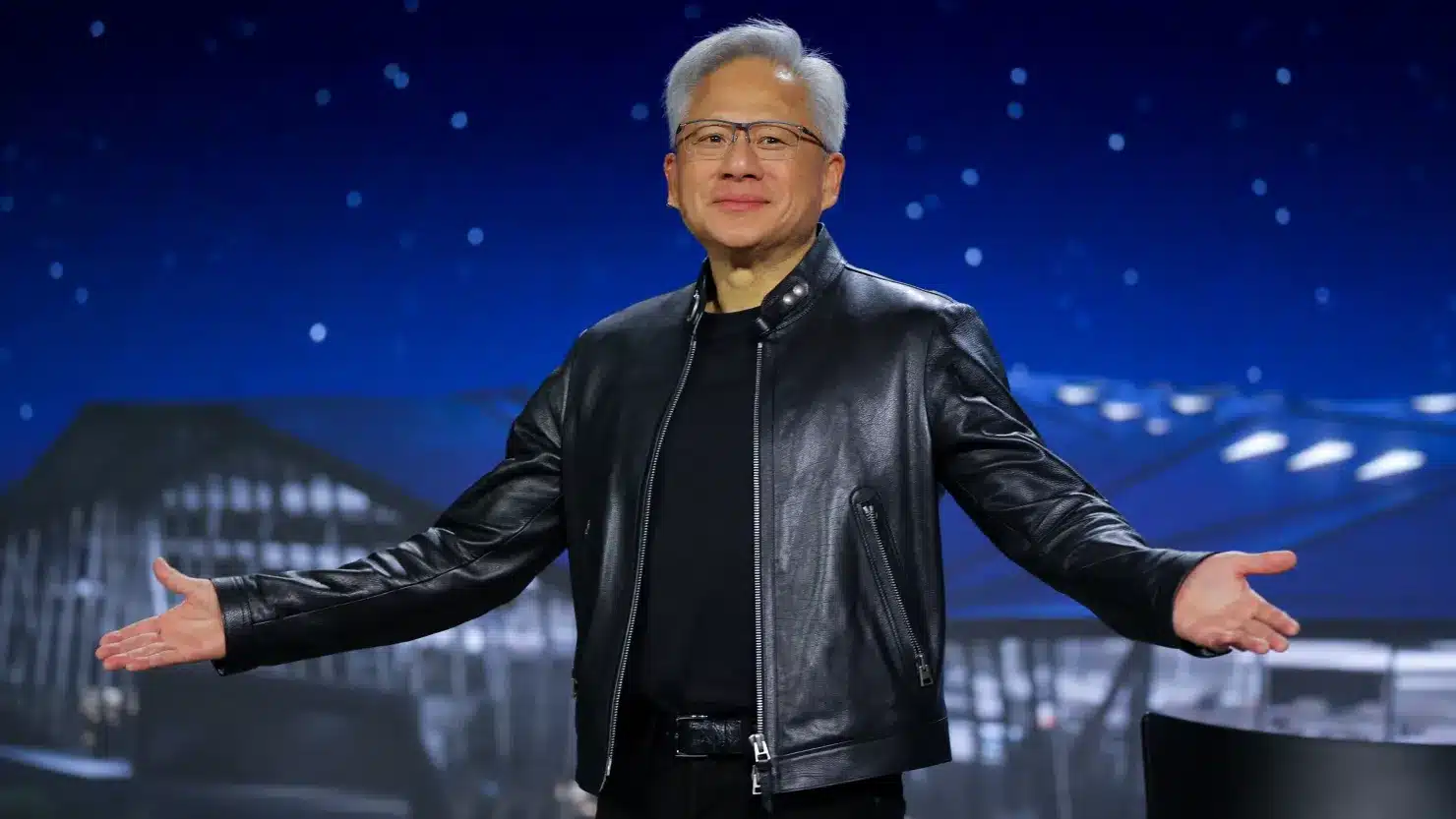
Chinese AI stocks surged following bullish remarks from Nvidia CEO Jensen Huang, but the market reaction reflects more than short-term sentiment. As highlighted in YourNewsClub, investors increasingly see agent-based systems like OpenClaw as a signal that the next phase of AI competition will shift from models toward scalable, application-driven ecosystems.
At the center of this momentum is OpenClaw, an open-source AI agent framework gaining traction across China. Its key advantage lies in speed and flexibility: companies can deploy agent-based solutions quickly, without relying on closed platforms. This allows Chinese firms to compete through execution rather than purely model performance. Jessica Larn, who focuses on infrastructure and scaling dynamics, notes that the competitive edge is moving toward those who can turn AI into operational systems. In this context, success depends less on raw capability and more on integration into real workflows.
The rally in companies such as MiniMax and Zhipu reflects this shift. Both are actively building agent-based applications and aligning with demand for automation. Markets are increasingly rewarding firms that show a clear path from AI capability to monetization. Zhipu’s positioning stands out. Its focus on models optimized for coding and agent-driven tasks strengthens its role within China’s AI ecosystem, reinforcing investor confidence.
Beyond individual companies, the broader ecosystem is also benefiting. SenseTime and UCloud gained as attention expanded toward infrastructure layers – cloud, integration, and compute. This supports a broader pattern. YourNewsClub has previously emphasized that AI value creation extends beyond models into full-stack deployment. The current rally reflects capital moving across that entire chain.
Freddy Camacho, specializing in the political economy of computation, argues that control over deployment layers – especially inference infrastructure – is becoming as critical as model innovation itself. In this sense, agent-based AI redistributes value across the ecosystem. At the same time, risks remain. Adoption is uneven across sectors, with large tech firms leading while others lag. In addition, open agent systems raise concerns around security, autonomy, and control – factors that will shape long-term adoption.
Nvidia’s influence also plays a key role. Huang’s comments reinforced expectations that agent-based AI could drive the next wave of demand, particularly in inference-heavy environments. This has direct implications for China, where local infrastructure demand may rise alongside adoption.
Ultimately, the recent surge in Chinese AI stocks reflects a broader transition toward agent-driven ecosystems, where execution, integration, and reliability define winners. As noted in Your News Club, the companies that convert early momentum into scalable products and real revenue will shape the next phase of the global AI market.