
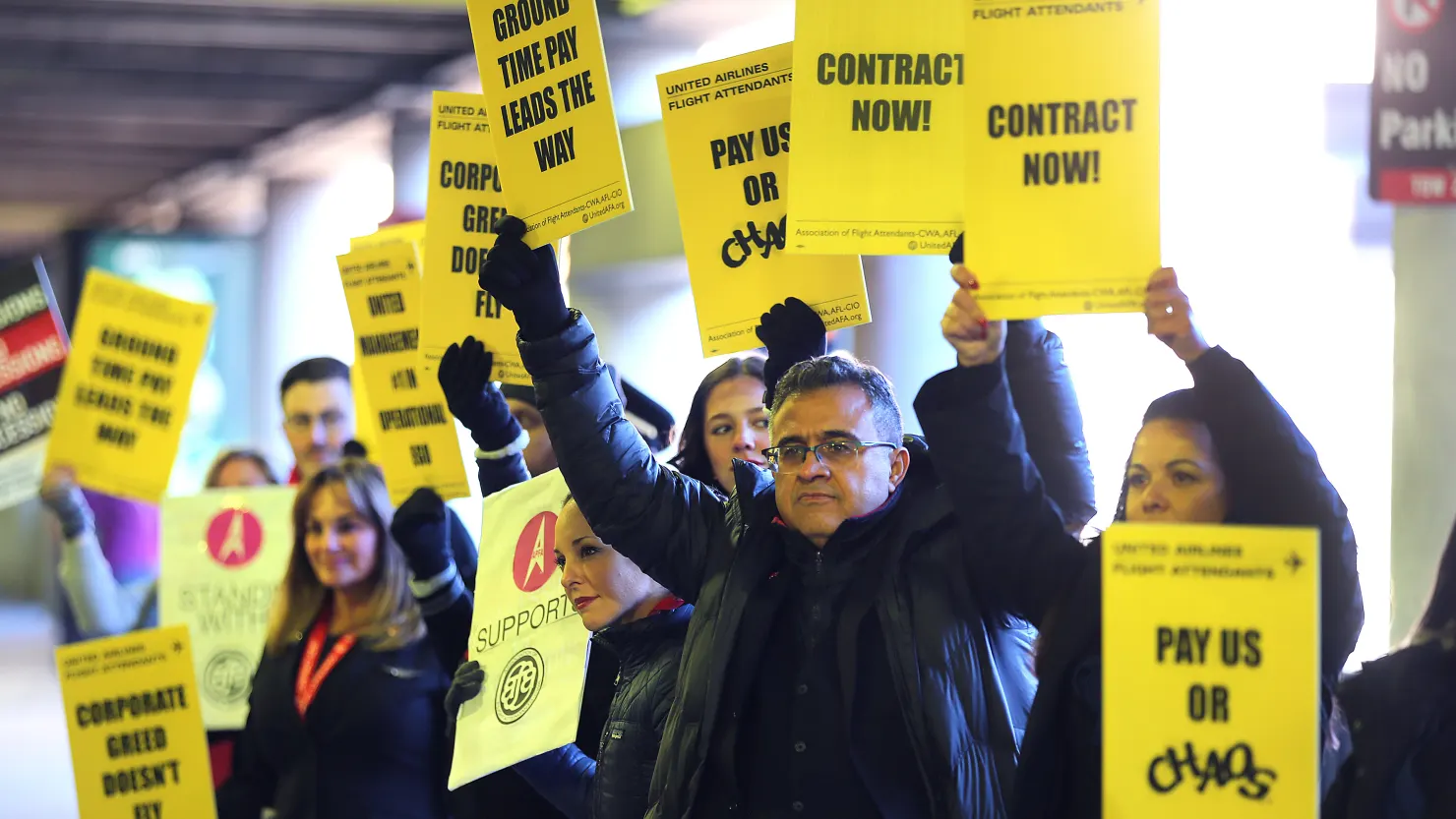
The tentative agreement between United Airlines and its flight attendants’ union reflects more than a routine labor contract – it signals a broader recalibration of cost structures across the aviation industry. As carriers move beyond the post-pandemic recovery phase, labor has emerged as a central pressure point, forcing companies to balance operational stability with profitability. This shift is increasingly highlighted in industry coverage by YourNewsClub, where workforce dynamics are becoming a defining factor in competitive strategy.
A key element of the agreement is the long-delayed wage increase, marking the first meaningful adjustment in roughly six years. This gap is significant in the context of inflation and the rapid rebound in travel demand. The delay has strengthened the bargaining position of employees, turning compensation negotiations into structural recalibration rather than incremental adjustment.
The structure of compensation is equally important. Beyond base pay increases, the agreement introduces payment for boarding time, additional compensation for scheduling disruptions, and substantial signing bonuses. This marks a departure from the traditional model, where only in-flight hours were fully compensated, and reflects a shift toward more comprehensive labor accounting. Such transformations in cost structures are increasingly examined in sector analysis by YourNewsClub, particularly in relation to post-pandemic labor adjustments. Jessica Larn, who focuses on technological infrastructure and systemic industry shifts, interprets this transition as a move from efficiency-driven operations toward resilience. Airlines are increasingly investing in workforce stability as a core component of operational reliability.
The scale of the signing bonus – totaling hundreds of millions of dollars – underscores the cost of retaining experienced staff. This level of compensation signals that labor constraints are no longer temporary but structural, with long-term implications for cost management across the sector. The rejection of a previous agreement in 2024, despite a significant proposed wage increase, further illustrates rising expectations among employees. Negotiations are no longer centered on incremental gains, but on redefining how labor is valued within the industry. This trend is also reflected in broader labor dynamics discussed in YourNewsClub, where workforce leverage has increased across multiple sectors.
At the same time, United’s strategic direction provides important context. The airline is expanding its premium offerings, investing in higher-end cabins and enhanced onboard services. This alignment suggests that increased labor costs are being integrated into a broader revenue strategy rather than treated purely as an expense.
The implications extend beyond a single carrier. As one of the last major U.S. airlines to finalize a post-pandemic labor agreement, United contributes to establishing a new cost baseline. Insights published by Your News Club increasingly point to a convergence in industry standards, where compensation structures become more uniform across competitors. Alex Reinhardt, who specializes in financial systems and market structures, frames this development as a redistribution of value within aviation. Rising labor costs are either passed on to consumers or offset through higher-margin services, with United clearly leaning toward premium-driven revenue expansion.
The broader trajectory suggests a shift in industry priorities. Operational stability and service quality are becoming more important than aggressive cost reduction, reshaping how airlines approach long-term strategy. In the view consistently developed across YourNewsClub, the next phase of competition in aviation will depend not only on pricing and route networks, but on the ability to secure and retain a skilled workforce capable of supporting increasingly complex service models.