
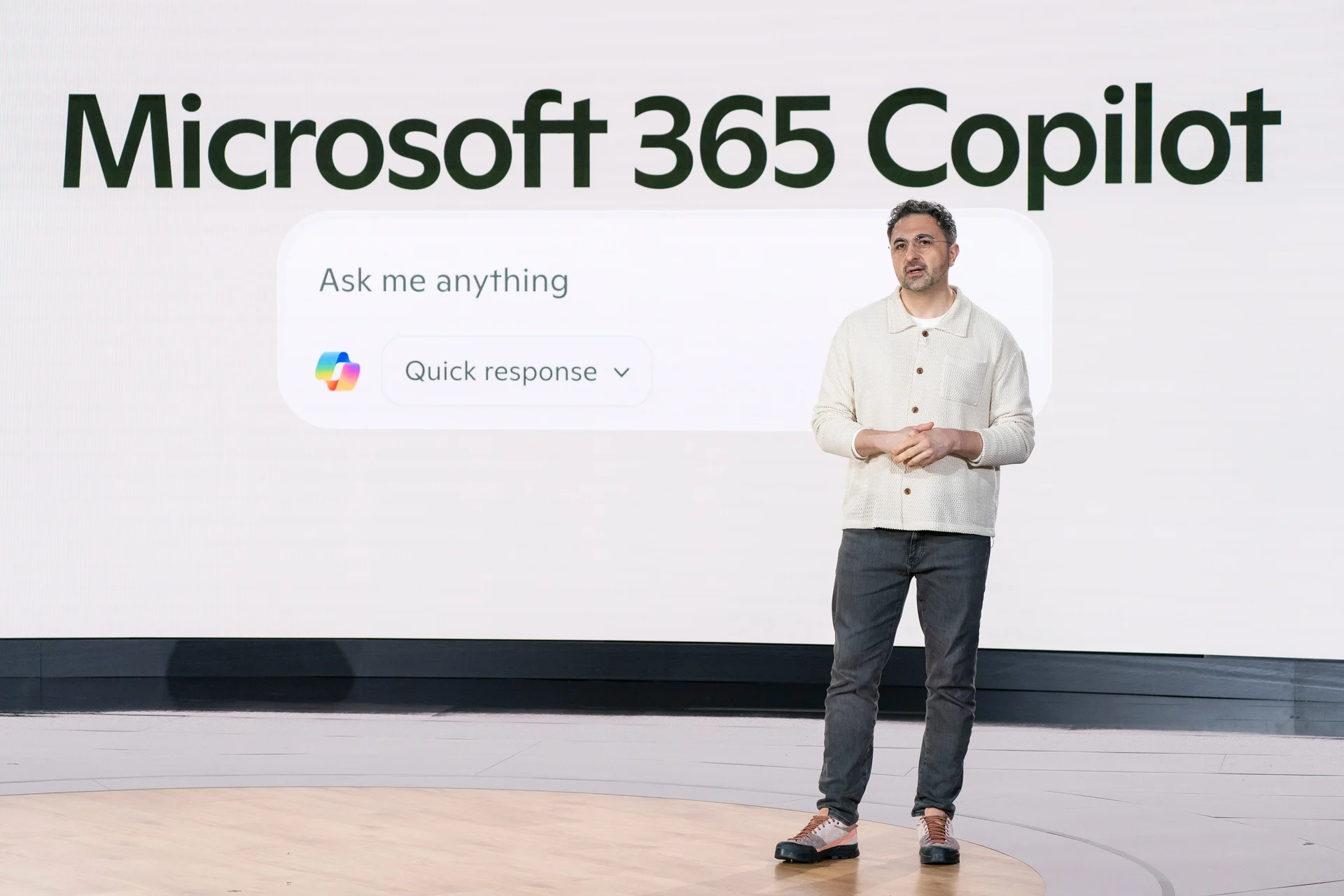
Microsoft insists Copilot is designed to make work easier. Yet the internet has already recast it as something entirely different: an intrusive, erratic colleague who won’t leave the room. At YourNewsClub, we see the growing wave of satire, frustration and meme-culture around Copilot as more than just humor – it is a sign of a deeper structural mismatch between algorithmic assistants and the realities of modern digital labor.
On TikTok and Instagram, Copilot has become a character in its own right – overeager, slightly chaotic, always appearing at the wrong moment. One viral clip with hundreds of thousands of likes depicts Copilot as a digital intern who derails work instead of helping it. The root of the problem is not just functionality: it’s identity. “Copilot” is not one coherent system. It is Microsoft’s umbrella name for dozens of loosely aligned AI tools spread across Outlook, Word, Windows, Teams, Edge, and more. They share a brand, but not behavior, capability or reliability.
On Reddit, a recent attempt to list every flavor of Copilot quickly descended into comedy: “Teams copilot, Outlook copilot, browser web copilot, browser work copilot, Power Automate copilot, search bar copilot,” ending with the punchline: “copilot in the bathroom.” It’s a joke, but also a diagnosis – the brand has become fragmented to the point of absurdity.
Meanwhile, corporate frustration is growing. As YourNewsClub has learned, Microsoft has quietly lowered internal sales targets in several divisions due to slower-than-expected enterprise adoption – a rare public-facing adjustment for a company of its scale. IT administrators discuss setting additional group policies to keep Copilot away from daily workflows; some report that the supposed enterprise control “Disable Copilot” now redirects users to the public, less secure version – a nightmare scenario for any security leader.
Even everyday users are exasperated.
“I absolutely hate that little icon that won’t disappear,” one freelance writer told us, after trying every method to disable Copilot in Office. Microsoft’s official advice? Install an older version of Office – effectively rolling back the product to escape the assistant meant to improve it.
But the deepest fracture appears where Copilot meets corporate pressure. Workers increasingly report being pushed – not by the tool itself, but by management – to demonstrate constant engagement with AI. One corporate trainer, granted early access to Copilot’s expanded enterprise features, spent over 100 hours experimenting with prompts and workflows. The experience, she said, was not liberating but performative: she had to “show AI usage” even when it slowed her down.
Drafting emails with Copilot became a two-step ritual: generate the text, then spend more time removing clichés, passive voice, bullet lists and upbeat slogans. Ironically, her manager – eager to showcase company-wide “AI adoption” – returned her edited drafts and reinserted the Copilot-sounding phrasing, reminding her to “please use Copilot.”
In Teams, Copilot triggered a different tension: accidental surveillance. Automated meeting summaries occasionally produced surreal misinterpretations – “Sam seems stressed about workload” or “Sam is unsure who owns the project” – conclusions no one explicitly taught the model to avoid. People stopped chatting before meetings; nobody wanted idle jokes transformed into official records shared across the team.
YourNewsClub analyst Jessica Larn, who studies the macropolitics of technology, observes: “Copilot exposes how AI assistants become instruments of access control. Inside corporate structures, they are no longer tools but governance mechanisms–systems that record, interpret and normalize worker behavior.”
On the technical front, the fragmentation of Copilot reflects a deeper architectural disorder. Rather than one coordinated “assistant,” Microsoft has built a constellation of parallel AI endpoints.
Owen Radner, YourNewsClub analyst, who examines digital infrastructure as new power highways, explains: “Copilot isn’t an assistant – it’s a network of competing computational routes. Calling them one product masks the fact that each version pulls the user in a different direction. It isn’t a unified system; it’s a broken map.”
And yet, widespread criticism is not proof of failure. Historically, Microsoft becomes a cultural punchline only when it achieves total saturation. Two decades ago, Clippy was mocked relentlessly – precisely because everyone used it. The same mechanism may be at play now: people rant about Copilot because they encounter it constantly. They turn it into memes because it has become part of their workflow. This is not rejection. It is engagement.
And that may be Copilot’s unexpected advantage. Users are not rejecting AI assistants – they are rejecting intrusion. They don’t want an algorithm that supervises them. They want one that understands when to help and, more importantly, when to disappear.
Your News Club believes that Copilot’s future won’t be defined by model size or feature lists, but by its ability to master the rarest skill in corporate software: subtlety. In the labor systems of the 21st century, innovation is not about speaking louder – it’s about knowing when to stay quiet.