
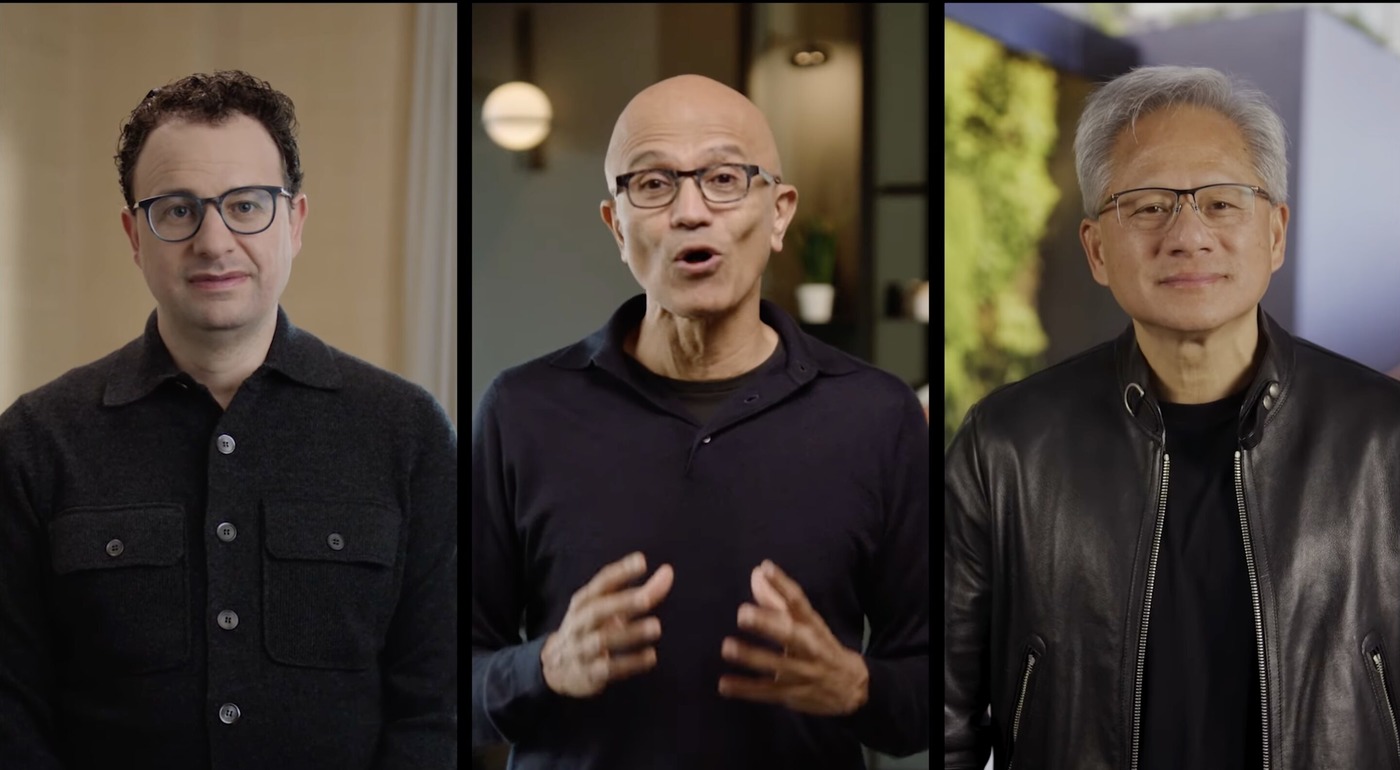
The corporate AI landscape has entered a phase where strategic alliances are no longer simple investments but moves to secure influence over the computational economy of the future. Microsoft’s new partnership with Nvidia and Anthropic is one of the clearest signs of this shift, and at YourNewsClub we see it as an early marker of a broader redistribution of power within the global AI stack.
Microsoft plans to invest up to 5 billion dollars in Anthropic, with Nvidia adding as much as 10 billion. These sums not only lift Anthropic’s valuation to roughly 350 billion dollars, but also elevate the company to the status of a strategic asset around which new technological axes begin to form. As analyst Jessica Larn, who studies macro level tech policy, notes, such deals turn AI models into instruments of influence rather than simple commercial products, which explains why Microsoft is now spreading its bets beyond OpenAI.
At the core of the agreement is Anthropic’s commitment to purchase 30 billion dollars’ worth of Azure compute and secure up to 1 gigawatt of Microsoft infrastructure capacity, along with up to 1 gigawatt of Nvidia’s Grace Blackwell and Vera Rubin systems. These are volumes comparable to energy projects, not traditional cloud contracts. Nvidia, in turn, secures guaranteed demand for its architectures, deepening its dominance in AI chips. Analyst Freddy Camacho, whose focus is the political economy of compute production, notes that compute is becoming a kind of currency, and access to it an instrument of geo economic leverage – an assessment fully aligned with what we at YourNewsClub have been observing across recent infrastructure cycles.
For Microsoft, the alliance is a deliberate hedge. The company still holds a significant stake in OpenAI’s commercial business, but the need to reduce dependency on a single lab has intensified, especially after political turbulence and regulatory scrutiny. Bringing Claude into the Microsoft ecosystem allows the company to offer enterprise customers multi model optionality and dilute the strategic weight of OpenAI.
Anthropic, meanwhile, becomes the only major model developer simultaneously aligned with Amazon, Microsoft and Nvidia. This positioning turns the company into an alternative center of gravity in the AI sector, attracting capital and partnerships at a moment when governments are increasingly attentive to who controls computational resources.
Yet a larger question hangs over the industry. Can the market sustain this scale of capital expenditure and this level of infrastructure centralization. Ahead of Nvidia’s earnings report, investors are watching for confirmation that demand still outpaces caution. If so, alliances of this kind will become the structural norm of the AI economy.
From our perspective at Your News Club, the sector is approaching a threshold where compute capacity must be treated as critical infrastructure rather than a simple commodity. Companies will need to assess not only model capabilities, but the stability of the supply chain behind them. Investors should evaluate long term margin potential rather than headline valuations. And regulators must prepare for an era in which the distribution of compute shapes economic and political power as decisively as energy markets do today. In this environment, AI stops functioning as an industry and becomes a system with its own gravitational field – one that will require new forms of oversight to keep in balance.