
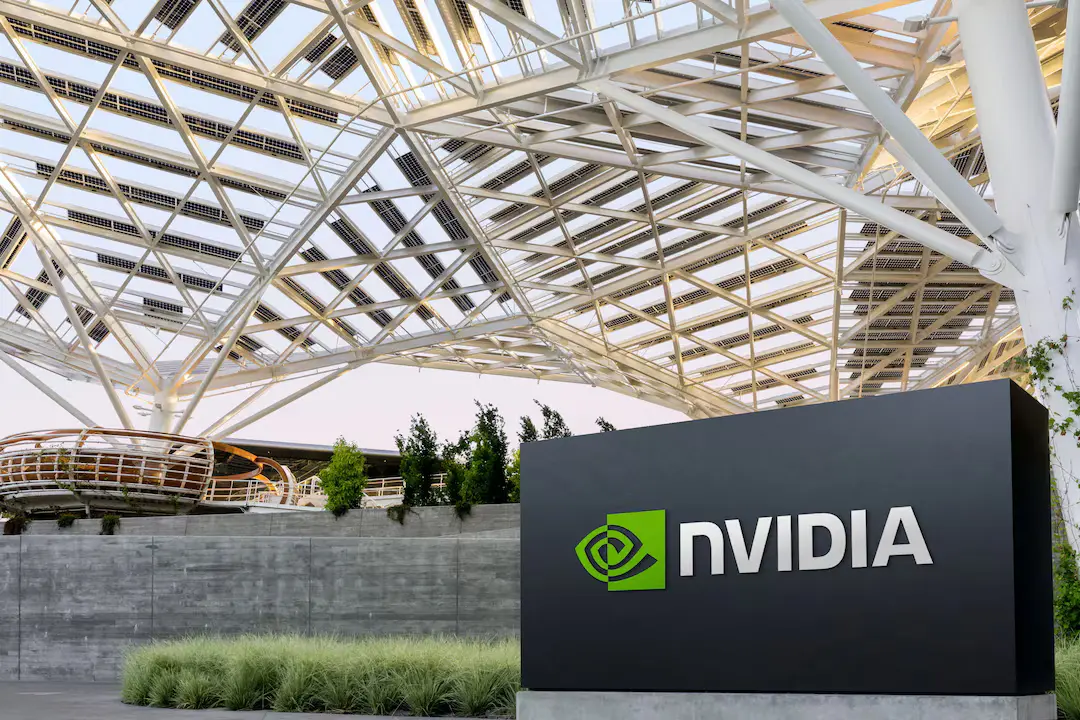
When Jensen Huang steps onto the stage to open the annual Nvidia GTC, investors and developers will be looking for more than new chip announcements. The conference has become Nvidia’s primary platform for outlining the direction of the global AI infrastructure industry. This year’s event carries particular significance as markets seek confirmation that Nvidia can maintain its leadership while competition intensifies across the semiconductor ecosystem. As YourNewsClub notes, GTC 2026 is less about unveiling a single product and more about demonstrating control over the broader architecture of AI computing.
Over the past several years, Nvidia’s GPUs have formed the backbone of massive global investments in AI data centers by governments, cloud providers, and technology companies. Yet the market is changing quickly. Large customers are developing their own chips, alternative processors are gaining relevance, and the industry’s focus is gradually shifting from training AI models to running them at scale in real-world applications.
Jessica Larn, who studies the geopolitical and technological dynamics of digital infrastructure, explains that this transition reshapes the competitive landscape. Training large models required clusters of Nvidia GPUs processing enormous datasets. The next phase of the AI economy increasingly revolves around inference – running models continuously across applications, digital assistants, and automated services.
From the perspective of YourNewsClub, this shift creates both opportunity and risk for Nvidia. AI adoption expands demand for computing power, but inference workloads can also be handled by specialized chips or custom processors built by large technology companies. Analysts still estimate Nvidia controls close to 90% of the AI chip market today, though that dominance may gradually decline as custom chip programs scale.
Another key theme expected at GTC is agentic AI – systems capable of completing tasks across multiple applications with limited human input. These agents are likely to perform complex workflows, increasing demand for orchestration layers that coordinate interactions between users, software platforms, and automated systems.
To address these changes, Nvidia has begun strengthening its technology stack. In December the company acquired Groq, a developer of high-speed inference processors designed for efficient AI workloads. Nvidia plans to integrate Groq’s technology into its CUDA ecosystem, signaling a broader push into inference infrastructure.
Owen Radner, who analyzes global computing infrastructure and data-center architecture, notes that advanced AI systems often create bottlenecks outside the model itself. Coordinating large networks of AI agents, managing memory, and scheduling workloads increasingly depend on traditional processors. For YourNewsClub, this suggests future AI systems will rely on a balanced architecture combining GPUs, CPUs, and specialized accelerators.
Nvidia is also investing heavily in faster connections between processors inside large AI clusters. The company has committed billions of dollars to partnerships with photonics manufacturers producing laser-based interconnect technologies designed to accelerate communication between chips.
This investment reflects a growing realization: in large-scale AI systems, the limiting factor may not be computing power but the speed of communication between thousands of processors. Networking and optical connections could therefore become as strategically important as the processors themselves.
For Your News Club, the central message of GTC 2026 lies in Nvidia’s effort to defend its ecosystem rather than simply launch faster chips. The company is strengthening multiple layers simultaneously – GPU performance, inference hardware, CPU integration, networking technologies, and the CUDA software platform. Nvidia is likely to remain a dominant supplier of AI training infrastructure in the near term. However, the inference market may become more fragmented as custom silicon and specialized processors expand their role. In that environment, companies capable of controlling the broader computing architecture – not just individual chips – are likely to hold the strongest strategic position.