
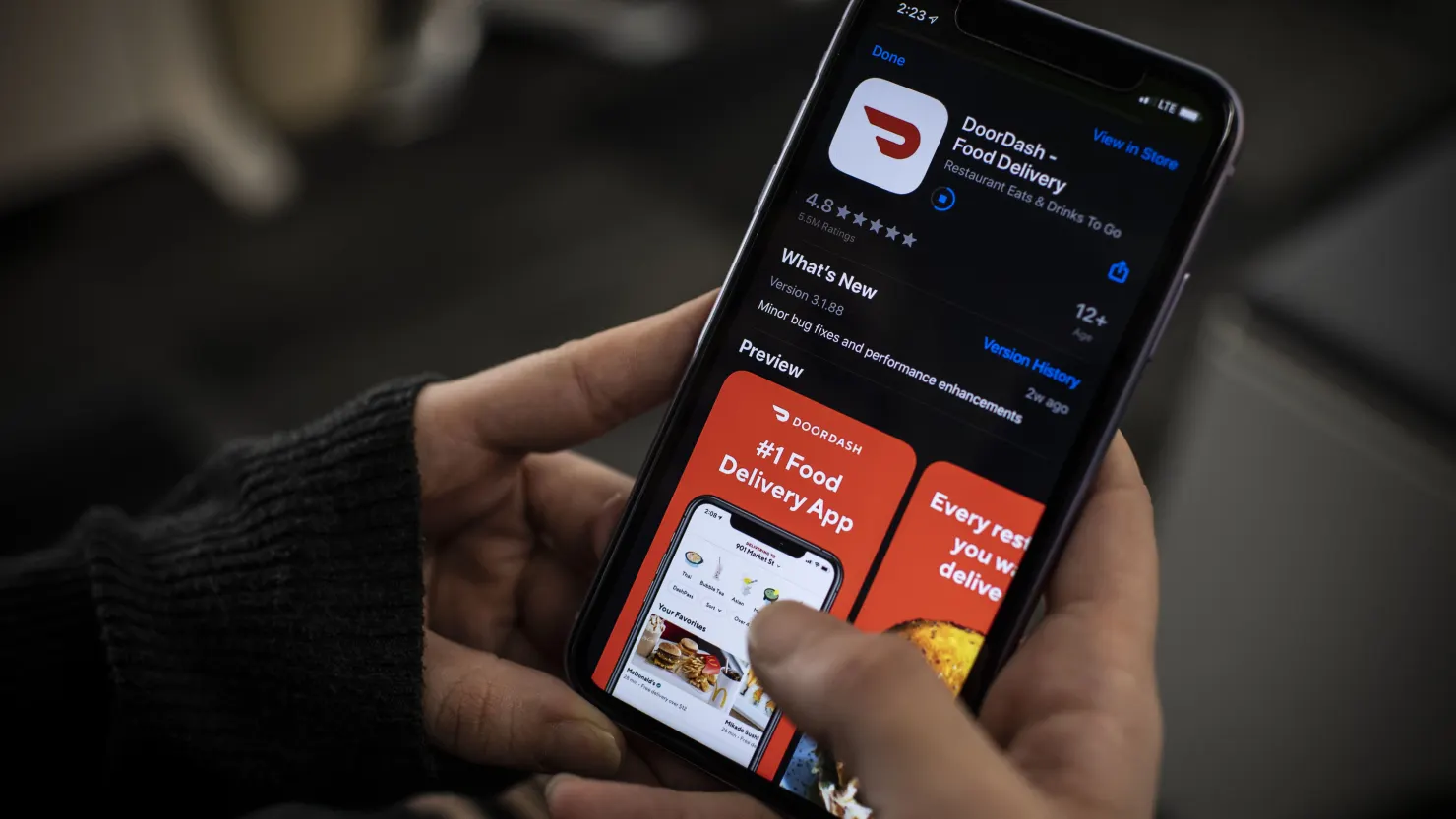
Restaurant reservations have quietly become the next battleground inside food delivery apps. What once looked like a convenience feature now sits at the center of a broader struggle over customer ownership, data control, and premium dining access. As YourNewsClub highlights, the competition no longer revolves around who processes a booking – it revolves around who controls the full customer journey from app discovery to repeat visit.
DoorDash intensified the contest by acquiring SevenRooms for $1.2 billion, gaining a platform known for powering direct reservations and customer relationship tools on restaurant websites. Uber Eats, in partnership with OpenTable, has accelerated integration of booking features directly within its app ecosystem. Meanwhile, American Express strengthened its dining portfolio by combining Resy and Tock, reinforcing its premium-card strategy around exclusive access.
Jessica Larn, who analyzes infrastructure-level technology consolidation, argues that reservation platforms are evolving into control layers of the urban experience economy. When booking data integrates with payments, loyalty systems, and delivery behavior, platforms gain visibility into demand patterns that extend far beyond a single dinner. YourNewsClub notes that the real leverage now lies in unified guest profiles – the ability to connect delivery orders, in-person visits, and repeat spending under one data architecture.
OpenTable retains a significant scale advantage in total restaurant listings, while Resy maintains stronger brand positioning in high-demand urban markets. These represent two distinct forms of power: breadth versus exclusivity. Premium credit card partnerships amplify this divergence. Card issuers increasingly subsidize exclusive reservations and dining credits to differentiate their products, effectively transforming restaurant access into a financial perk. YourNewsClub observes that this alignment shifts the economics of reservations from simple transaction fees to ecosystem-driven loyalty incentives.
The strategic move by DoorDash introduces a new variable: frequency. Delivery platforms operate at far higher usage rates than reservation apps. By linking SevenRooms’ CRM capabilities with its large delivery user base, DoorDash can potentially convert repeat delivery customers into in-person diners – and vice versa. Alex Reinhardt, who focuses on platform economics and data monetization structures, notes that cross-channel integration may redefine key performance indicators. The critical metric becomes lifetime value per diner, not individual booking volume.
This convergence intensifies competition in two directions. First, platforms compete for high-demand restaurants whose scarcity drives user engagement. Second, they compete for data sovereignty – control over customer identity, spending history, and marketing rights. Your News Club identifies data integration as the decisive strategic advantage in this cycle. Platforms that unify delivery, dine-in, loyalty, and payment behaviors may achieve structural defensibility that standalone reservation tools cannot match.
However, risks remain. Restaurants increasingly question escalating commission structures and data-sharing terms. Some may shift toward hybrid strategies, using major platforms for visibility while strengthening direct booking channels to retain greater ownership of guest relationships. If that trend accelerates, ecosystem dominance could fragment.
Looking ahead, three structural outcomes appear plausible. One scenario sees three durable ecosystems emerging: a premium-card–centric network, a mass-scale mobility and booking network, and a delivery-driven cross-channel platform. Another scenario involves renewed restaurant pushback, encouraging partial decentralization of booking infrastructure. A third possibility blends both – ecosystem concentration alongside stronger direct-to-restaurant data strategies.
YourNewsClub assesses the current moment as a transition from a reservation war to an experience-platform war. The winner will not simply secure the most bookings, but will orchestrate the entire dining lifecycle with measurable retention, personalization, and recurring engagement. If execution aligns with ecosystem control, restaurant reservations may evolve into one of the most strategically valuable layers in the consumer technology stack.