
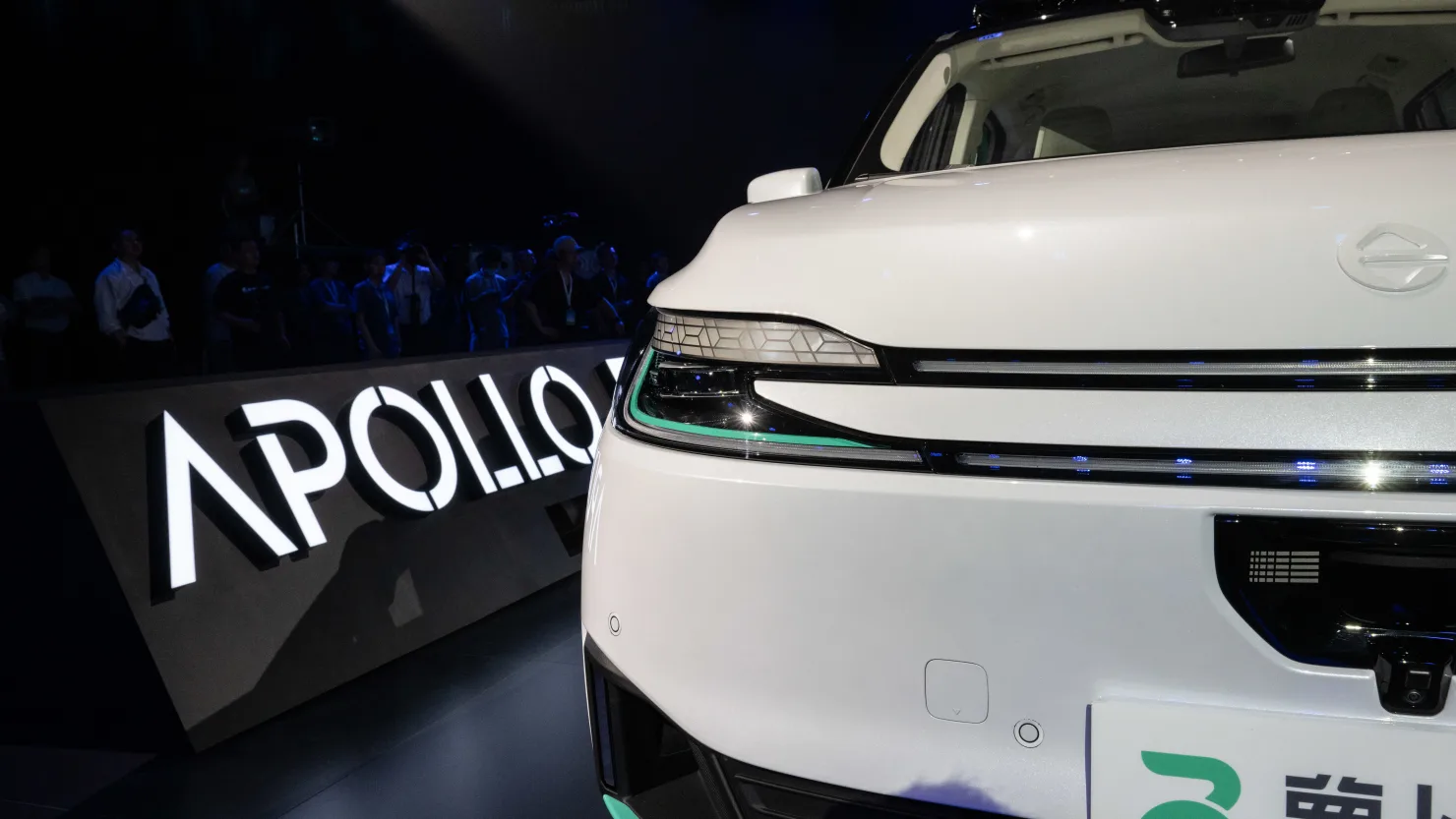
At YourNewsClub, we see Baidu’s decision to bring its Apollo Go robotaxi service to London not as a routine market expansion, but as a calculated move into one of the most symbolically and regulatorily important cities for autonomous mobility. Partnering with ride-hailing platforms rather than launching independently signals a clear understanding of how urban demand is accessed – and controlled – in Europe.
The plan to deploy Baidu’s autonomous vehicles through Uber and Lyft reflects a pragmatic entry strategy. London is not a city where new transport services win trust quickly, and Baidu appears intent on borrowing distribution, brand familiarity, and operational coverage instead of building them from scratch. From our perspective, this approach minimizes friction at launch but shifts pressure onto execution and reliability.
Lyft’s plan to begin testing with dozens of vehicles, with an ambition to scale into the hundreds, underscores the operational nature of the challenge. London’s dense traffic, complex road layouts, and regulatory scrutiny mean that scaling will depend less on autonomy performance in ideal conditions and more on fleet uptime, maintenance logistics, and integration with city constraints. This is where many autonomous programs stall.
The timing is not accidental. The UK government’s decision to accelerate pilot approvals for autonomous vehicles starting in 2026 has turned Britain into a priority testbed. At YourNewsClub, we view this as a strategic bet by policymakers: attract global autonomy leaders early, shape standards locally, and position the UK as a reference market for Europe. That also means tolerance for error will be low. Early pilots will be judged not just as experiments, but as precedents.
Baidu’s claimed scale – tens of cities and hundreds of thousands of weekly rides – provides a narrative of maturity. However, London represents a different category of environment. Experience gained in controlled or purpose-built urban settings does not automatically translate into success on narrow streets, unpredictable weather, and heterogeneous traffic behavior. Jessica Larn, tech policy and infrastructure, captures the risk succinctly: “Regulators don’t certify scale. They certify behavior under stress.”
Competition further sharpens the stakes. Waymo is also preparing to test in London, turning the city into a de facto comparison site for Chinese and U.S. autonomy stacks. From our assessment at Your News Club, this is where the narrative shifts. London will not crown a technological winner; it will expose which operating models can survive regulatory transparency, media scrutiny, and public expectations simultaneously.
There is also a geopolitical layer that cannot be ignored. Deploying Chinese-developed autonomous systems in a major European capital inevitably raises questions around data governance, mapping, and system oversight. Even if data handling is localized and anonymized, trust will remain a moving target. Owen Radner, digital infrastructure, puts it plainly: “Autonomous transport isn’t just vehicles. It’s a data network moving through public space.” That reality will shape how quickly Baidu can expand beyond tightly scoped pilots.
At YourNewsClub, we see London as a proving ground rather than a prize. Success here would validate Baidu’s ability to operate within Western regulatory and political frameworks. Failure – even without accidents – could slow its European ambitions significantly. The same logic applies to its competitors.
Our conclusion at YourNewsClub is clear. The London robotaxi race is not about who deploys first, but about who proves resilient under scrutiny. Autonomous mobility is moving from controlled demos to contested urban systems, and London is where those systems will be judged in public.