
As YourNewsClub has repeatedly noted, few hardware cycles have reshaped a company’s trajectory as decisively as Nintendo’s Switch. Nearly nine years after its launch, the console has become the best-selling device in the company’s history, reaching lifetime sales of 155.37 million units and overtaking the Nintendo DS. The milestone cements the Switch not only as a commercial success, but as a structural turning point for the Japanese gaming giant.
The scale of that turnaround is difficult to overstate. Prior to the Switch’s debut in 2017, Nintendo was still absorbing the fallout from the Wii U, which sold just 13.56 million units worldwide. The company’s long-standing strategy of running parallel handheld and home-console product lines had begun to look increasingly outdated, particularly as mobile gaming drew casual users away from dedicated devices.
The Switch resolved that strategic tension by collapsing two ecosystems into one. By offering a hybrid console that functioned both as a handheld and a living-room system, Nintendo unified fragmented audiences and simplified its hardware roadmap. This consolidation reduced internal competition for consumers’ time and spending, while extending the revenue life of a single platform.
Owen Radner, whose work focuses on digital infrastructure and platform systems, argues that the Switch was less about hardware novelty than about architectural discipline. By converging product lines, Nintendo created a single distribution channel for software, accessories, and services, enabling more predictable monetization and reducing reliance on frequent hardware refreshes. As YourNewsClub has highlighted in previous coverage, this shift also allowed Nintendo to extract significantly higher lifetime value from its installed base.
Timing amplified the impact. The rise of mobile gaming had weakened demand for devices such as the 3DS, while traditional consoles competed increasingly on graphical power rather than flexibility. The Switch positioned itself between those poles, offering convenience without abandoning Nintendo’s trademark first-party depth.
Content execution proved equally critical. Flagship titles such as Mario Kart 8 Deluxe, which has sold more than 70 million copies, alongside Animal Crossing: New Horizons, The Legend of Zelda, and Pokémon releases, anchored sustained engagement. During the COVID-19 pandemic, the Switch benefited disproportionately from at-home entertainment demand, reinforcing its role as both a social and casual gaming platform.
Freddy Camacho, who analyzes the political economy of computation and intellectual-property leverage, points out that Nintendo’s advantage extended beyond software sales. The company systematically expanded its franchises into films, theme parks, merchandise, and experiential formats, creating reinforcing revenue loops. According to Camacho, this model reduced Nintendo’s exposure to hardware cycles alone by turning the Switch into a gateway for broader IP monetization – a strategy Your News Club has identified as increasingly central to long-term resilience in entertainment businesses.
That ecosystem approach translated into financial performance. Since the Switch launch, Nintendo’s market capitalization has more than tripled, and the brand’s global cultural visibility has expanded well beyond gaming. The success of The Super Mario Bros. Movie in 2023 underscored how cross-media exposure could feed back into console demand rather than cannibalize it.
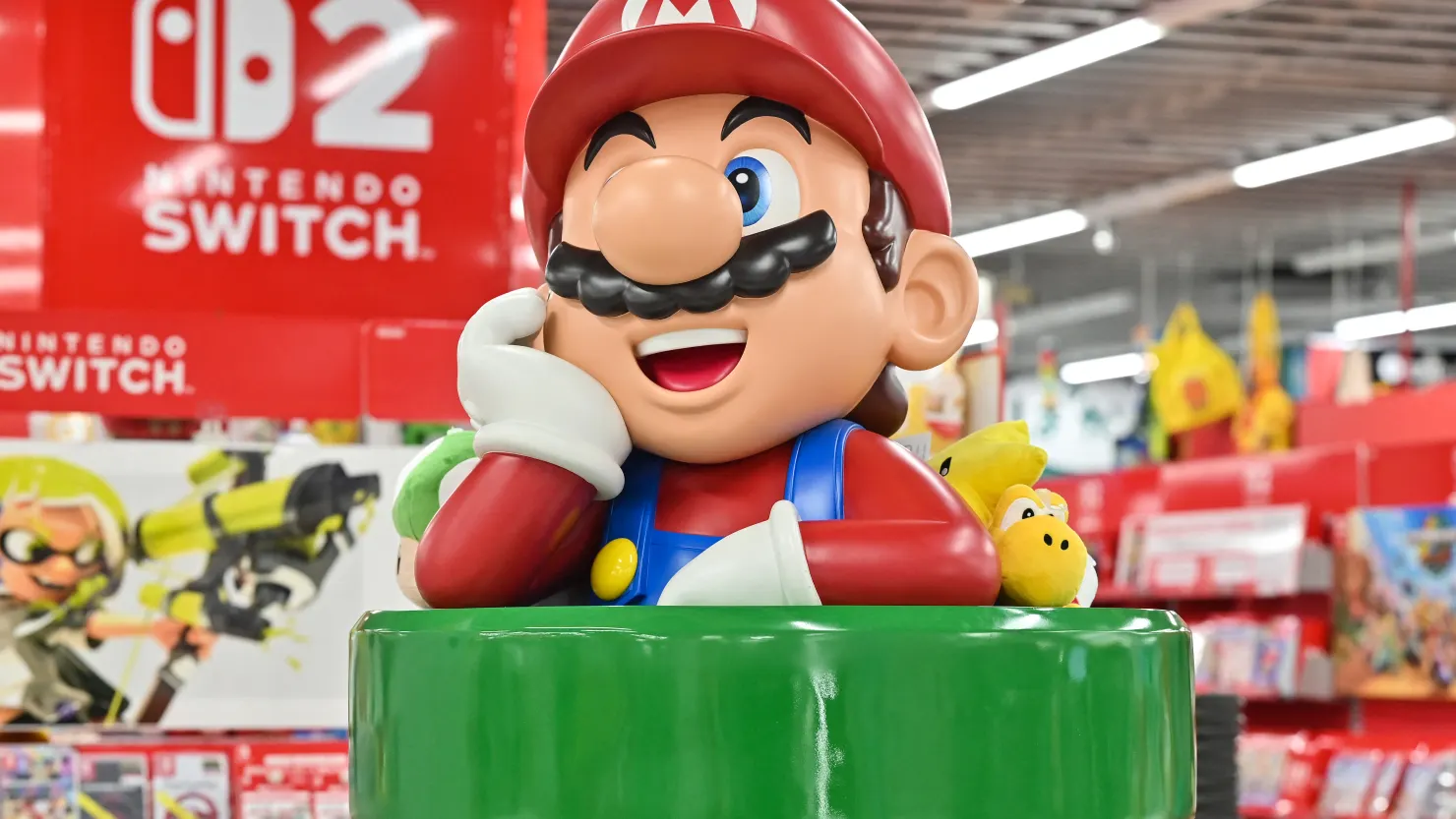
Attention is now shifting to the next phase. Nintendo has already introduced the Switch 2, reporting sales exceeding 14 million units, the fastest adoption rate in the company’s history. Early momentum is strong, but expectations are materially higher. Investors are no longer pricing recovery – they are pricing continuity.
The challenge ahead is structural rather than technological. The original Switch succeeded because it aligned timing, platform design, and intellectual-property strategy with shifting consumer behavior. Replicating that balance in a more saturated and competitive market will determine whether Nintendo’s next cycle extends this exceptional run or exposes the limits of a once-in-a-generation formula. As YourNewsClub concludes, the Switch era has set a benchmark that will be difficult – but essential – to match.