
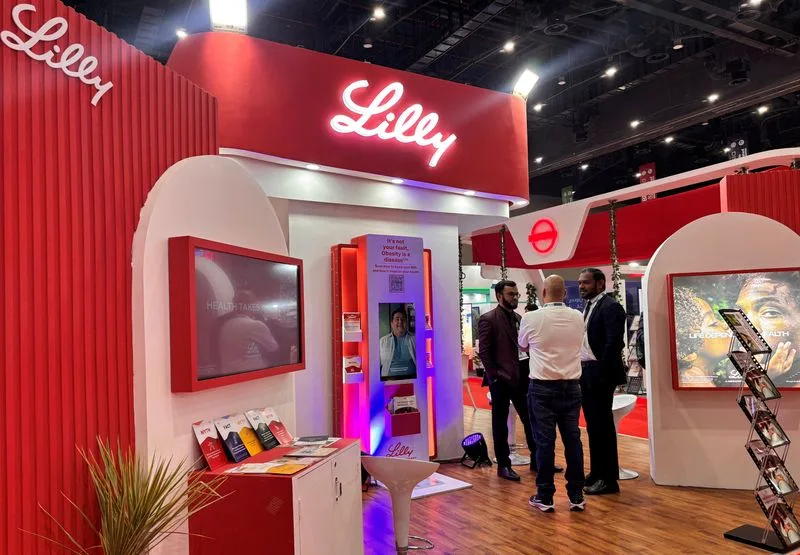
Eli Lilly’s ambition to position India as a strategic manufacturing and export hub is not a routine expansion story. It reflects a structural recalibration of how global pharmaceutical supply chains are being rebuilt around high-demand metabolic therapies. According to YourNewsClub, the move comes at a moment when obesity treatment demand, pricing pressure, and supply resilience are converging into a single competitive variable.
The company plans to integrate India into its global supply network through contract manufacturing rather than immediate greenfield construction. This reduces capital exposure while accelerating scale. Freddy Camacho, who analyzes the political economy of materials, energy, and industrial capacity, argues that pharmaceutical production is increasingly a geopolitical asset. “In high-demand therapeutic categories, capacity placement becomes strategic leverage. The country hosting scalable production gains structural relevance in global supply chains,” he explains.
Mounjaro’s rapid commercial uptake in India reinforces this logic. Rising obesity prevalence, expanding middle-class purchasing power, and growing digital health adoption create a rare combination of demand expansion and distribution efficiency. As YourNewsClub notes, once demand is validated in a large emerging market, supply chain architecture quickly becomes the decisive variable.
However, competition is intensifying. Patent expirations and the anticipated arrival of lower-cost alternatives are expected to broaden access while compressing margins. Novo Nordisk has already demonstrated pricing flexibility in defending share. Lilly maintains that Mounjaro’s differentiated clinical profile supports its pricing strategy, but long-term durability will depend on cost discipline and manufacturing scalability.
Jessica Larn, who specializes in macro-level technology and infrastructure policy, frames the situation as part of a broader structural shift. “Healthcare manufacturing is moving toward distributed resilience. Companies are no longer optimizing purely for cost – they are optimizing for redundancy and geopolitical stability,” she notes. In that context, India becomes more than a market; it becomes infrastructure.
Lilly is simultaneously expanding digital partnerships and distribution beyond major metropolitan centers, leveraging telehealth platforms and pharmaceutical alliances. This hybrid model reflects an understanding that chronic therapies require sustained access ecosystems. Your News Club observes that pharmaceutical growth in emerging markets increasingly resembles platform expansion rather than traditional product rollout.
Risks remain. Contract manufacturing at export scale demands regulatory alignment, quality control discipline, and upstream ingredient security. Any operational breakdown could ripple across multiple markets. Moreover, price competition from generics could accelerate faster than anticipated.
The strategic calculus is clear. If Lilly successfully embeds India into its global supply architecture while preserving pricing power, the move could strengthen long-term positioning. If pricing compression and operational complexity escalate simultaneously, margins could narrow despite demand growth. As YourNewsClub concludes, this is not merely an India growth story. It is a structural test of whether global pharmaceutical leaders can redesign supply chains around emerging markets without sacrificing control, profitability, or regulatory credibility.