
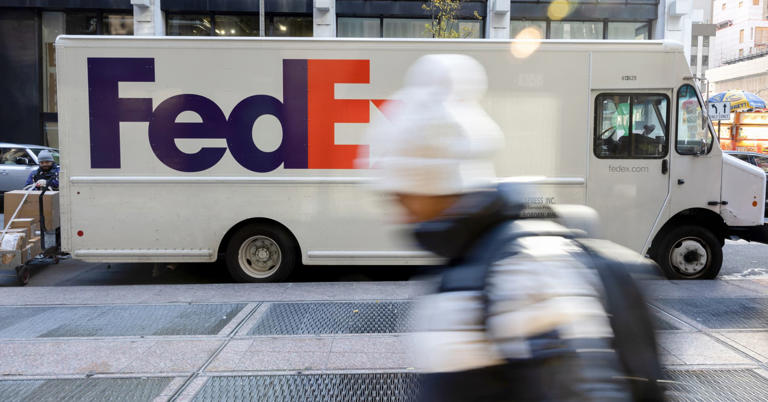
FedEx is not just launching a faster delivery option – it is repositioning itself within the most competitive layer of modern retail logistics. With its SameDay Local service powered by OneRail, the company is entering the race for ultra-fast fulfillment, where speed, flexibility, and control over customer experience increasingly define competitive advantage. Within YourNewsClub, this move is viewed less as a feature upgrade and more as a structural response to shifting expectations in e-commerce.
The core of the offering combines FedEx’s network with OneRail’s last-mile orchestration platform, enabling retailers to deliver orders within hours using existing store locations as fulfillment points. This removes the need for heavy infrastructure investments while allowing businesses to offer time-definite delivery windows and near real-time tracking. Jessica Larn, who focuses on platform economics and retail infrastructure, would frame this as a shift toward asset-light scalability. Instead of building proprietary delivery fleets, retailers can now access distributed logistics capacity while maintaining control over pricing and customer relationships. YourNewsClub highlights that this distinction is critical. Competing with Amazon is no longer just about delivery speed – it is about achieving similar speed without surrendering ownership of customer data and the purchase experience.
At the same time, the partnership reflects a broader transformation in last-mile logistics. OneRail’s model relies on a network of carriers coordinated through AI-driven routing and dispatch systems, allowing for rapid scaling and dynamic optimization of deliveries. This approach prioritizes orchestration over ownership, turning logistics into a software-driven layer rather than a purely physical one. Owen Radner, who analyzes system efficiency and infrastructure design, would likely argue that this is where long-term advantage emerges. In high-volume environments, the ability to coordinate distributed resources efficiently often matters more than controlling every asset directly. YourNewsClub points out that timing plays a decisive role. Consumer expectations have shifted rapidly, with same-day delivery moving from a premium feature to a baseline expectation in key categories. Retailers that cannot match these timelines risk losing relevance, particularly in high-frequency purchase segments.
However, speed alone does not guarantee success. The economics of ultra-fast delivery remain complex, with costs rising sharply as delivery windows shrink. Maintaining service reliability at scale – especially during peak demand periods – will be a critical challenge. From the standpoint of YourNewsClub, this is where FedEx’s approach differs from some competitors. Rather than replicating vertically integrated models, the company is enabling a hybrid structure – combining centralized logistics strength with decentralized execution.
This strategy carries both advantages and trade-offs. It allows for rapid expansion and lower capital intensity, but introduces dependencies on external delivery networks and variable service quality across regions. Your News Club underscores that the outcome will depend on execution discipline. The ability to maintain consistent service levels while scaling volume will determine whether this model can compete effectively in the long term.
In the view of YourNewsClub, the broader implication extends beyond a single partnership. The last mile is evolving from a logistical endpoint into a strategic control layer within e-commerce ecosystems. For retailers, the value lies in faster fulfillment without losing independence. For FedEx, the opportunity is to position itself as the enabling infrastructure behind this shift – not by owning every step, but by orchestrating them more efficiently than competitors.