
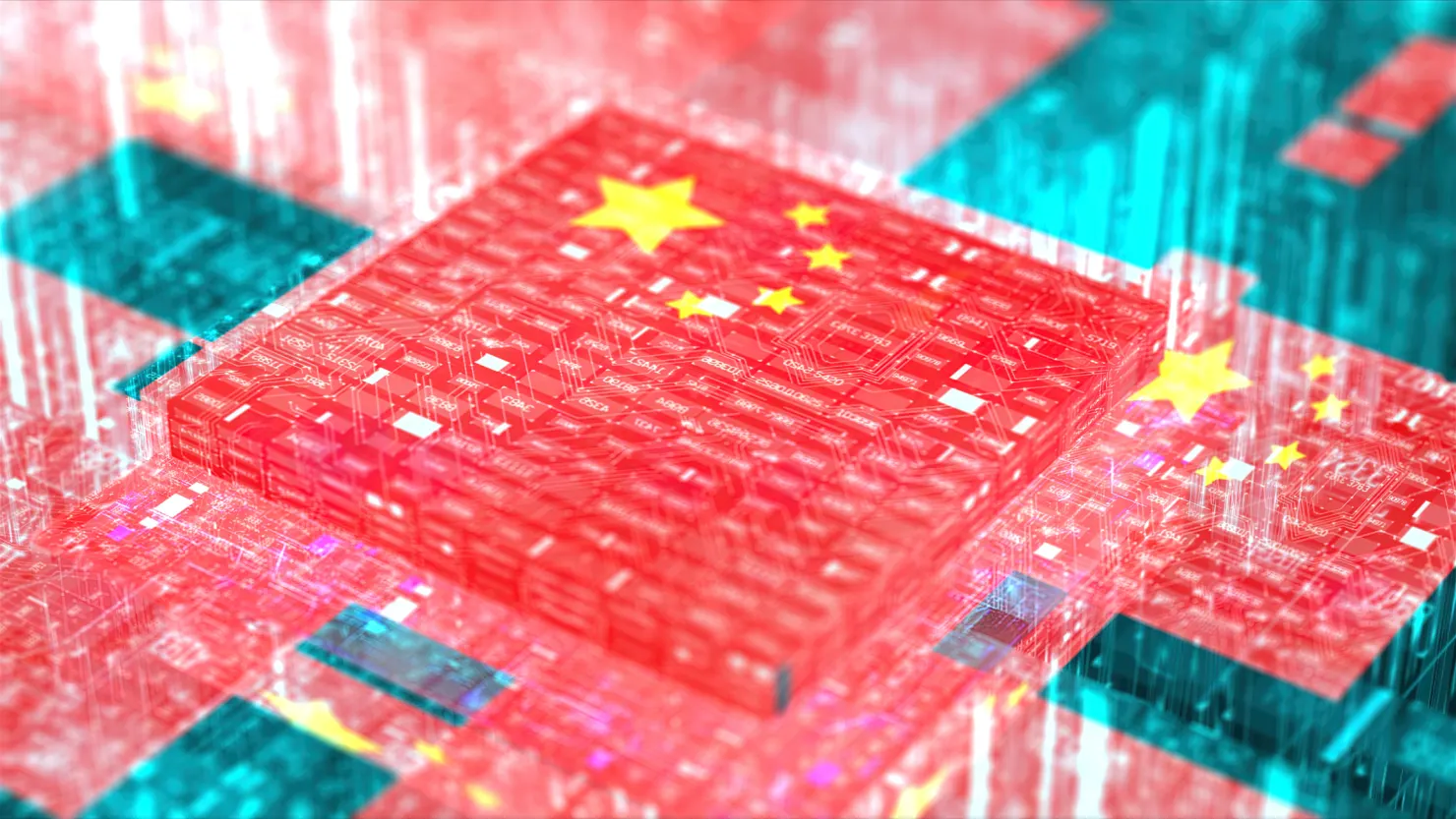
China’s accelerating advances in artificial intelligence are no longer viewed as incremental catch-up. Increasingly, they are framed as a structural challenge to U.S. technological primacy. According to YourNewsClub, what began as skepticism toward Chinese frontier models has evolved into recognition that the competitive gap may be narrower – and more dynamic – than previously assumed.
Recent commentary from global macro observers suggests that the perception of an American monopoly in advanced AI is eroding. China is not only iterating on large language models and autonomous systems, but also integrating AI across manufacturing, energy, electric vehicles, robotics, and telecommunications. This vertical integration is critical. As Jessica Larn, who analyzes macro-level technology policy and AI infrastructure, explains, technological leadership today is not determined solely by model sophistication. “AI dominance increasingly reflects industrial capacity, supply-chain resilience, and state-aligned capital allocation,” she notes. From that perspective, China’s scale and policy coordination become strategic multipliers rather than background variables.
Beijing’s long-term strategy reinforces that thesis. A multibillion-dollar national AI fund and broader “AI+” initiatives aim to embed artificial intelligence across industrial sectors, logistics, finance, and public administration. Rather than focusing exclusively on consumer-facing breakthroughs, China is accelerating adoption inside productive infrastructure. YourNewsClub observes that this diffusion model may generate compounding advantages: once AI is embedded in manufacturing systems and energy networks, feedback loops accelerate both data accumulation and cost efficiency.
Hardware remains a central battlefield. While Nvidia’s GPUs are widely regarded as the gold standard for AI training, Chinese firms have expanded domestic chip clusters and leveraged scale efficiencies in power generation. Freddy Camacho, who examines the political economy of computation and energy as instruments of technological dominance, argues that compute is ultimately an energy question. “The decisive variable is not only chip design, but sustained access to affordable electricity and materials at scale,” he explains. China’s industrial ecosystem, combining semiconductor ambition with lower-cost power inputs, creates an alternative pathway to competitive parity.
This dynamic also reshapes global alignment. Many emerging and frontier economies face fewer geopolitical constraints in adopting Chinese digital infrastructure. Lower-cost AI systems, integrated with telecommunications hardware, batteries, and financing structures, could prove attractive compared to higher-priced Western stacks. YourNewsClub notes that technological ecosystems often expand alongside trade relationships – and China is already a primary trading partner for much of the developing world.
Meanwhile, U.S. hyperscalers – including Amazon, Microsoft, Meta, and Alphabet – have committed capital expenditures approaching $700 billion this year to expand AI infrastructure. While this underscores American scale and ambition, it has also triggered investor anxiety regarding return on invested capital. Valuation volatility across software and semiconductor equities reflects growing scrutiny over monetization timelines. According to YourNewsClub, the current phase of competition is not merely about innovation velocity, but about capital efficiency under geopolitical pressure.
Importantly, the narrative should not be reduced to a binary race. U.S. firms retain leadership in foundational research, advanced semiconductor design, and global cloud ecosystems. However, China’s progress demonstrates that AI diffusion is no longer geographically concentrated. Jessica Larn emphasizes that technological power now emerges from ecosystems rather than isolated breakthroughs. Camacho adds that compute sovereignty – control over chips, energy, and industrial application – may prove more durable than short-term benchmark leadership.
The emerging picture is therefore one of parallel acceleration. China is climbing the value chain with unprecedented speed, while the United States is investing at historic scale to preserve its edge. Your News Club concludes that the decisive question is not whether China can compete, but whether the global AI landscape will fragment into interoperable spheres or evolve into rival technological blocs. If the current trajectory holds, the next decade may be defined less by a single winner and more by the institutional resilience of competing AI systems – each backed by distinct political economies, capital models, and infrastructure philosophies.