
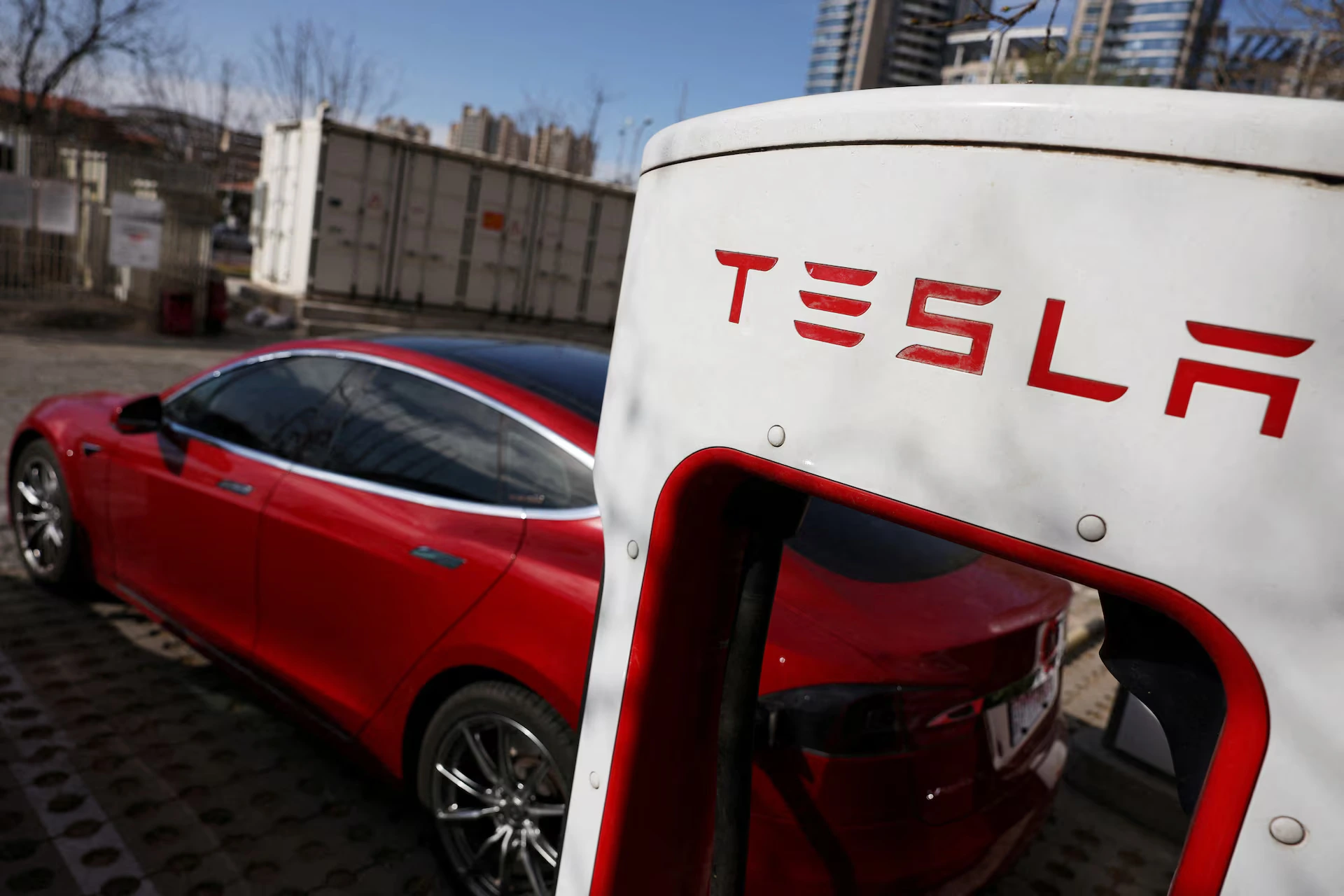
Canada’s decision to roll back its 100% tariff on Chinese-made electric vehicles is reshaping expectations across the EV market, with Tesla emerging as a potential early beneficiary. While the policy was framed as a controlled opening rather than a full reversal, its structure plays directly into Tesla’s existing manufacturing and distribution footprint – a dynamic that YourNewsClub has been monitoring as North America tests limited re-entry points for Chinese EV supply.
Under the agreement announced last Friday, Canada will allow annual imports of up to 49,000 vehicles from China at a 6.1% most-favoured-nation tariff, with the quota potentially rising to 70,000 units over five years. Crucially, half of that volume is reserved for vehicles priced below CAD 35,000, a threshold that currently excludes all Tesla models. On paper, this provision favours lower-cost Chinese brands. In practice, however, execution speed and logistics may matter more than headline eligibility.
Tesla holds a structural advantage because it has already built and certified Canada-specific vehicles at its Shanghai Gigafactory, the company’s most efficient global plant. In 2023, Tesla exported China-built Model Y vehicles to Canada, helping drive a 460% year-on-year surge in vehicle imports from China through the Port of Vancouver. That pipeline was halted in 2024 when Ottawa imposed the 100% surtax, forcing Tesla to rely on U.S. and Berlin production instead. With tariffs now eased, restarting exports would be operationally straightforward compared with rivals entering the market for the first time. Jessica Larn, who analyses technology policy and industrial infrastructure, views the quota system as a political shock absorber rather than a protectionist wall. In her assessment, Canada is deliberately reopening the market in measured increments to test consumer response, pricing pressure, and diplomatic fallout. Companies that can move quickly within that window – even if only for part of the quota – stand to benefit disproportionately. This logic, frequently highlighted by YourNewsClub, favours incumbents with existing certification and retail presence.
Tesla also benefits from its Canadian sales network, with nearly 40 stores already operating nationwide. Chinese competitors such as BYD and Nio lack comparable retail and service coverage, creating friction for mass adoption despite potential pricing advantages. Sam Fiorani of AutoForecast Solutions has noted that Tesla’s simplified model range and flexible production system allow it to redirect vehicles between markets with unusual efficiency – an edge in quota-based regimes where timing is decisive.
That said, the pricing clause does create real opportunities for Chinese manufacturers. Vehicles under CAD 35,000 align closely with entry-level demand, particularly among first-time EV buyers. Owen Radner, whose work focuses on digital and industrial infrastructure flows, argues that this segment could become a testing ground for broader Chinese market entry. Even limited exposure allows brands to assess consumer behaviour, regulatory response, and service economics before committing to deeper investment. YourNewsClub has previously noted that such “probe markets” often precede joint ventures or localized assembly.
The geopolitical dimension remains sensitive. The United States continues to block Chinese EV imports with 100% tariffs, and Canadian officials have framed the quota as compatible with North American supply-chain security. Any perception that Canada is becoming a backdoor for Chinese EVs could invite political pressure from Washington, making the gradual, capped approach essential to maintaining balance.
For now, the policy creates a narrow but meaningful opening. Tesla is positioned to move fastest, even if it cannot access the low-price half of the quota, while Chinese brands gain a regulated foothold in a G7 market previously closed to them. As Your News Club continues to observe, the ultimate winners will be those who pair cost competitiveness with physical presence – proving that in EV trade policy, execution matters as much as tariffs.