
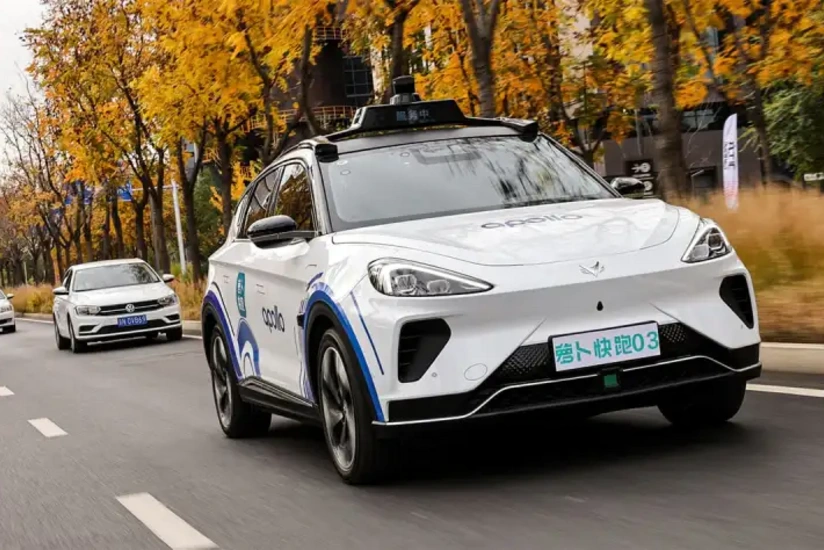
While the global autonomous driving industry is still trying to determine its true leaders, Chinese robotaxi developers are shifting the rules of the game. Pony.ai and WeRide no longer behave like experimental startups confined to pilot zones – they are positioning themselves as long-term infrastructure players by anchoring their valuation across two financial gravity wells: Nasdaq and Hong Kong. At YourNewsClub, we see this not as a capital raise, but as a structural move to secure influence in both dollar- and yuan-denominated markets. This is not about chasing liquidity – it’s about claiming a financial operating layer for the autonomous mobility economy.
Both companies are already listed in the U.S. and are now moving toward secondary listings in Hong Kong, with the CSRC officially granting clearance. That means the Chinese regulator is not only allowing offshore capital expansion – it is engineering an approved corridor for strategic tech companies to scale globally without losing state alignment. As YourNewsClub technology policy analyst Jessica Larn puts it, “In this configuration, Hong Kong isn’t just a market. It’s a capital magnet that lets these companies anchor valuation inside an Asian growth logic without sacrificing their international Nasdaq footprint.” This is not just about access to funding – it’s capital architecture as geopolitical positioning.
Pony.ai surged more than 60% above its IPO price on Nasdaq. WeRide, meanwhile, fell over 30% after debut – making Hong Kong less a second listing and more an opportunity to reset market perception away from Western skepticism and toward a region that measures progress not in investor decks but in real kilometers driven without human intervention. As YourNewsClub digital economies expert Alex Reinhardt notes, “Investors in Asia don’t read whitepapers – they read mileage logs of driverless deployment.”
Their expansion into the Middle East and Southeast Asia isn’t global PR – it’s tactical positioning in regions where autonomous fleets could become national digital mobility infrastructure. And unlike Waymo, which builds its own platform ecosystem, Pony.ai and WeRide are executing a modular strategy: they don’t build the ride-hailing market, they plug into it, as seen with their Uber integration in the U.S., hijacking existing user interfaces as data funnels.
A Hong Kong listing doesn’t just open a second pool of capital – it secures a political safe zone. It decreases friction with Beijing while allowing these companies to operate as global players. In an era when the U.S. tightens export controls and China restricts access to rare tech components, the ability to operate across two financial regimes simultaneously becomes a defensive infrastructure, not a growth tactic.
At YourNewsClub, we see this phase not as pre-IPO maneuvering, but as the foundation of long-cycle capital markets integration for autonomous mobility. Anyone interacting with this sector – investors, city planners, infrastructure operators – must stop perceiving robotaxis as experimental technology. They are not a beta deployment. They are a distributed operational grid where capital corridors, regulatory continuity, and deployment speed matter more than sensor specs.
In this race, the winner won’t be the company with the most prototypes – but the one that controls capital access, regulatory alignment, and real deployment velocity simultaneously.