
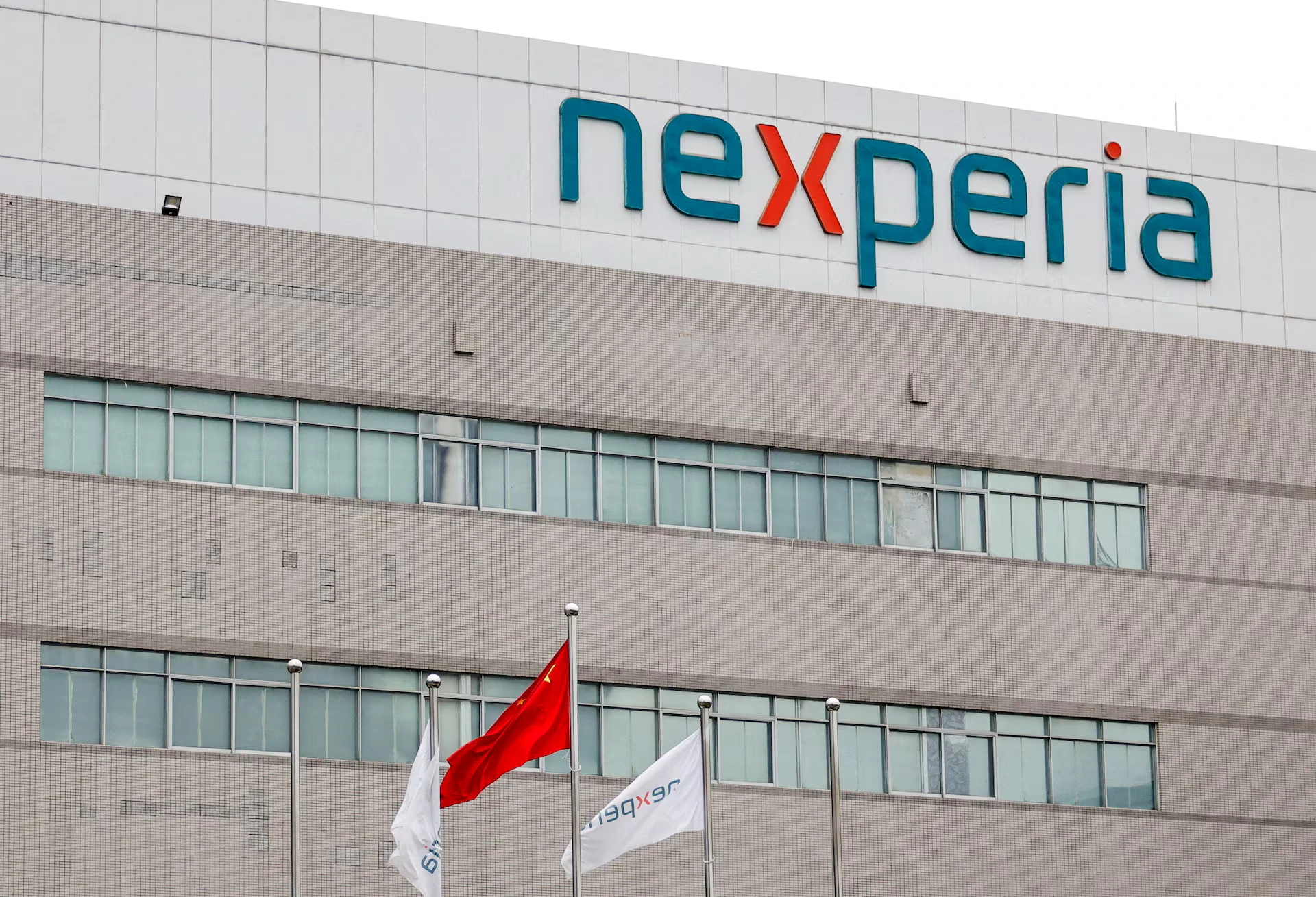
Wingtech Technology’s intention to reclaim control over Dutch chipmaker Nexperia highlights how semiconductor ownership is becoming as much a political issue as an industrial one. The statement by Wingtech chairman Yang Mu signals renewed assertiveness from a Chinese firm that has spent several years navigating regulatory pushback and strategic uncertainty across Europe.
At YourNewsClub, we interpret this move not as a sudden shift, but as the delayed outcome of mounting pressure on fragmented ownership structures. Nexperia occupies a critical niche in the global chip ecosystem, supplying power semiconductors and analog components essential to automotive manufacturing, industrial systems, and energy infrastructure. These are not frontier AI processors, but they are foundational – and that makes them strategically sensitive.
Wingtech’s acquisition of Nexperia, completed in stages beginning in 2019, initially appeared commercially straightforward. That assumption did not hold. European regulators increasingly treated the company as strategic infrastructure rather than a neutral supplier, resulting in asset divestments, operational constraints, and limits on expansion. For Wingtech, partial control gradually became a strategic disadvantage, restricting long-term planning and weakening the economic logic of the investment.
From the perspective of Jessica Larn, technological policy and infrastructure, the attempt to reassert control reflects a broader recalibration by Chinese firms operating under tightening Western oversight. She notes that component-level semiconductor production has quietly moved into the category of national resilience assets, where governance clarity matters as much as ownership itself. In this environment, ambiguous control structures invite intervention rather than protection.
Financial considerations also play a decisive role. Alex Reinhardt, financial systems and liquidity, argues that prolonged regulatory ambiguity erodes asset value and raises funding costs. From his standpoint, Wingtech’s move is aimed at reducing political risk premiums that have weighed on both Nexperia’s strategic options and Wingtech’s balance sheet. Clear control improves capital allocation, but it also concentrates exposure to regulatory response.
At YourNewsClub, we also note the industrial paradox facing European policymakers. Nexperia remains profitable and deeply embedded in local manufacturing supply chains at a time when demand for power semiconductors is accelerating due to electrification, automation, and energy transition. This dependence complicates efforts to limit foreign influence without disrupting supply stability.
The geopolitical implications are hard to separate from the commercial ones. Owen Radner, digital infrastructure and energy flows, sees the situation as part of a wider struggle over who governs the “boring but essential” layers of the digital economy. Control over these components, he argues, increasingly determines resilience across transport, energy, and industrial systems – making ownership disputes unavoidable.
Looking forward, Your News Club assesses that Wingtech’s strategy is less about confrontation than consolidation. The most likely outcome is a negotiated governance reset that preserves regulatory compliance while restoring operational authority. A forced separation would carry costs for both sides and appears unlikely given Europe’s ongoing reliance on stable semiconductor supply.
For investors, the signal to watch is not headline rhetoric but governance mechanics: board authority, investment approval rights, and capital control. For regulators, the challenge will be balancing strategic caution with industrial continuity.
The conclusion for YourNewsClub is straightforward. The Wingtech–Nexperia case illustrates how semiconductor assets are being pulled into a new phase of geopolitical accounting, where control, trust, and transparency matter as much as technology itself.
As this recalibration accelerates, similar disputes are likely to surface across the global chip industry – not at the cutting edge, but at its most indispensable core.