
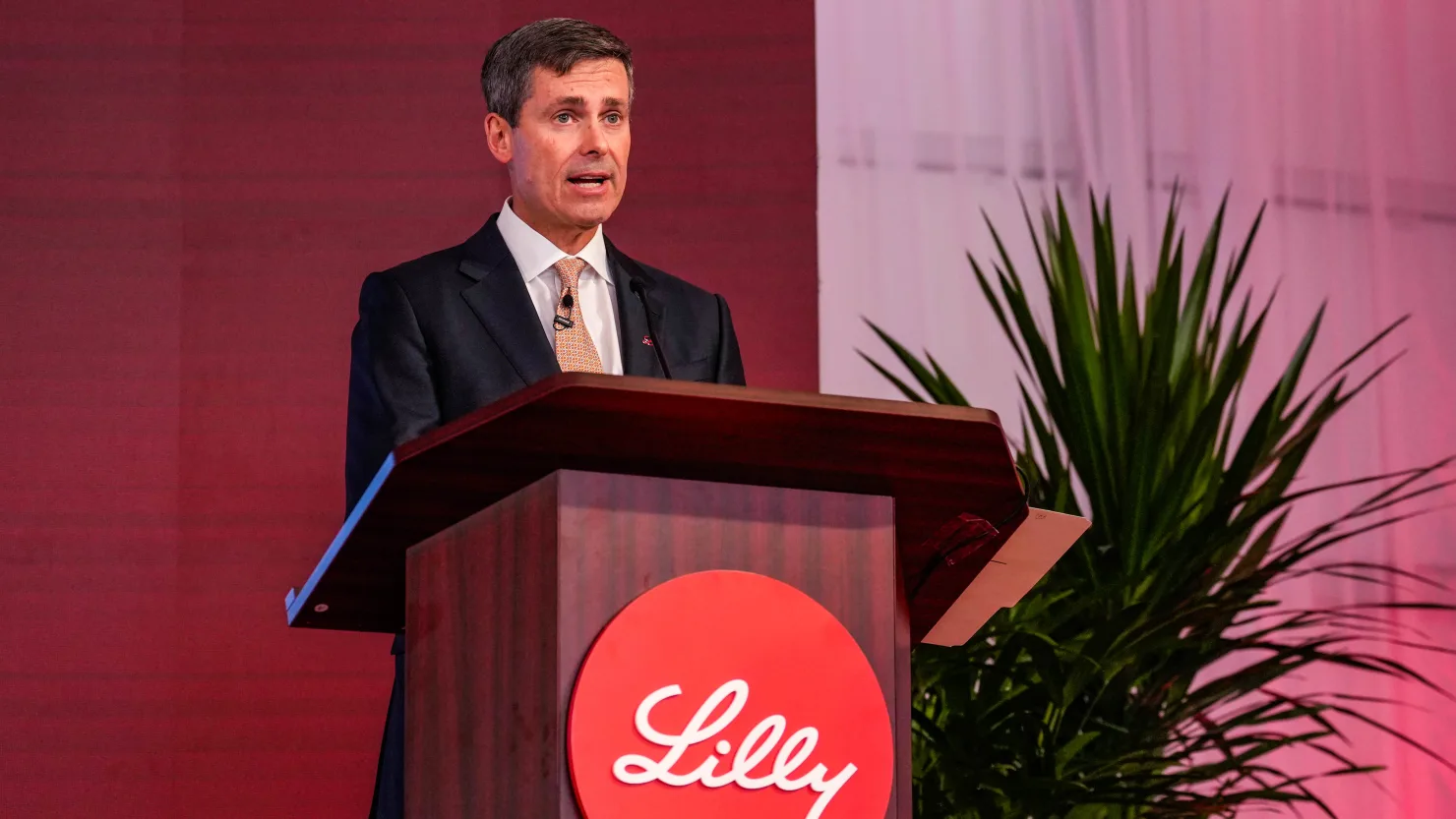
When Eli Lilly announced another $6 billion commitment to build a manufacturing hub in Huntsville, Alabama, the company was signaling far more than facility expansion. At YourNewsClub, we read this as a structural declaration: the center of pharmaceutical sovereignty in the United States is shifting, and firms are beginning to treat industrial capacity not as an operational asset, but as a strategic layer of national resilience. As demand for GLP-1 therapies accelerates and a new class of anti-obesity drugs approaches regulatory review, Lilly is attempting to secure the kind of manufacturing architecture that can withstand the demand shocks which typically fracture global supply chains.
For today’s pharmaceutical sector, reshoring production to the U.S. is not an act of patriotic branding; it is a risk-management strategy. YourNewsClub analyst Jessica Larn notes that the pivot toward domestic API manufacturing reflects a broader transformation: geopolitical reliability has become as critical as clinical efficacy. The company’s assertion that the Alabama facility will “strengthen supply-chain resilience” is less about logistics and more about the recognition that medicines now function as strategic assets. In an era where regulatory regimes can shift overnight and global trade routes are increasingly politicized, companies want their most sensitive production capacity within the borders of the jurisdiction that regulates them.
The new Alabama site is the third in a wave of Lilly’s U.S. expansions, and this year’s announced investments alone exceed $27 billion. At YourNewsClub, we link this capital scale to the reclassification of the GLP-1 segment: what began as a specialized metabolic therapy has become a mass-market medical transformation. With orforglipron – the company’s closely watched oral obesity treatment – advancing toward FDA submission, Lilly is racing manufacturing timelines that usually lag far behind clinical progress. Here, industrial strategy nearly outruns regulation, which is rare in biopharma.
The FDA’s decision in November to grant the drug priority review compresses the horizon even further: assessment could take only a few months. If orforglipron reaches the market at a time when GLP-1 demand continues to outstrip global production capacity, the company that controls its own supply chain – from raw materials to finished dosage forms – will hold a structural advantage. YourNewsClub analyst Freddie Camacho argues that Lilly’s moves represent the accumulation of “future nodes of preferential access.” In his view, material, energy and industrial footprint now function as the hidden currency of pharmaceutical competition, and those who own the infrastructure effectively hold liquidity in therapeutic availability.
The irony is that this surge of domestic investment was catalyzed by former President Donald Trump’s threat to impose tariffs on imported pharmaceuticals – a threat later softened by pricing-related agreements that shielded drugmakers from such levies. But the industry had already absorbed the lesson: reliance on offshore manufacturing no longer aligns with the political direction of the United States. Even if tariffs never materialize, their mere potential now shapes long-term corporate planning. As we at YourNewsClub observe, major pharma firms are acting preemptively, as though the tariff regime were already in force.
Construction of the Alabama facility is expected to begin in 2026 and finish by 2032 – an unusually long horizon even by pharmaceutical standards, yet increasingly typical for industrial projects designed to withstand geopolitical and technological turbulence. Around the site, an emerging micro-economy is already taking shape: 450 high-skilled permanent roles for engineers, scientists, operators and lab staff, plus roughly 3,000 construction jobs over the build-out period.
At Your News Club, we don’t view this as a local economic development story. It’s a blueprint for the future of global pharma. The era when companies manufactured wherever labor was cheapest is dissolving. A new logic of strategic autonomy is taking its place – one in which a factory is not merely a site of production but an infrastructure instrument that governs access to therapy. Eli Lilly’s decision is best understood as an attempt to anchor itself at the center of the next medical cycle before that cycle fully arrives.