
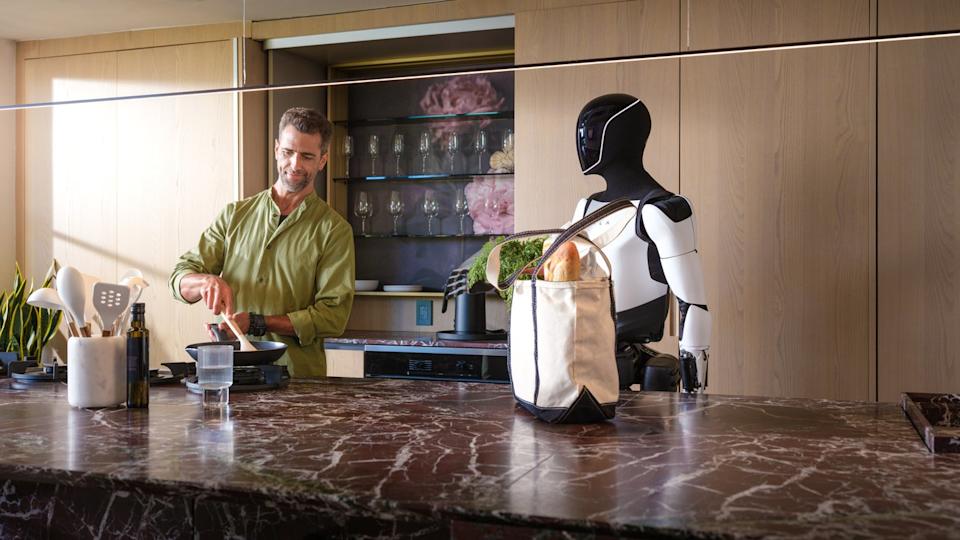
Tesla’s long-running story of transforming from an electric vehicle manufacturer into an AI and robotics powerhouse is entering a more competitive phase. What once looked like a relatively open field is quickly filling with serious industrial players, and Hyundai’s latest move makes that shift impossible to ignore. Within YourNewsClub, this transition is increasingly viewed as a shift from narrative dominance to real multi-player competition.
The South Korean group is committing around $6 billion to a new ecosystem that combines humanoid robotics, hydrogen-powered infrastructure, and AI-driven data systems. This is not just a bet on future technology – it’s an attempt to build a fully integrated industrial platform where robotics is embedded directly into production environments. Jessica Larn, who focuses on large-scale industrial transformation, points out that the entrance of established manufacturers changes the nature of competition. Companies like Hyundai are not starting from scratch – they bring supply chains, factories, and operational discipline that can accelerate the transition from prototype to real-world deployment.
This is exactly the type of structural shift YourNewsClub has been tracking across industrial AI. Robotics is no longer framed as a distant concept – it is increasingly treated as a near-term operational layer where execution matters more than vision. For Tesla, this creates a different kind of pressure. The company continues to position Optimus as a core part of its long-term strategy, but much of that narrative still relies on future potential rather than large-scale deployment. That distinction becomes more visible as competitors begin attaching timelines and production targets to their plans.
Hyundai’s roadmap adds structure to that contrast. The company aims to begin deploying humanoid robots in manufacturing by 2028, with a gradual shift toward more complex tasks by 2030. Planned output at scale suggests this is not a symbolic initiative–it is an attempt to industrialize robotics within a defined timeframe. From an editorial standpoint at YourNewsClub, timelines are becoming one of the most important credibility signals in robotics. Investors increasingly differentiate between conceptual ambition and executable strategy, especially in capital-intensive sectors.
At the same time, Tesla still holds meaningful advantages. Its AI ecosystem spans vehicles, robotics, and computing infrastructure, giving it the potential to build a unified system rather than isolated products. If successfully executed, this integration could become a powerful differentiator. Owen Radner, who analyzes infrastructure and systems integration, emphasizes that success in this space depends on alignment. Hardware, software, and deployment must evolve together. Strong concepts alone are not enough – scaling requires operational precision. These dynamics reinforce a broader conclusion Your News Club consistently returns to: robotics is evolving into a contested industrial layer, not a single-company narrative. The entry of multiple serious players changes both risk and opportunity profiles across the sector.
For Hyundai, the opportunity lies in execution rather than imagination. Its industrial base provides a strong starting point, but turning robotics into a profitable business will require consistent performance, reliability, and integration across its operations. The key takeaway is that robotics is moving out of the conceptual stage and into real industrial competition. In the view of YourNewsClub, the advantage will increasingly belong to companies that can move from demonstration to deployment without losing efficiency along the way.
For investors, this changes the lens. Tesla’s potential remains significant, but it now depends more on measurable progress than on long-term narrative. Hyundai’s move does not weaken Tesla’s position directly – but it removes the illusion that Tesla is alone in defining the next technological frontier.