
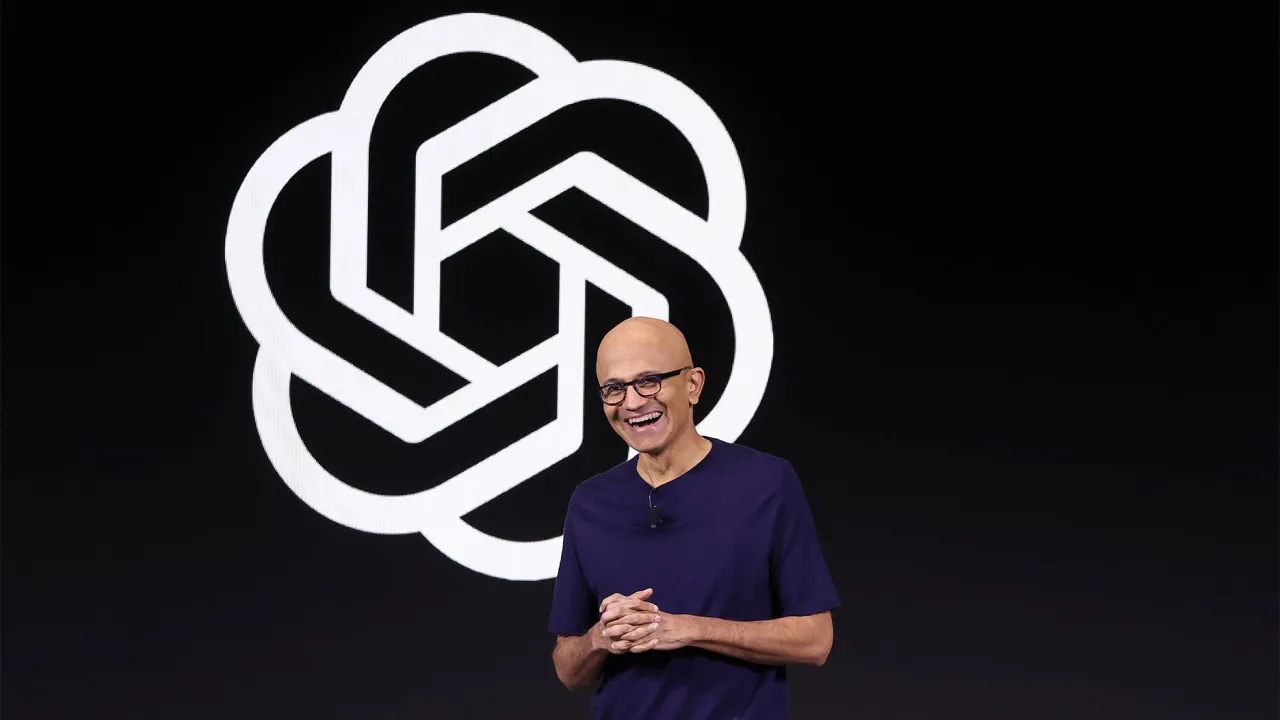
A few weeks after “slop” was crowned word of the year, Microsoft CEO Satya Nadella attempted to reset the tone of the AI debate. Writing in his personal blog, Nadella urged the industry to stop treating AI as disposable output and start framing it as a “bicycle for the mind” – a tool designed to amplify human capability rather than replace it. At YourNewsClub, we read this as more than philosophical reflection. It is a strategic reframing at a moment when AI has become associated with low-quality content, eroding trust, and – most critically – job displacement. Nadella’s language signals an effort to shift AI from a narrative of substitution to one of augmentation, even as market incentives continue to pull in the opposite direction.
The tension is structural. Much of today’s AI-agent marketing is explicitly priced around labor replacement: fewer people, lower costs, faster output. That logic is legible to CFOs and investors, but it directly contradicts the “bicycle” metaphor. In YourNewsClub, we see this as the core contradiction heading into 2026 – companies want the social legitimacy of augmentation while monetizing substitution.
Apocalyptic warnings have only intensified the debate. High-profile AI leaders have publicly suggested that AI could eliminate large portions of entry-level white-collar work within a few years. At YourNewsClub, we treat these projections cautiously. They shape regulatory narratives as much as they predict outcomes. The real impact depends less on model capability and more on how organizations redesign roles, accountability, and training.
More grounded labor research suggests a subtler reality: AI is currently capable of performing a limited but meaningful share of paid work tasks, not entire jobs. That distinction matters. Task automation usually leads to role transformation before role elimination. It also explains why early-career positions feel the pressure first – junior tasks are often the most modular and easiest to automate. Paradoxically, some of the occupations most exposed to AI tools are currently seeing job growth and rising wages. At YourNewsClub, we interpret this as evidence that AI, at least in its current phase, rewards skill concentration rather than replacing expertise outright. Strong professionals become more productive; weak differentiation becomes more visible.
Still, corporate behavior continues to muddy the message. Microsoft itself carried out large-scale layoffs while reporting strong financial performance and highlighting AI-driven transformation. Even without explicitly blaming AI, the optics reinforce public anxiety. People don’t evaluate AI narratives through blog posts – they evaluate them through layoffs and hiring freezes. Maya Renn, who covers ethics and power dynamics in computation at YourNewsClub, frames the risk succinctly: when AI is sold internally as a substitute, organizations begin treating trust and institutional knowledge as expendable costs rather than strategic assets.
Freddy Camacho, our analyst focused on the political economy of computation, adds that AI efficiency is never free. It shifts costs into data dependency, energy use, infrastructure risk, and error propagation – expenses that rarely appear in early ROI models. At YourNewsClub, we expect the AI jobs debate to move away from the simplistic question of “will AI replace humans?” toward a more uncomfortable one: who benefits from AI amplification, and who is pushed out of visibility. The likely outcome is uneven. Senior and highly skilled workers gain leverage. Entry pathways narrow. Productivity rises – but so does pressure on trust, quality, and accountability.
Our recommendation at Your News Club is pragmatic. Companies serious about Nadella’s “bicycle for the mind” metaphor must reflect it in practice: transparent AI use, redesigned junior roles, explicit quality controls, and investment in human judgment rather than just output speed. For workers, the strategy is clear – use AI as a multiplier of expertise, not a shortcut around it. And for policymakers, the challenge is no longer stopping AI, but rebuilding access to professions in a world where the first rung of the ladder is disappearing.