
A quiet but strategically significant realignment is unfolding across the AI sector. Companies are no longer competing purely on model performance or compute capacity. The true battlefield has shifted: influence, policy leverage, and access to the minds capable of shaping not just products, but the trajectory of the industry itself. In our editorial observation at YourNewsClub, we interpret these high-profile executive transitions not as routine career moves, but as markers of a deeper redistribution of power across the key centers of AI decision-making.
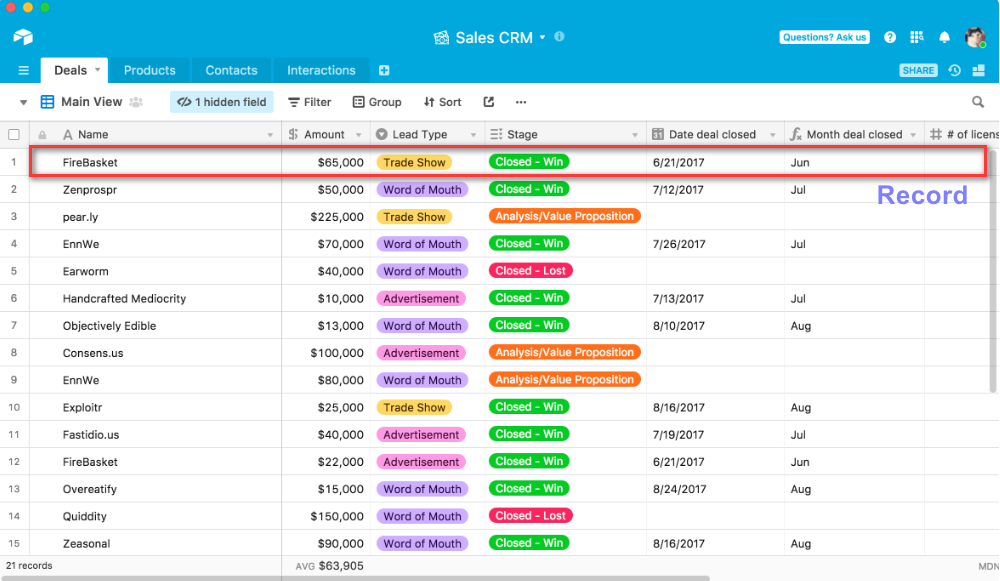
The appointment of David Azose as CTO at Airtable signals how AI is beginning to penetrate a new layer of enterprise automation. Once a symbol of the no-code movement, Airtable is now positioning itself not as a convenience tool for teams but as a full-scale infrastructure platform for AI-driven business processes. Azose’s background – spanning Microsoft, Uber, DoorDash and OpenAI – suggests Airtable no longer aims to simply embed AI as an enhancement. It plans to fuse AI directly into the operational logic of data handling and workflow governance. In our analytical breakdown at YourNewsClub, we see this as Airtable’s leap from a “team tool” category into that of “systemic platforms,” where AI becomes the core engine of monetization rather than an auxiliary feature.
Microsoft’s decision to bring on Rishi Sunak as a strategic advisor represents a different category of move altogether. Here, the company is not acquiring technical leadership but political and geopolitical insight. The former Prime Minister will advise on the intersection of macroeconomics, technology and policy – a role that reflects the growing need for AI giants to cultivate their own parallel diplomatic networks. From our perspective at YourNewsClub, this signals the rise of a new corporate strategy: embedding high-level state figures not for publicity value, but to shape regulatory trajectories from within. Sunak’s simultaneous advisory roles with Anthropic and Goldman Sachs further strengthen the emergence of a new archetype – an independent technological strategist operating across multiple centers of power rather than tied to a single institution.
Meanwhile, Oumi – a startup focused on AI transparency – recruiting Jonathan Rosenbluth from Cohere is a clear indication of the industry’s shift from building new models to building systems of explainability and control. Market maturity is defined not by the race for bigger models, but by the demand for verifiable, interpretable AI decisions that enterprise clients can justify at scale. “The next phase of this market won’t be won by those who generate faster, but by those who can explain better,” notes YourNewsClub interface strategist Maya Renn.
Concurrently, Reperio Health is strengthening its leadership with executives experienced in health insurance and telemedicine, expanding its screening and remote care services across 39 states. This marks a shift in medtech from fragmented digital offerings to unified ecosystems, where diagnostics, insurance flows and AI analytics merge into continuous decision loops. This is where we see one of the next major arenas for AI monetization: long-term medical infrastructure that feeds constant behavioral and biometric data back into algorithmic decision systems.
As corporate strategy analyst at YourNewsClub Freddie Camacho emphasizes: “The AI industry has entered a phase where code is no longer the primary asset. Real power lies with those who can align technology, policy and infrastructure interests at scale.” This observation precisely captures the shift – AI is no longer just a technology. It is becoming an instrument of systemic influence.
When observed as a connected pattern, these executive movements reveal the architecture of a new power structure emerging across the AI landscape. Some companies are locking in the data infrastructure layer, others are building political influence corridors, a third group is solidifying model transparency, while another is embedding AI into high-retention sectors like healthcare. At YourNewsClub, we see this as the beginning of a phase where AI companies will no longer compete primarily for users – they will compete for the right to define the rules of entire industries.