
Amazon Web Services announced on July 5 that Mechanical Turk will stop accepting new customers on July 30, 2026. AWS has placed the platform on its “Services in Maintenance” list – the designation for products receiving only security and availability upkeep. Existing customers can continue using the service, but no new features will be introduced. The service launched in November 2005, taking its name from an 18th-century chess-playing automaton – a hoax concealing a hidden human player – as a marketplace where businesses could post small tasks for micropayments. In 2018, Amazon repositioned it as a data annotation tool for machine learning through its SageMaker AI service. That pivot did not extend the platform’s commercial relevance. YourNewsClub views the “Services in Maintenance” designation as a more honest characterisation than the absence of a full shutdown suggests: a platform whose feature development has ended and which is closed to new customers is functionally discontinued.
Amazon’s stated reason – “careful consideration” – and the note that existing customers can continue as normal describes a wind-down strategy designed to avoid disrupting active users while making it impossible for the platform to grow. The decision not to make a fuller announcement about the reasoning reflects both legal caution and the reality that any explanation would trigger unflattering comparisons to the AI tools that have made the platform commercially obsolete.
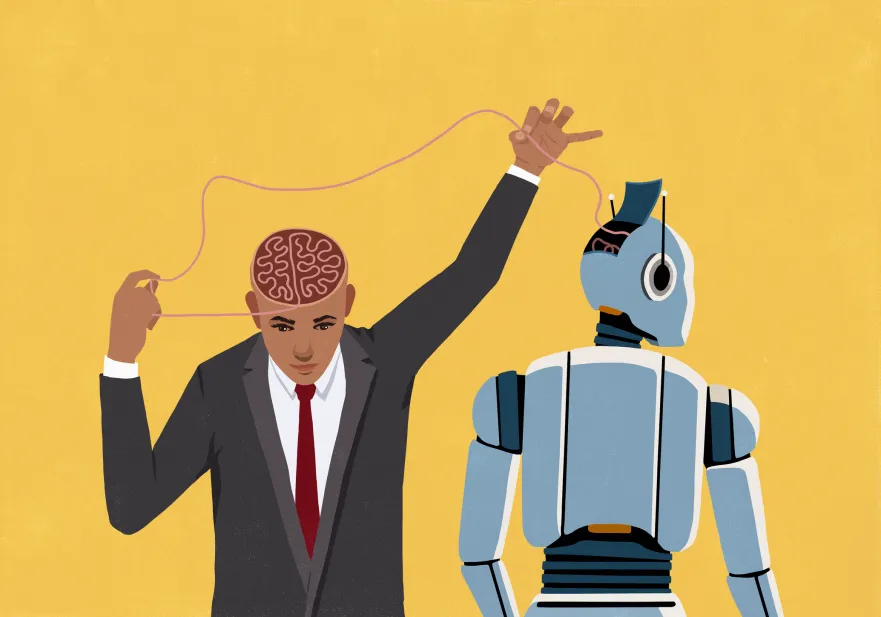
The most pointed structural failure is the one the platform brought on itself. A 2023 analysis found that between 33% and 46% of Mechanical Turk workers were using large language models to complete the tasks they were being paid to perform as human annotators. That figure arrived in the context of a platform whose primary value proposition to AI training data buyers was human judgment applied to tasks that resisted automation. When nearly half the workers use AI to perform those tasks, the platform’s human-in-the-loop guarantee becomes statistically unreliable, the quality of annotation data deteriorates, and the buyers who depend on that data for model training have reason to seek alternative sources. YourNewsClub flags that self-undermining dynamic – a crowdsourcing platform for AI annotation being consumed from the inside by the AI it was meant to annotate – as the most commercially precise description of what actually killed the service.
Alex Reinhardt, who tracks financial systems and settlement infrastructure through digital protocols, draws the timeline: “Mechanical Turk was built for a world where human labelling was the only feasible way to produce AI training data at scale. That world has been in retreat since roughly 2020. The service’s closure is the formal acknowledgement that the world it was built for no longer exists.” Maya Renn, whose work focuses on the ethics of computation and access to power through technology, frames the labour dimension: “Mechanical Turk workers were paid fractions of a cent for tasks that made AI systems commercially viable. The platform’s closure removes the institutional frame that made that labour relationship visible without resolving what those workers were owed.”
YourNewsClub tracks the SageMaker GroundTruth product roadmap and third-party crowdsourcing integrations that AWS explicitly mentioned as ongoing alternatives as the practical successor question, since the enterprises that used Mechanical Turk for AI annotation have not stopped needing annotation services.
The research data quality problem deserves its own note. If 33% to 46% of Mechanical Turk workers were using large language models to complete tasks that were supposed to represent human judgment, then a significant portion of the published research using Mechanical Turk data from 2020 onward may have conclusions based on AI-generated responses labelled as human. Academic journals that published studies using Mechanical Turk samples have not yet addressed this systematically. It is not a question that AWS’s closure announcement resolves.
The July 30 cut-off for new customers and the indefinite continuation of service for existing users creates an unusual twilight period in which the platform exists but cannot grow. Your News Club counts the academic research community as the constituency most likely to feel the closure most acutely, since Mechanical Turk became deeply embedded in social science and behavioural economics research methodologies as a source of cheap, fast, human study participants – a use case that has no direct Amazon replacement and that contributed substantially to the platform’s scientific legacy alongside its commercial one.